
Free sample
Chapter 1: The Sonic Angle--Most podcasters fail before they speak a single word.They fail in the silence of their outline. They fail at the kitchen table, staring at a topic that feels right but produces episodes that feel wrong. They fail because they confuse what they want to talk about with why anyone should listen. And by the time they hit record, the damage is already done—baked into the structure, the pacing, the very premise of their show.This book exists because that failure is entirely preventable.Scripting Podcasts is not a book about microphones, editing software, or RSS feeds. Those are logistics.
This book is about something more fundamental: the architecture of audio attention. It is about transforming the messy, distracted, half-listening experience of podcast consumption into a deliberate, engineered journey that hooks listeners in the first ten seconds and keeps them leaning in until the final word.But before we can talk about hooks, structures, or sound design, we must address the single most overlooked element in podcast creation: the angle.The Mistake Most Podcasters Make Open any podcasting forum, and you will find the same question asked a thousand ways: "Why is no one listening to my show?" The answers are almost always technical—poor audio quality, inconsistent release schedule, lack of marketing. These matter. But they are symptoms, not causes.The cause lives in the script. And the script's failure begins with the angle.Most podcasters start with a topic.
"I want to talk about marketing." Or true crime. Or film criticism. Or entrepreneurship. They build an outline around that topic, then write a script that explains what they know. This is the essay approach—dense, linear, re-readable.
It works for newsletters and blog posts because readers can pause, re-read, and control their own pace.Podcasts offer none of those luxuries.A podcast listener cannot re-read a confusing sentence without rewinding. They cannot skim ahead to see if the episode gets better. They cannot set the script down and return to it later without losing the thread. The podcast listener is, in almost every case, doing something else—driving, washing dishes, exercising, scrolling social media. Their attention is a precious, fragile resource that you must earn second by second.The essay approach bleeds listeners.
It assumes an attentive, seated, single-tasking audience. That audience does not exist.What replaces the essay approach? The sonic angle.Defining the Sonic Angle The sonic angle is the irreducible core of your episode—the single, focused question that everything in your script serves. It is not your topic. It is not your theme.
It is the specific lens through which you invite the listener to see your topic.Here is the distinction, because it matters more than any other distinction in this book:Topic: "I want to talk about productivity."Sonic angle: "Why does productivity culture make us feel more tired than accomplished?"Topic: "I want to talk about the Roman Empire."Sonic angle: "What did Roman soldiers smell on the morning of their last battle?"Topic: "I want to interview entrepreneurs."Sonic angle: "What did my guests learn in the year their businesses almost failed?"Do you feel the difference? The topic is a category. The sonic angle is a provocation—a question that creates immediate curiosity, tension, or emotional stakes. It is the engine that drives every sentence you will write.The sonic angle has three essential characteristics:1. It is irreducible.
You cannot break it down further without losing its power. "Why does productivity culture exhaust us?" is irreducible. "Thoughts on productivity" is not.2. It implies a listener transformation. The angle contains within it the change the listener will experience.
They start with one assumption (productivity helps) and end with another (productivity might hurt). That arc is the episode.3. It is audio-native. A great sonic angle works better in audio than on the page. It uses pacing, silence, emphasis, and emotional tone.
It cannot be fully captured in a headline or a tweet.The Kitchen Table Test How do you know if your sonic angle is any good?Before you write a single word of script, perform the Kitchen Table Test. Here is how it works:Imagine you are making dinner. A friend walks into the kitchen and asks, "What's your podcast episode about this week?" You have two sentences—no more—to make them want to listen. You cannot use jargon, caveats, or throat-clearing phrases like "Well, it's kind of about..."If your two sentences do not produce a follow-up question or a visible flicker of interest, your angle is too broad.Let me show you the difference.Bad (topic-based, two sentences):"It's about productivity. I talk about some research on why people feel overwhelmed."Good (sonic angle, two sentences):"Most productivity advice makes you busier, not better.
I found the research on why your to-do list is lying to you."The second version has conflict ("makes you busier, not better"), specificity ("to-do list is lying to you"), and a promise of revelation ("I found the research"). The friend at the kitchen table leans in. "Wait, lying how?"That lean is the sound of a sonic angle working.The Kitchen Table Test is brutal. It should be. If you cannot pass it, you are not ready to script.
Return to your idea and ask: What is the question at the heart of this episode? Not the topic. The question.Newsletter Voice vs. Podcast Voice One of the most common sources of script failure is the writer who has spent years honing their written voice—for newsletters, blogs, books, or reports—and assumes that voice will translate to audio.It will not.The newsletter voice is dense, information-rich, and forgiving. It assumes a reader who can pause, re-read, highlight, and skip.
It uses compound sentences, parenthetical asides, and vocabulary that rewards slow processing. A great newsletter is a treasure chest: the reader digs through it at their own pace, finding gems.The podcast voice is ephemeral, momentum-driven, and punishing. It assumes a listener who cannot pause to parse a complex sentence. It uses short clauses, active verbs, and vocabulary that lands instantly. A great podcast episode is a river: the listener is carried along, unable to stop without losing the current.Here is the same information delivered in both voices.
Read them aloud.Newsletter voice:"Considering the increasingly complex landscape of productivity tools and their paradoxical effect on worker efficiency—namely, that more tools often correlate with less output—it becomes necessary to examine the underlying assumptions of the productivity industry itself."Podcast voice:"More tools, less done. That's the paradox. And it's making us all feel like failures. Today, we're asking: what if productivity is the problem?"The second version breathes. It pauses.
It uses contractions ("we're," "it's"). It speaks directly to the listener ("making us feel"). It ends with a question that pulls the listener forward.Throughout this book, we will be ruthlessly committed to the podcast voice. Every technique—from the Markup Method in Chapter 4 to the pacing rules in Chapter 2—serves this commitment. But it begins here, with the recognition that your written instincts are likely working against you.The Narrative Engine: Beyond the Single Episode…
This is the end of the free sample. Get the eBook to keep going. Buy now
About this book
Details
- Author
- Brackett Beula
- Publisher
- SamEnrico
- Language
- English
- Genre
- Non-Fiction, Self-Help / Media
- Released
- 2026-06-09
- Pages (approx.)
- 140
- Available as
- eBook, Audiobook

Read better in the ZLOADR app
Your eBooks on your phone or tablet. Sign in with your SamEnrico account and start reading.
More by Brackett Beula
 School On Set Education FailBrackett Beula$11.99
 Managing Interruptions for Accountants WorkbookBrackett Beula$11.99
 Assertive Parenting CommunicationBrackett Beula$11.99
 Warehouse District SearchBrackett Beula$11.99
 The Freelance Social Security GuideBrackett Beula$11.99
 UK VAT Returns First Filing ManualBrackett Beula$11.99
 Buffett Dairy QueenBrackett Beula$11.99
 The Last Druids of Anglesey: Guardians of Celtic WisdomBrackett Beula$11.99
 The Unseen Hand: How a British Spy Shaped the Cold War from the ShadowsBrackett Beula$11.99
 The Forgotten Navigator: Zheng He's Lost Voyages Across the Indian OceanBrackett Beula$11.99
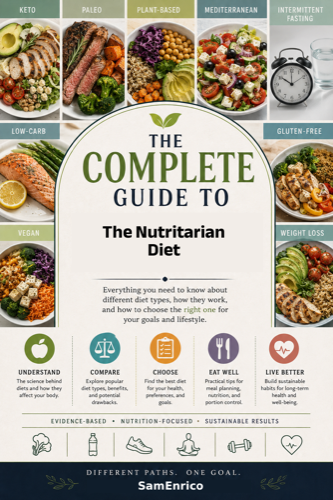 The Complete Guide to the Nutritarian DietBrackett Beula$11.99
 Graduate Account Development ExecutiveBrackett Beula$11.99
You may also like
 News Distraction ControlYu Tori$11.99
 Parent Time PodcastsCrawley Nicolette$11.99
 Habit Podcasts GuideChalmers Ila$11.99
 Morning Routine PodcastsHenson Kathie$11.99
 Memory Palace PodcastsLemons Leandra$11.99
 Chunking Podcast GuideYu Chastity$11.99
 Pain Meditation PodcastsFlint Leif$11.99
 Interruption PodcastsMosley Macy$11.99
 Nightmare PodcastsKinney Dodie$11.99
 Resilience PodcastsRalph Allen$11.99
 Remote Work PodcastsPolk Russell$11.99
 Goal Setting PodcastsLea Justine$11.99