
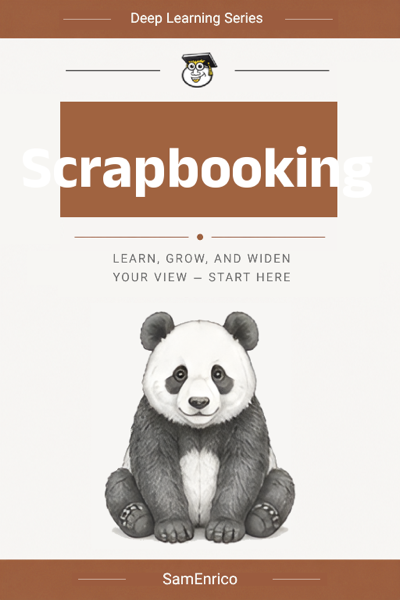
Scrapbooking eBook
A Coursebook on Scrapbooking
A Coursebook on Scrapbooking
Formats
Free sample
Chapter 1: The Stories We Save...--There is a box in your closet, or perhaps under your bed, or stacked in the corner of a garage. It is filled with photographs—not the perfectly curated ones you post online, but the real ones. The slightly out-of-focus birthday candles. The vacation shot where your father is squinting into the sun. The school portrait with the terrible haircut.
The receipt from a restaurant that closed ten years ago, tucked behind a picture of someone you no longer speak to. This box is not organized. It is not labeled. And yet, you cannot throw it away.That box is not a problem to be solved. It is a story waiting to be told.Welcome to scrapbooking.
You have likely heard the word before, and you may have formed an opinion about it. Perhaps you imagine grandmothers carefully cutting doilies and pressing dried flowers into leather-bound albums. Perhaps you think of the elaborate, overwhelming pages you have seen on social media—pages that require fifty-dollar tools and an art degree to replicate. Perhaps you have dismissed scrapbooking as sentimental clutter or a hobby for people with too much time on their hands.All of these assumptions are wrong.Scrapbooking, at its core, is the act of preserving memory through the deliberate arrangement of photographs, words, and tangible objects on a page. It is older than photography itself—people have been pasting letters, pressed plants, and handwritten notes into albums since the seventeenth century.
But in its modern form, scrapbooking has become something far more significant than craft. It is a form of visual autobiography. It is a tool for processing experience. It is an act of resistance against the forgetfulness that creeps into every life.And you already know how to do it. You have been scrapbooking since the first time you taped a concert ticket to your bedroom wall.
Since the first time you wrote a date on the back of a photo. Since the first time you arranged a handful of pictures on your phone into a digital album. The difference between those instinctive acts and the pages you will learn to create in this book is not a difference in kind but a difference in intention. This book will teach you to be deliberate. It will teach you to be intentional.
It will teach you to stop preserving everything and start preserving what matters.Why Scrapbooking Matters More Now Than Ever We live in an age of photographic abundance. The average smartphone user takes nearly two thousand photos per year. The average parent of a young child takes significantly more. We have more images of our lives than any generation in human history, and yet we look at them less. They sit on hard drives.
They crowd cloud storage. They are backed up, synced, duplicated, and never seen again.This is the paradox of the digital age: the easier it becomes to capture a moment, the less meaning that moment retains. When you could only afford to develop twenty-four exposures on a roll of film, each shot carried weight. You considered composition. You waited for the right light.
You printed only the best and discarded the rest. Today, you take twenty shots of the same coffee cup and keep all of them. Abundance has eroded intentionality.Scrapbooking reverses this erosion. It forces you to choose. When you sit down with a stack of photographs—physical prints, not pixels on a screen—you must make decisions.
Which of these twenty images actually tells the story? Which one captures the emotion, not just the event? Which one will matter to you in ten years? These are not technical questions. They are philosophical questions.
They ask you to clarify what you value.Beyond the act of selection, scrapbooking also creates a physical object in a world that has become increasingly weightless. Your digital photos exist nowhere and everywhere. They have no texture, no smell, no resistance when you turn a page. A scrapbook album, by contrast, is stubbornly real. You can feel the thickness of the cardstock.
You can see the shadow cast by a raised embellishment. You can run your finger over handwritten journaling and feel the indentation of the pen. This physicality matters. Neuroscientific research has shown that the act of holding a physical photograph activates different memory pathways in the brain than swiping through images on a screen. The physical object is more likely to be remembered.
It is more likely to be felt.The Four Essential Elements of Every Layout Before you cut a single piece of paper or purchase a single tool, you must understand the fundamental anatomy of a scrapbook page. Every completed layout—the industry term for a single page or two-page spread—contains four essential elements. You cannot omit any of them without diminishing the page's power. They are: photographs, journaling, title, and embellishments.Let us examine each in turn.Photographs are the visual anchors of your page. They are not the whole story, but they are the entry point.
A well-chosen photograph draws the viewer in and establishes the emotional tone. Note the phrase "well-chosen." This book will teach you, in Chapter 4, how to select the single hero photo from a burst of twenty similar shots. For now, understand that more is not better. A layout with one powerful image nearly always outranks a layout with twelve mediocre ones. Your photographs are not documentation; they are illustration.
They exist to serve the story, not to exhaustively catalog every moment of an event.Journaling is the written component of your layout. It is the most frequently omitted element among beginners, and it is the most important. Without journaling, your scrapbook is merely a photo album. With journaling, it becomes a memoir. Journaling answers the questions that photographs cannot: How did you feel?
What was said that was not photographed? What context is missing? Who are these people, and why do they matter? Journaling can be as short as a single sentence or as long as a page of handwritten reflection. But it must be present.
A scrapbook page without words is a beautiful corpse—visually appealing but spiritually dead.The title is the headline of your layout. It announces the theme, sets the mood, and guides the viewer's interpretation. A title can be straightforward ("Disney World 2019") or poetic ("The Year the Lemons Fell"). It can be funny ("We Ate Our Way Through Italy") or solemn ("What We Carried Home"). The title is your first opportunity to inject personality into the page.
Chapter 8 will teach you how to design titles using different fonts, sizes, and materials. For now, simply understand that every layout needs a title—even if that title is a single word.Embellishments are the decorative accents that add texture, color, and visual interest. They include stickers, die-cuts, enamel dots, brads, flair buttons, washi tape, sequins, and dozens of other small items. Embellishments are the seasoning of scrapbooking, not the main course. Beginners often overuse them, covering their pages in so much decoration that the photographs become nearly invisible.
This book will teach you restraint. Embellishments should guide the eye, not assault it. They should support the story, not…
This is the end of the free sample. Get the eBook to keep going. Buy now
About this book
Details
- Author
- Shoemaker Dennis
- Publisher
- SamEnrico
- Language
- English
- Genre
- Non-Fiction, Informative, Educational
- Released
- 2026-05-06
- Pages (approx.)
- 128
- Available as
- eBook, Audiobook

Read better in the ZLOADR app
Your eBooks on your phone or tablet. Sign in with your SamEnrico account and start reading.
More by Shoemaker Dennis
 HRT For Cognitive Function Dementia GuideShoemaker Dennis$11.99
 Logistics Tech Investment PlanShoemaker Dennis$11.99
 Paystack Acquisition Exit GuideShoemaker Dennis$11.99
 Child Post Hypnotic GuideShoemaker Dennis$11.99
 The Empathy for Infertility GuideShoemaker Dennis$11.99
 The Maestro of Strings: Manuel Velázquez and the Birth of the Modern GuitarShoemaker Dennis$11.99
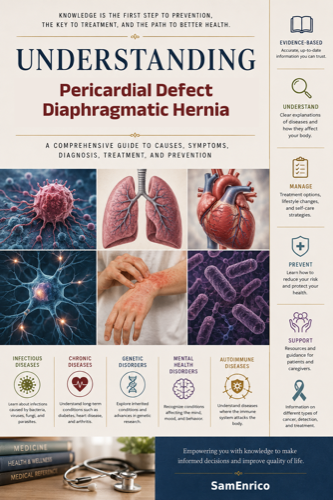 Understanding Pericardial Defect Diaphragmatic HerniaShoemaker Dennis$17.99
 Stripe Connect Platform GuideShoemaker Dennis$12.99
 London Pop Up Permits and RegulationsShoemaker Dennis$12.99
 How to Start a Theme Parks BusinessShoemaker Dennis$11.99