
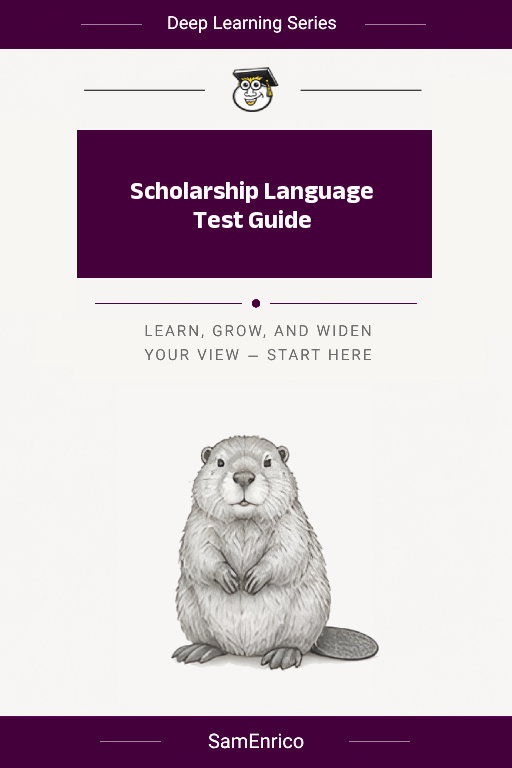
Non-FictionTest Prep GuideLanguage Guide
Scholarship Language Test Guide eBook
Prepare for IELTS, TOEFL, or DELF required by fund
by Ott Royce
Prepare for IELTS, TOEFL, or DELF required by funders. Score strategies for African applicants.
Formats
Free sample
Chapter 1: The Funder’s Secret Calculus--–- Most African applicants wake up on test day believing they are proving their English or French. They are wrong. They are actually proving something far more specific: that they can survive a Western classroom. This misunderstanding is why thousands of qualified applicants lose scholarships every year—not because they lack language ability, but because they prepared for the wrong problem.Consider two applicants. Amara from Lagos has flawless grammar.
She can diagram a sentence better than most native speakers. She scored 90th percentile on her university entrance exam. But when a scholarship committee watches her interview video, they see long pauses, hesitation, and a quiet voice. She gets rejected. Kwame from Accra speaks with confidence.
His grammar has errors—he mixes up tenses and forgets articles—but he laughs easily, interrupts politely to ask questions, and tells a story about fixing a broken generator with his uncle. He gets the scholarship. The funder’s calculus is brutal but logical: they can teach grammar. They cannot teach participation.This chapter reveals what the top ten best-selling language test guides will never tell you. They teach you how to answer questions.
They do not teach you how funders think. You will learn why a 6.5 in IELTS from an African applicant is not the same as a 6.5 from a European applicant. You will discover the five funders that matter most and what each secretly prioritizes. You will diagnose yourself as an Exogenous or Endogenous learner—a framework that will guide your entire preparation. And you will understand the five core African realities that make your situation different from every generic test guide on the market.By the end of this chapter, you will stop preparing like a student and start preparing like a scholarship winner.The Great Misunderstanding Most applicants believe language tests measure language.
They do not. They measure something more specific: the ability to perform academic tasks under pressure in a standardized way. This distinction matters because funders do not care about your language in the abstract. They care about whether you can walk into a seminar at the London School of Economics, understand a lecture on post-colonial trade policy, and then argue with a British classmate about it without freezing.The Common European Framework of Reference for Languages (CEFR) divides proficiency into six levels: A1 (beginner) to C2 (mastery). Scholarship funders almost always require B2 (upper intermediate) or C1 (advanced).
On paper, these levels describe what you can do: understand main ideas, produce detailed text, interact with fluency. But in practice, funders interpret these scores through a lens that most test-takers never see.Here is the truth that test prep companies hide: a B2 score from a Nigerian applicant who learned English in a crowded classroom with forty other students is evaluated differently than a B2 score from a German applicant who had private tutoring since age six. The funder asks two questions: "What obstacles did this applicant overcome to achieve this score?" and "Will this applicant thrive in our program or just survive?"This is not discrimination. It is risk assessment. Funders have data showing that students with strong grammar but weak fluency drop out at higher rates—not because they cannot do the work, but because they cannot ask for help, participate in study groups, or challenge a professor during office hours.
The silent student gets the grade but fails the networking. The fluent student with errors gets invited to the research project.The Five Funders Who Control Your Future Not all scholarships are equal. The funder you target determines everything: which test you take, what score you need, and how you should prepare. Let us examine the five most important funders for African applicants.The Chevening Scholarship (United Kingdom) funds one-year master's degrees at UK universities. Their hidden priority is leadership potential.
They do not want perfect students; they want future presidents, directors, and change-makers. Their language requirement is IELTS 6.5 overall with no section below 5.5. But the successful African Chevening applicant typically scores 7.0 or higher. Why? Because Chevening interviews are famously difficult.
You must argue about British foreign policy, defend your development project, and answer rapid-fire questions from a panel. Your IELTS speaking score is their best predictor of interview performance. A 6.5 gets your application read. A 7.5 gets you the interview.The Erasmus Mundus Joint Master Degrees (European Union) fund programs that require travel between two or three European countries. Their hidden priority is adaptability.
You will study in Spain, Germany, and France. Each country has different academic norms. Their language requirements are complicated: often IELTS 6.5 or TOEFL 90, plus proof of French or German depending on the program. But the secret is that Erasmus Mundus evaluators read hundreds of applications from across Africa, Asia, and Latin America. They have learned to spot the "template applicant" who copied essays from the internet.
Your language score matters less than your ability to write a personal statement that sounds like a real human. They want evidence that you can navigate three different university bureaucracies without melting down.The Chinese Scholarship Council (China) funds programs in Mandarin or English. Their hidden priority is political and economic alignment. China is building long-term relationships across Africa. They want applicants who will become ambassadors of Sino-African cooperation.
Their language requirements are lower than Western funders: often HSK 4 (Mandarin) or IELTS 6.0. But the successful applicant studies Chinese history, understands Belt and Road Initiative projects in their home country, and mentions specific Chinese-African partnerships in their essay. The language score is a gatekeeper; the political knowledge is the differentiator.The DAAD Scholarship (Germany) funds development-related master's programs. Their hidden priority is practical problem-solving. German universities value technical precision and real-world application.
Their language requirements vary: English-taught programs need IELTS 6.5 or TOEFL 90; German-taught programs need Test Da F or DSH. But the DAAD application requires a detailed "study plan" and "relevance to home country" statement. The successful African applicant shows how they will use their degree to solve a specific local problem—not "reduce poverty" but "design a low-cost water filtration system for the northern region using locally available materials." Your language score must be high enough to write that technical statement convincingly.The Mastercard Foundation Scholars Program (global) funds African students at partner universities worldwide. Their hidden priority is "giving back." This funder is unique because it was designed specifically for African applicants. They understand the financial pressure, the power cuts, the accent anxiety.
Their language requirements are flexible: they accept IELTS, TOEFL, Duolingo, or institutional tests. But the selection process prioritizes applicants who demonstrate leadership in their communities—not future leadership, but actual leadership already happening. Your language score can be lower if you have started a community library, organized a waste collection system, or taught younger students. The Mastercard evaluators ask themselves: "Will this person return to their community and multiply their impact?" Your score proves you can study abroad; your story proves you will come back.Understanding these five funders changes your entire preparation strategy. You no longer ask "How do I get a high score?" You ask "What does Chevening actually want to see in a speaking sample?" or "How can my writing sample demonstrate adaptability to…
This is the end of the free sample. Get the eBook to keep going. Buy now
About this book
Details
- Author
- Ott Royce
- Publisher
- SamEnrico
- Language
- English
- Genre
- Non-Fiction, Test Prep Guide, Language Guide
- Released
- 2026-05-29
- Pages (approx.)
- 132
- Available as
- eBook, Audiobook

Read better in the ZLOADR app
Your eBooks on your phone or tablet. Sign in with your SamEnrico account and start reading.
More by Ott Royce
 Project Status Colors GuideOtt Royce$11.99
 The Chronic Pain Gratitude PracticeOtt Royce$11.99
 Sprouts and Microgreens GuideOtt Royce$11.99
 Attempt Survivor Therapist StoryOtt Royce$11.99
 Family Meal Prep Weekend StrategyOtt Royce$11.99
 The Neon Rebels: Beirut's Underground Art Revolution (1960s-1970s)Ott Royce$11.99
 A Beginners Guide to Field Hockey (Volume 1)Ott Royce$11.99
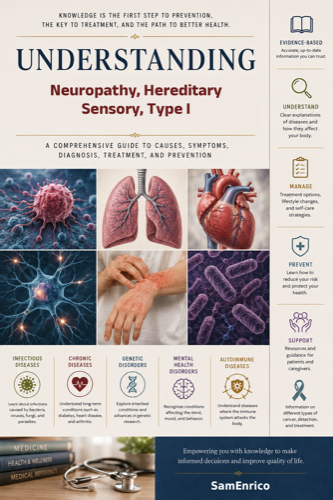 Understanding Neuropathy, Hereditary Sensory, Type IOtt Royce$17.99
 Paid Social ManagerOtt Royce$11.99
 Small Business AI Loan ManagementOtt Royce$12.99
You may also like
 Hong Kong Handover 1997Dunn Johnnie$11.99
 Zumba For Postnatal Recovery CourseNeal Christian$11.99
 Zumba for BeginnersLadner Nikia$11.99
 YouTube Comment Mining GuideHumes Pandora$12.99
 Worry Box MeditationCarlin Rudy$11.99
 Workplace Stress MeditationNguyen Lynn$11.99
 Workplace Stress and Sleep RepairHawley Ivory$11.99
 Workplace Perfectionism CureDelaney Jeffry$11.99
 Workplace Injustice Anger GuideWallen Isabelle$11.99
 Work Addiction and Burnout LinkGreenwood Ester$11.99
 Women in Yoga and WellnessBeattie Galina$11.99
 Women in Stand Up ComedyChun Evangeline$11.99