


Non-FictionAnnual CheckupRefusal AppealRejection
Schengen Visa Appeal Guide eBook
Appeal Schengen visa refusals including rejection
Appeal Schengen visa refusals including rejection reasons, appeal deadlines, and document resubmission.
Formats
Free sample
Chapter 1: The Panic Pause--You are holding a piece of paper that just cost you a trip you have been planning for months. Maybe it is a business meeting that could have changed your career. Maybe it is a family wedding you promised to attend. Maybe it is a long-awaited vacation with non-refundable flights and hotels that are now hanging by a thread. Your passport is stamped with a word that feels like a public humiliation: REFUSED.
Your first instinct is to fire off an angry email to the embassy. Your second is to crumple the letter and pretend this never happened. Your third is to reapply immediately with the exact same documents, hoping for a different officer.All three instincts are wrong. And all three will cost you time, money, and credibility.This chapter is not about the legal technicalities of the Schengen visa appeal process. That comes later.
This chapter is about the next 48 hours—the most dangerous period after a refusal, when your emotions are raw and your decisions are most likely to be catastrophic. I call this period the Panic Zone. In the Panic Zone, applicants make mistakes that permanently damage their chances of ever receiving a Schengen visa. They send insulting emails that get logged in the Visa Information System (VIS) as "hostile applicant." They reapply immediately with no changes, guaranteeing a second refusal that reinforces the first. They give up entirely, believing the myth that a Schengen refusal is a lifetime ban.None of these outcomes are inevitable.
But to avoid them, you need to do something that feels counterintuitive when every fiber of your being wants to fight back or flee. You need to pause.This is the Panic Pause. It is a deliberate, structured 48-hour period during which you take no action except gathering information and calming your nervous system. You will not email the embassy. You will not reapply.
You will not hire a lawyer yet. You will not post about your refusal on social media or travel forums (where strangers will give you confident but often wrong advice). You will simply breathe, read this chapter, and complete three specific tasks that will determine whether you have a path forward or whether you need to accept the loss and move on.By the end of this chapter, you will know exactly what kind of refusal you have, whether an appeal is even possible, and most importantly, whether you should fight or fold. You will have transformed a moment of humiliation into a structured diagnosis. And you will be ready to move to Chapter 2, where the real work begins.But first, let me tell you a story.The Story of Two Rejections In the spring of 2024, two men applied for Schengen tourist visas to Germany.
Both were from the same country. Both had similar incomes. Both wanted to visit Berlin for one week. Both were rejected on the same day. Both received the same checkmark on their Annex VI refusal forms: "Justification for the purpose and conditions of the intended stay was not provided."On the surface, their situations were identical.
But what happened next could not have been more different.The first man, let us call him Amir, panicked immediately. He sent an angry email to the German consulate demanding an explanation. He received an automated reply saying his email had been noted but no further correspondence would be entered into. He then submitted a new visa application the next week, changing nothing except adding a one-sentence note: "I promise I will come back." He was refused again, this time with an additional checkmark: "Reasonable doubt as to the applicant's intention to leave the territory of the Member States." His second refusal letter explicitly referenced his previous refusal. He had now cemented a pattern in the VIS that would follow him for years.The second man, let us call him Daniel, also panicked initially.
But he had a friend who had been through a refusal before, and his friend told him: "Do nothing for two days. Just read and breathe." Daniel put the refusal letter in a drawer. He took a walk. He slept on it. The next morning, he looked at the letter again with fresh eyes.
He noticed something Amir had missed. The refusal letter said "purpose not provided" but Daniel had submitted a detailed itinerary with flight confirmations and hotel bookings. Something was wrong. He pulled out his application receipt and realized the consulate had attached the wrong file to his application—an older, incomplete itinerary from a different trip. This was a clerical error, not a true refusal.Because Daniel had paused instead of reacting, he was able to file a perfect administrative appeal within the 1-month deadline, attaching his correct itinerary and politely pointing out the error.
His appeal was granted in 11 days. He received his visa and made his trip.Amir is still trying to get a Schengen visa two years later.The difference between Amir and Daniel was not their documents, their income, or their travel history. The difference was the Panic Pause. One man reacted. One man responded.
You are going to be Daniel.Step One: The Immediate Physical Actions (First 10 Minutes)Before you do anything else, complete these three physical actions. They are simple but essential, and they create a ritual that signals to your brain that you are moving from panic to procedure.Action 1: Photocopy the refusal letter immediately. Not a photo on your phone. A real photocopy or a high-resolution scan. You will need this for your appeal file.
The original letter should be kept in a safe place. The copy is what you will write on, highlight, and reference. Do not lose this letter. Without it, you cannot appeal—the reference number on the letter is your key to the entire process.Action 2: Write down the date you PHYSICALLY received the letter. Not the date on the letter.
Not the date the embassy says they mailed it. The date you opened your mailbox or your email and saw the refusal. Why does this matter? Because appeal deadlines are calculated from the date of notification. In some countries (like Germany), the law considers you notified three days after the letter was mailed, even if you received it later.
But in many countries, the clock starts when you actually receive the decision. Write down today's date on the top of your photocopy. This is your deadline anchor.Action 3: Note your deadline country immediately. Turn to Chapter 9 of this book (or the emergency cheat sheet in the Appendix) and find your destination country. Write your appeal deadline in large numbers on the top of your refusal letter.
For example: "GERMANY: 1 MONTH FROM [DATE RECEIVED]" or "CZECH REPUBLIC: 15 DAYS." If your deadline is less than 7 days away, put a red circle around it. You are in emergency mode, and you should skip directly to Chapter 7 after finishing this chapter.These three actions take less than ten minutes. They cost nothing. And they transform your refusal letter from an emotional weapon against you into a document you are analyzing.Step Two: Understanding What Just Happened to You (The Psychology of Refusal)A Schengen visa…
This is the end of the free sample. Get the eBook to keep going. Buy now
About this book
Details
- Author
- Rhodes Carmen
- Publisher
- SamEnrico
- Language
- English
- Genre
- Non-Fiction, Annual Checkup, Refusal Appeal, Rejection
- Released
- 2026-06-01
- Pages (approx.)
- 154
- Available as
- eBook, Audiobook

Read better in the ZLOADR app
Your eBooks on your phone or tablet. Sign in with your SamEnrico account and start reading.
More by Rhodes Carmen
 Anger and ADHD ImpulsivityRhodes Carmen$11.99
 Vacation Without Work Email GuideRhodes Carmen$11.99
 The Wrestling Mental EdgeRhodes Carmen$11.99
 Antwerp Diamond Heist Insurance ScamRhodes Carmen$11.99
 FINRA Disciplinary ActionsRhodes Carmen$11.99
 From Ashes to Ashes: The Phoenix That Was ChernobylRhodes Carmen$11.99
 The Digital Pioneers of Southeast Asia: How a Forgotten Team Built the Internet’s BackboneRhodes Carmen$11.99
 Australian Oak HarvestingRhodes Carmen$11.99
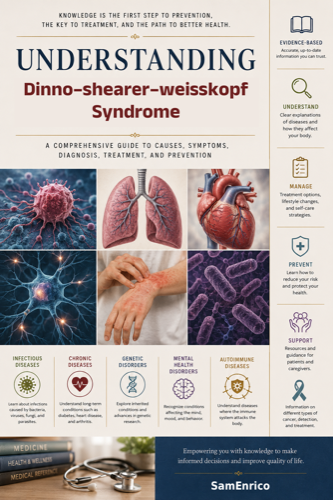 Understanding Dinno–shearer–weisskopf SyndromeRhodes Carmen$17.99
 Ultimate Handbook Guide to Renqiu : (China) Travel GuideRhodes Carmen$11.99
 Student Housing Brazil GuideRhodes Carmen$12.99
You may also like
 Hong Kong Handover 1997Dunn Johnnie$11.99
 Zumba For Postnatal Recovery CourseNeal Christian$11.99
 Zumba for BeginnersLadner Nikia$11.99
 YouTube Comment Mining GuideHumes Pandora$12.99
 Worry Box MeditationCarlin Rudy$11.99
 Workplace Stress MeditationNguyen Lynn$11.99
 Workplace Stress and Sleep RepairHawley Ivory$11.99
 Workplace Perfectionism CureDelaney Jeffry$11.99
 Workplace Injustice Anger GuideWallen Isabelle$11.99
 Work Addiction and Burnout LinkGreenwood Ester$11.99
 Women in Yoga and WellnessBeattie Galina$11.99
 Women in Stand Up ComedyChun Evangeline$11.99