
Satellite Internet Guide
Capital deployment for LEO constellations, ground
Capital deployment for LEO constellations, ground stations, and user terminals.
Formats
About this book
Free sample
Chapter 1: The Orbital Land Grab--–- In February 2022, as Russian tanks rolled toward Kyiv and Ukrainian soldiers scrambled to defend their capital, a different kind of battle was unfolding 550 kilometers above the Earth. The country's terrestrial internet networks had been systematically disabled by cyberattacks and artillery. Communications were failing. Then, a software update pushed from a small office in California reached a constellation of satellites that most people had never heard of. Within hours, Starlink terminals were being handed to Ukrainian drone operators, artillery spotters, and civilian disaster coordinators.
The war changed overnight.This is the new space race. And it is not about flags and footprints on the Moon. It is about who controls the world's internet.The Low Earth Orbit (LEO) satellite internet sector has transformed from a speculative venture into a $110 billion-plus global industry. We are witnessing the most significant shift in telecommunications since the fiber-optic boom of the 1990s. Unlike the failed "dot-com" satellite ventures of that era—Iridium, which filed for bankruptcy after launching 77 satellites, and Teledesic, which collapsed before launching any—today's LEO constellations benefit from three structural shifts: reusable rockets that have cut launch costs by 90 percent, mass-produced satellites that cost a fraction of their predecessors, and surging demand for connectivity revealed by the COVID-19 pandemic.This chapter establishes the market landscape for LEO satellite internet.
You will learn the market size and growth drivers, the key players and their strategies, the competitive dynamics between LEO and traditional geostationary (GEO) providers, and the concept of "orbital real estate" as a finite, non-renewable resource. You will understand why the International Telecommunication Union's "use-it-or-lose-it" spectrum filing system creates unprecedented urgency for capital deployment. And you will see why the winners of this new space race will not be the best engineers—they will be the best capital allocators.By the end of this chapter, you will understand that LEO internet is not a single market but a layered opportunity requiring differentiated capital strategies. The players who integrate satellite manufacturing, launch, ground infrastructure, and user terminal production under a unified capital plan will dominate. The rest will become…
This is the end of the free sample. Get the eBook to keep going. Buy now
Contents
- Chapter 1
- Chapter 2
- Chapter 3
- Chapter 4
- Chapter 5
- Chapter 6
- Chapter 7
- Chapter 8
- Chapter 9
- Chapter 10
- Chapter 11
- Chapter 12
Details
- Author
- Quinlan Ashli
- Publisher
- SamEnrico
- Language
- English
- Genre
- Non-Fiction, Forecast & Outlook, Satellite Comms
- Released
- 2026-06-09
- Pages (approx.)
- 115
- Available as
- eBook, Audiobook

Read better in the ZLOADR app
Your eBooks on your phone or tablet. Sign in with your SamEnrico account and start reading.
More by Quinlan Ashli
 Postpartum Mastitis Treatment GuideQuinlan Ashli$11.99
 Triggers and Self InjuryQuinlan Ashli$11.99
 Strength Training Nutrition PlanQuinlan Ashli$11.99
 Verbal Abuse Cycle BreakQuinlan Ashli$11.99
 Triptan Migraine GuideQuinlan Ashli$11.99
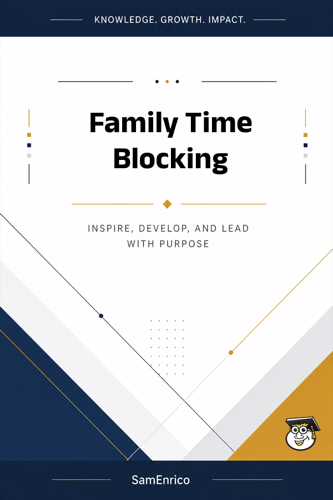 Family Time BlockingQuinlan Ashli$11.99
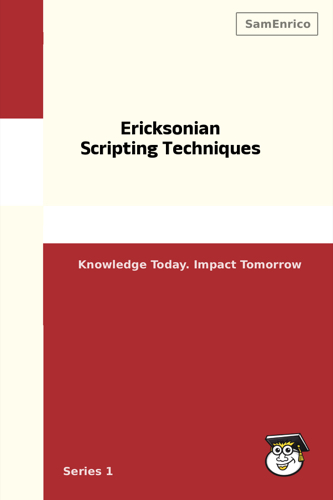 Ericksonian Scripting TechniquesQuinlan Ashli$11.99
 Sarcopenia Motivation WorkbookQuinlan Ashli$11.99
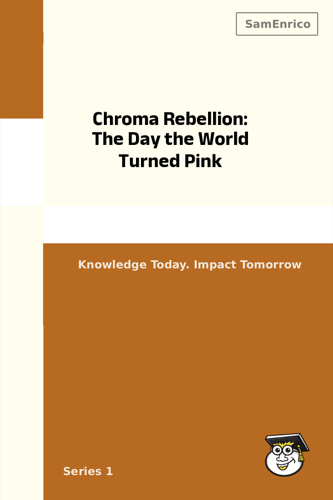 Chroma Rebellion: The Day the World Turned PinkQuinlan Ashli$11.99
 The Frozen Sky: Nansen's Arctic Vision and the Birth of Polar AviationQuinlan Ashli$11.99
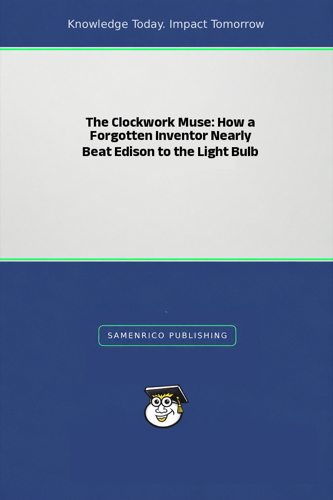 The Clockwork Muse: How a Forgotten Inventor Nearly Beat Edison to the Light BulbQuinlan Ashli$11.99
 Growing Utricularia (Bladderwort)Quinlan Ashli$11.99