Safety Innovation Guide Audiobook
Design novel safety features that also enhance use
Design novel safety features that also enhance user experience.
Formats
Free sample
Chapter 1: The 12-Second Massacre--It was a Tuesday afternoon at a Midwestern distribution center when Marcus, a 14-year veteran forklift operator, did something he had done ten thousand times before. He lifted a pallet of industrial adhesives, rotated his machine, and began backing toward the loading bay. What he did not do was log into the safety tablet mounted six feet away on the concrete pillar. The tablet required a four-digit PIN, then a dropdown menu selection, then a confirmation dialog, then a second confirmation because the software had been “updated for compliance.” By the time Marcus had completed all four steps on his previous shift, forty-seven seconds had elapsed. His supervisor had yelled at him for holding up the line.
So Marcus stopped logging. He stopped reporting the near-misses. He stopped acknowledging the pre-shift safety checklists. He did not stop working. He was, by every measure, a careful, competent, and conscientious employee.
But the safety software had made him a liar. And three weeks after he stopped logging, a different operator in a different warehouse—one who had also stopped logging—backed a forklift into a shelving unit. Eighteen thousand pounds of retail inventory collapsed. Two people were hospitalized. The safety tablet on the pillar recorded nothing because no one had logged in.This is not a story about lazy workers.
This is a story about the 12-Second Massacre—the quiet, invisible slaughter of good intentions by bad design. And this chapter is where we stop blaming humans and start fixing the machines.The Cognitive Friction That Kills Every safety feature, no matter how well intentioned, imposes a cost on the user. That cost is measured in seconds, in keystrokes, in mental effort, and in frustration. Designers call this cognitive friction—the resistance a user feels when a system demands something that interrupts their primary task. Low friction feels like a car door that closes with a satisfying thunk.
High friction feels like a seatbelt buzzer that screams at you while you are already buckled in. And when friction exceeds a critical threshold, users do not become safer. They become creative.The critical threshold, synthesized from decades of usability research across aviation, medicine, manufacturing, and software, is approximately twelve seconds. This is the 12-Second Rule: if an in-flow safety task takes longer than twelve seconds to complete, the majority of users will abandon, bypass, or actively defeat it within one week…
This is the end of the free sample. Get the Audiobook to keep going. Buy now
About this book
Details
- Author
- Sigler Magaly
- Publisher
- SamEnrico
- Language
- English
- Genre
- Non-Fiction, Self-Help, Safety Engineering
- Released
- 2026-06-12
- Pages (approx.)
- 135
- Available as
- eBook, Audiobook

Listen in the VoxFlicks app
Audiobooks and audio dramas wherever you go. Sign in with your SamEnrico account and press play.
More by Sigler Magaly
 Sibling Loss of InfantSigler Magaly$11.99
 Multigenerational HousingSigler Magaly$11.99
 Driving for Dollars GuideSigler Magaly$11.99
 Day Job Detachment MethodSigler Magaly$11.99
 Cancer Pain ManagementSigler Magaly$11.99
 Anger Restructuring HomeworkSigler Magaly$11.99
 Gambling Self Exclusion GuideSigler Magaly$11.99
 The Vanishing of the Argentine Socialite: A Cold Case Reopened by DNASigler Magaly$11.99
 The Shadow War of the Warlords: Tamerlane's Silent Siege of DelhiSigler Magaly$11.99
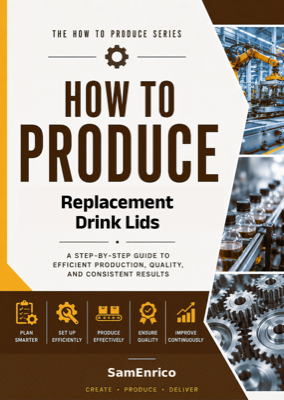 How to Produce Replacement Drink LidsSigler Magaly$11.99
 How to Become a Abrasive-band WinderSigler Magaly$11.99
 Promotion Case One Pager ExamplesSigler Magaly$12.99