
Non-FictionTrue CrimeCrypto Crime
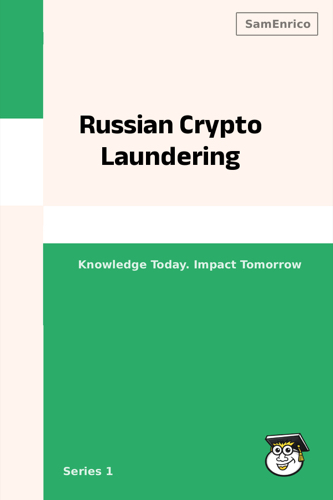
Russian Crypto Laundering eBook
Track how ransomware gangs use cryptocurrency to h
Track how ransomware gangs use cryptocurrency to hide millions from authorities.
Formats
Free sample
Chapter 1: The Safe Harbor...--The email arrived at 3:47 AM on a Tuesday, which was the first sign that something was wrong. John Herring, the chief operating officer of a midsized pipeline operator based in North Carolina, had been asleep for three hours when his phone buzzed against the nightstand. He ignored it. Then it buzzed again. Then again.
By the fourth buzz, he rolled over, squinted at the screen, and saw forty-seven alerts from the company's industrial control systems. The pipeline that carried refined gasoline from Houston to New York had stopped. Not slowed. Stopped. The shutdown command hadn't come from his team.
It had come from someone else.That someone else was sitting in a rented apartment in St. Petersburg, drinking cold coffee at a desk with three monitors. He was twenty-four years old, had dropped out of university five years earlier, and had never held a legal job in his life. He was also about to become very rich. At 3:51 AM, he typed a message into a web interface and pressed enter.
The message appeared on every computer screen inside Herring's pipeline control room: "Your network has been encrypted. Your backups have been deleted. Your data has been exfiltrated. To restore operations, send 75 Bitcoin to the following address. You have 48 hours."This is not a story about a pipeline.
This is a story about a machine—an invisible, distributed, ruthlessly efficient machine that has laundered billions of dollars in cryptocurrency from under the noses of the world's most sophisticated law enforcement agencies. The machine has no single operator, no headquarters, and no CEO. It runs on code, greed, and a simple geographical fact: there is a country where the operators can sit, openly, without fear of extradition. That country is Russia. This book is the story of how the machine works, who built it, and why it has proven nearly impossible to stop.The Digital Inheritance The origins of the Russian ransomware machine cannot be understood without first understanding a strange legacy of the Soviet Union: the world's best-educated generation of unemployed computer programmers.
When the USSR collapsed in 1991, the newly independent Russian Federation inherited a scientific and technical education system that produced tens of thousands of highly skilled engineers every year. What it did not inherit was an economy capable of employing them. Research institutes closed. State contracts vanished. Factory salaries went unpaid for months.In the 1990s, a young programmer in Moscow or Yekaterinburg had three options.
The first was to emigrate—to Germany, to Israel, to the United States—and join the technology companies that were hungry for Soviet-trained talent. The second was to find work in the chaotic new Russian private sector, often in roles that paid a fraction of what they could earn abroad. The third was to go underground. A surprising number chose the third path, not because they were inherently criminal, but because the underground paid in hard currency and asked no questions about visas.The early cybercriminal forums—Carding Planet, Verified, Direct Connection—emerged in the early 2000s as digital bazaars where stolen credit cards, hacked servers, and malware tools were bought and sold. These forums were overwhelmingly Russian-speaking, not because of any inherent cultural predisposition toward cybercrime, but because the Russian internet developed in parallel to the Western internet.
The first Russian cybercriminals were not targeting Americans; they were targeting other Russians. But as the Russian economy stabilized in the 2000s and domestic law enforcement began to pay attention, the criminals looked outward.A Ukrainian hacker named Maksym, who was arrested in 2018 and later cooperated with the FBI, described the mentality in testimony that has since become public: "We did not think of Americans as victims. We thought of them as numbers on a screen. The banks were not real to us. The people were not real.
We were told that American companies were rich, that they had insurance, that no one would be hurt. That was a lie we told ourselves, but it was a very useful lie."By 2010, the Russian-speaking cybercriminal underground had evolved from a loose collection of forum users into a stratified economy. At the top were the "coders"—the programmers who wrote the malware. Below them were the "affiliates" who deployed it. Below them were the "cashiers" who laundered the proceeds.
And below everyone were the "mules"—often unwitting, often in other countries—who moved money through the traditional banking system. This structure, which would later become the blueprint for ransomware-as-a-service, was already in place before the first Bitcoin ransom was ever demanded.The Invention of Ransomware-as-a-Service The first modern ransomware attack is generally credited to a piece of malware called Crypto Locker, which appeared in September 2013. Crypto Locker was not particularly sophisticated by today's standards. It spread through email attachments disguised as customer complaints or shipping notices. Once installed, it encrypted files on the victim's computer and demanded a ransom of approximately $300 in Bitcoin.
What made Crypto Locker revolutionary was not the technology but the business model. The operators did not deploy the malware themselves. They sold it to affiliates, who paid a commission on every successful ransom. This was the birth of ransomware-as-a-service.The Russian-speaking groups that dominated the early ransomware market had an advantage that their counterparts in other countries did not: they operated from jurisdictions where extradition was effectively impossible. Russia has no extradition treaty with the United States.
It has refused to sign the Budapest Convention on Cybercrime, the primary international framework for cross-border digital investigations. A Russian citizen arrested in Russia for cybercrimes against American targets will almost certainly never face an American judge. This is not speculation; it is documented history. When the FBI identified the Russian operators of the Game Over Zeus botnet in 2014, the suspects continued to post on social media from their apartments in St. Petersburg.
They were never arrested.The "safe harbor" theory—the idea that the Russian government tolerates or even encourages ransomware gangs as long as they do not target Russian entities—emerged from this observed reality. The theory is not universally accepted, and later chapters will examine its nuances in depth, but the empirical pattern is undeniable. From 2015 to 2025, not a single major ransomware group that agreed to avoid Russian and CIS (Commonwealth of Independent States) targets suffered a significant law enforcement action on Russian soil. Groups that violated this unwritten rule—such as those that accidentally infected Russian hospitals or government agencies—were quickly shut down, often by the FSB itself.The Corporate Raiders of the Digital Age To understand the scale of what these groups became, it is necessary to set aside the Hollywood image of a lone hacker in a hoodie. The mature ransomware gangs of the late 2010s and early 2020s operated with a level of corporate discipline that would impress a Mc Kinsey consultant.
They had human resources departments. They had performance reviews. They had recruitment pipelines. They had customer support—except the customers were victims, and the support was negotiating ransom payments.Conti is the most extensively documented example, thanks to a massive leak of internal chat logs in 2021. The Conti gang, which is believed to have operated out of a mix of St.
Petersburg, Minsk, and Kyiv before the 2022 invasion of Ukraine, maintained a formal organizational structure. There was the "HR department,"…
This is the end of the free sample. Get the eBook to keep going. Buy now
About this book
Details
- Author
- Campos Magali
- Publisher
- SamEnrico
- Language
- English
- Genre
- Non-Fiction, True Crime, Crypto Crime
- Released
- 2026-06-10
- Pages (approx.)
- 124
- Available as
- eBook, Audiobook

Read better in the ZLOADR app
Your eBooks on your phone or tablet. Sign in with your SamEnrico account and start reading.
More by Campos Magali
 Shopping Addiction And Minimalism CourseCampos Magali$11.99
 The Name Memory Mastery GuideCampos Magali$11.99The Name Memory Mastery GuideCampos Magali$11.99
 The Beginner Eyes OpenCampos Magali$11.99
 Import Tariff Classification HandbookCampos Magali$11.99
 The Last King of Scotland’s Lost CrownCampos Magali$11.99
 Understanding Congenital Cystic Eye Multiple Ocular and Intracranial AnomaliesCampos Magali$17.99
 Micro Insurance For BoPCampos Magali$12.99
 Chinese Language ImmersionCampos Magali$12.99
 How to Start a Awnings Made of Plastic Business (Beginners Guide)Campos Magali$11.99
 Music TherapyCampos Magali$11.99
You may also like
 Hong Kong Handover 1997Dunn Johnnie$11.99
 Zumba For Postnatal Recovery CourseNeal Christian$11.99
 Zumba for BeginnersLadner Nikia$11.99
 YouTube Comment Mining GuideHumes Pandora$12.99
 Worry Box MeditationCarlin Rudy$11.99
 Workplace Stress MeditationNguyen Lynn$11.99
 Workplace Stress and Sleep RepairHawley Ivory$11.99
 Workplace Perfectionism CureDelaney Jeffry$11.99
 Workplace Injustice Anger GuideWallen Isabelle$11.99
 Work Addiction and Burnout LinkGreenwood Ester$11.99
 Women in Yoga and WellnessBeattie Galina$11.99
 Women in Stand Up ComedyChun Evangeline$11.99