
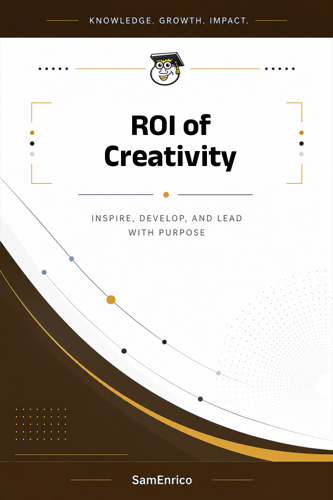
About this book
Free sample
Chapter 1: The Depreciation Curve--– In the winter of 2019, a 112-year-old department store chain called J.H. Mayfield & Co. did something that its board believed was fiscally responsible. It cut the creative budget by 22 percent. The marketing design team was reduced from forty-seven people to twenty-two.
The in-house innovation lab—which had produced exactly zero profitable products in three years—was shuttered entirely. The head of finance circulated a memo celebrating the move: “We are eliminating waste and focusing on what works.”Eighteen months later, Mayfield & Co. filed for Chapter 11 bankruptcy.The post-mortem analysis revealed something uncomfortable. The 22 percent budget cut had saved the company $14 million in operating expenses. But over those same eighteen months, same-store sales had dropped by 12 percent, eroding $210 million in revenue.
The company had saved a dollar and lost fifteen. The board had treated creativity as a discretionary expense—something you cut when times get tight. But the data suggested something else entirely. Creativity was not a cost to be minimized. It was an asset that had been allowed to depreciate.This is not an isolated story.
It is a pattern so common that it has a name in corporate finance circles: the creative depreciation spiral. A company faces margin pressure. It looks for “non-essential” cuts. Creative departments—marketing, design, R&D, product innovation—are historically underfunded because their returns are harder to predict than those of a sales team or a production line. The cuts happen.
Morale drops. The remaining creative talent produces safer, more incremental work. Revenue stagnates or falls. The board cuts again. The spiral continues until the company either reverses course or dies.The purpose of this book is to break that spiral.
But before we can fix the problem, we have to understand a fundamental error that most executives make. They think about creativity as an expense. They should think about it as a capital asset.The Cost Center Trap Walk into almost any mid-sized company and ask the CFO where creativity lives on the balance sheet. You will get a blank stare. Creativity is not there.
It is scattered across the profit and loss statement under line items like “Marketing Expense,” “Research and Development,” and “General…
This is the end of the free sample. Get the eBook to keep going. Buy now
Contents
- Chapter 1
- Chapter 2
- Chapter 3
- Chapter 4
- Chapter 5
- Chapter 6
- Chapter 7
- Chapter 8
- Chapter 9
- Chapter 10
- Chapter 11
- Chapter 12
Details
- Author
- Shin Elenore
- Publisher
- SamEnrico
- Language
- English
- Genre
- Non-Fiction, Self-Help
- Released
- 2026-06-07
- Pages (approx.)
- 155
- Available as
- eBook, Audiobook

Read better in the ZLOADR app
Your eBooks on your phone or tablet. Sign in with your SamEnrico account and start reading.
More by Shin Elenore
 MBSR for Exam PerformanceShin Elenore$11.99
 Dementia Caregiver Stress GuideShin Elenore$11.99Dementia Caregiver Stress GuideShin Elenore$11.99
 Alcohol Withdrawal Safety PlanShin Elenore$11.99
 The Financial Stress and DatingShin Elenore$11.99
 Meditation for Carpal TunnelShin Elenore$11.99
 IFTTT Reminder AppletsShin Elenore$11.99
 Daily Review for AccountantsShin Elenore$11.99
 The Vanishing Fortunes: The 1873 Ballarat Gold Swindle and Family AnnihilationShin Elenore$11.99
 The Mathematicians of Timbuktu: The Golden Age of African NumbersShin Elenore$11.99
 A Collector's Handbook to the AC 90Shin Elenore$11.99
 How to Produce RecordersShin Elenore$11.99
You may also like
 Hong Kong Handover 1997Dunn Johnnie$11.99
 Zumba For Postnatal Recovery CourseNeal Christian$11.99
 Zumba for BeginnersLadner Nikia$11.99
 YouTube Comment Mining GuideHumes Pandora$12.99
 Worry Box MeditationCarlin Rudy$11.99
 Workplace Stress MeditationNguyen Lynn$11.99
 Workplace Stress and Sleep RepairHawley Ivory$11.99
 Workplace Perfectionism CureDelaney Jeffry$11.99
 Workplace Injustice Anger GuideWallen Isabelle$11.99
 Work Addiction and Burnout LinkGreenwood Ester$11.99
 Women in Yoga and WellnessBeattie Galina$11.99
 Women in Stand Up ComedyChun Evangeline$11.99