
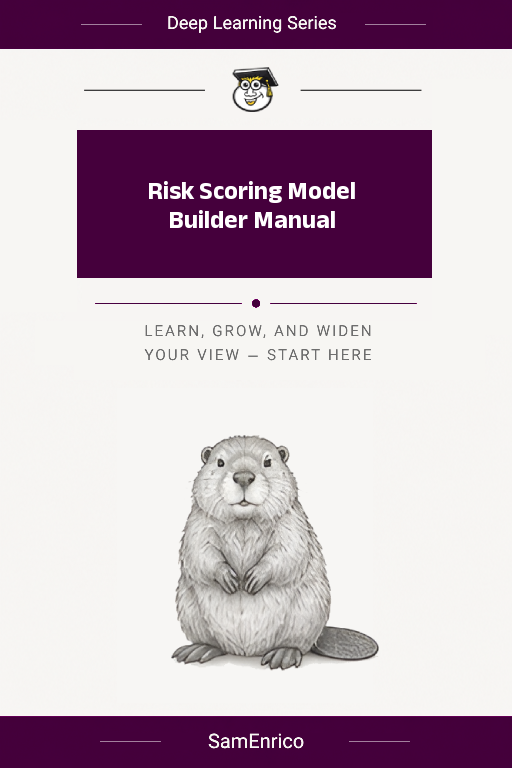
Non-FictionAI OperatorRegulatory TechRisk Guide
Risk Scoring Model Builder Manual
Create custom compliance risk scoring models using
by David Kiana
Create custom compliance risk scoring models using AI from historical audit findings, incident data, and control failures. Includes factor weighting, score calibration, and threshold setting.
Formats
About this book
Free sample
Chapter 1: The $47 Million Blind Spot--The email arrived at 11:47 PM on a Tuesday. Sarah, a compliance director at a mid-sized financial services firm, had been expecting the quarterly audit report for weeks. What she did not expect was the subject line: "Regulatory Finding — Material Weakness — Please Call Immediately."The finding was not that her company had failed an audit. They had passed. Every control tested had received a "satisfactory" rating.
The problem was something far more insidious: the regulator had discovered a pattern of control failures that occurred between audit periods — failures that the binary pass/fail framework had never been designed to detect, let alone prevent.Over the preceding eighteen months, a specific access control had failed intermittently. Dormant accounts were being reactivated without proper review. Privilege creep was going unnoticed. Each individual failure was small, but the aggregate pattern represented a 73% probability of a material breach within the next twelve months. The regulator had calculated this probability using the company's own data — data that Sarah's team had collected but never analyzed probabilistically.The fine: $47 million.
Plus eighteen months of regulatory oversight. Plus the slow, grinding erosion of customer trust.Sarah's mistake was not negligence. It was not incompetence. It was using a risk measurement system that had been obsolete for years without anyone realizing it. She had been flying a plane using instruments that showed the weather from last month.This book is for everyone who never wants to read that email.The Illusion of Binary Compliance Every compliance professional has experienced the cognitive dissonance: an audit concludes with a clean opinion, yet something feels wrong.
Controls that passed testing seem fragile. Incidents occur shortly after audits close. The gap between "compliant" and "actually secure" persists despite everyone's best efforts.This gap is not a failure of individual competence. It is a structural flaw in how organizations have historically measured risk.The Sampling Problem Traditional audits examine a sample. A statistically valid sample, carefully selected, properly documented.
But a sample is still a sample. Even the most rigorous audit examines perhaps 5% of transactions, 10% of user sessions, or…
This is the end of the free sample. Get the eBook to keep going. Buy now
Contents
- Chapter 1
- Chapter 2
- Chapter 3
- Chapter 4
- Chapter 5
- Chapter 6
- Chapter 7
- Chapter 8
- Chapter 9
- Chapter 10
- Chapter 11
- Chapter 12
Details
- Author
- David Kiana
- Publisher
- SamEnrico
- Language
- English
- Genre
- Non-Fiction, AI Operator, Regulatory Tech, Risk Guide
- Released
- 2026-05-30
- Pages (approx.)
- 153
- Available as
- eBook, Audiobook

Read better in the ZLOADR app
Your eBooks on your phone or tablet. Sign in with your SamEnrico account and start reading.
More by David Kiana
 Writing Break Portfolio GuideDavid Kiana$11.99
 The Gut Brain Autism InterventionDavid Kiana$11.99
 Disappointment in Life MilestonesDavid Kiana$11.99
 Jonestown Survivor Escape TestimonyDavid Kiana$11.99
 The Gambling Addiction Withdrawal GuideDavid Kiana$11.99
 The Last Letter from the Lost SquadronDavid Kiana$11.99
 How to Start a Sugarcane Mills BusinessDavid Kiana$11.99
 Green Technology Long Term OutlookDavid Kiana$12.99
 Understanding Large B-cell Diffuse LymphomaDavid Kiana$17.99
 Brushite MiningDavid Kiana$11.99
You may also like
 Hong Kong Handover 1997Dunn Johnnie$11.99
 Zumba For Postnatal Recovery CourseNeal Christian$11.99
 Zumba for BeginnersLadner Nikia$11.99
 YouTube Comment Mining GuideHumes Pandora$12.99
 Worry Box MeditationCarlin Rudy$11.99
 Workplace Stress MeditationNguyen Lynn$11.99
 Workplace Stress and Sleep RepairHawley Ivory$11.99
 Workplace Perfectionism CureDelaney Jeffry$11.99
 Workplace Injustice Anger GuideWallen Isabelle$11.99
 Work Addiction and Burnout LinkGreenwood Ester$11.99
 Women in Yoga and WellnessBeattie Galina$11.99
 Women in Stand Up ComedyChun Evangeline$11.99