
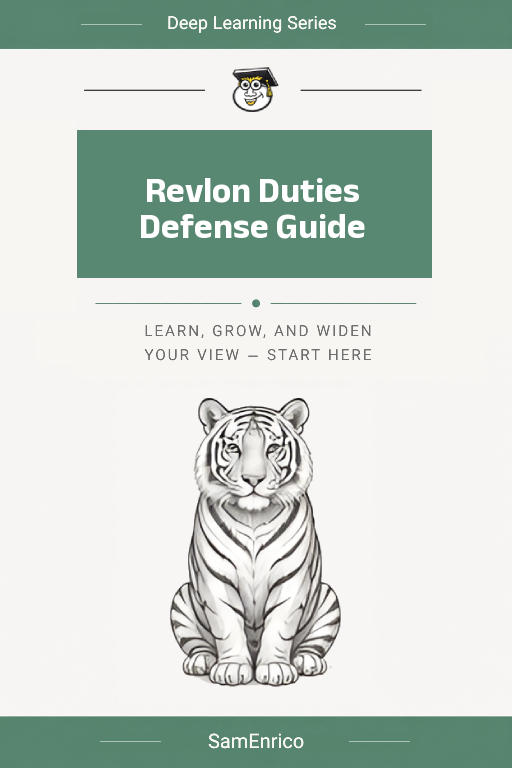
Revlon Duties Defense Guide
Once sale inevitable, maximize shareholder value b
Once sale inevitable, maximize shareholder value by running auction instead of protecting managers.
Formats
About this book
Free sample
Chapter 1: The Inevitability Trap...–- Most directors believe they breach their fiduciary duty by making a bad deal. They are wrong. The far more common breach—the one that appears in nearly every shareholder lawsuit—is failing to recognize when the duty changes. A board can run a flawless auction, hire the best bankers, and negotiate a premium price, but if they started that process three weeks too late, they have already lost. The court will not ask whether the final price was fair.
The court will ask: Why did you wait?This is the Inevitability Trap. It is the single most destructive blind spot in corporate governance, and it has cost shareholders more money than all the bad mergers combined. The trap works like this: a board receives a credible takeover bid. The bid is unsolicited, perhaps even hostile. The CEO urges resistance.
The board adopts a poison pill, hires defensive lawyers, and issues a press release declaring the company is "not for sale." Six months later, the board accepts a lower bid from a different buyer. Shareholders sue. The board's defense? "We ran a thorough process and got the best price available at the time." The court's response? "You should have started the auction six months ago.
You breached your duty the moment you said 'not for sale' when you knew, or should have known, that a sale was inevitable."This chapter provides the diagnostic framework for identifying the precise moment when defensive measures become moot and Revlon duties activate. It is not a theoretical exercise. In Delaware courts, the timing of the Revlon trigger is often the single most litigated issue in sale transactions. Plaintiffs' lawyers pore over board minutes, emails, and calendar entries searching for the earliest date on which a reasonable board would have known that a sale was inevitable. Every day between that date and the date the board actually began an auction is a day of potential liability.
Multiply that by the number of shares outstanding, and you have the basis for a nine-figure damages claim.The chapter details the Delaware courts' three specific…
This is the end of the free sample. Get the eBook to keep going. Buy now
Contents
- Chapter 1
- Chapter 2
- Chapter 3
- Chapter 4
- Chapter 5
- Chapter 6
- Chapter 7
- Chapter 8
- Chapter 9
- Chapter 10
- Chapter 11
- Chapter 12
Details
- Author
- Hamilton Kristy
- Publisher
- SamEnrico
- Language
- English
- Genre
- Non-Fiction, Crisis Management
- Released
- 2026-05-29
- Pages (approx.)
- 158
- Available as
- eBook, Audiobook

Read better in the ZLOADR app
Your eBooks on your phone or tablet. Sign in with your SamEnrico account and start reading.
More by Hamilton Kristy
 Remote Media Communication GuideHamilton Kristy$11.99
 Uber Safety Protocols for DriversHamilton Kristy$11.99
 The Apology NonverbalsHamilton Kristy$11.99
 Gambling Addiction Recovery for Athletes CourseHamilton Kristy$11.99
 Anticipatory Grief TipsHamilton Kristy$11.99
 Rock Climber Flexibility Training GuideHamilton Kristy$11.99
 Daily Review Five Minute RitualHamilton Kristy$11.99
 The Attendance Requirement StressHamilton Kristy$11.99
 Hearst International NewsHamilton Kristy$11.99
 The Silk Road's Shadow Traders: Uncovering the Secret Networks of the Trans-Saharan Spice WarsHamilton Kristy$11.99
 The Blood and Gold of the Peninsular War: How Money Fueled Wellington's TriumphHamilton Kristy$11.99
 Rhythm & Rebellion: The Jazz Age's Secret WeaponHamilton Kristy$11.99
You may also like
 Hong Kong Handover 1997Dunn Johnnie$11.99
 Zumba For Postnatal Recovery CourseNeal Christian$11.99
 Zumba for BeginnersLadner Nikia$11.99
 YouTube Comment Mining GuideHumes Pandora$12.99
 Worry Box MeditationCarlin Rudy$11.99
 Workplace Stress MeditationNguyen Lynn$11.99
 Workplace Stress and Sleep RepairHawley Ivory$11.99
 Workplace Perfectionism CureDelaney Jeffry$11.99
 Workplace Injustice Anger GuideWallen Isabelle$11.99
 Work Addiction and Burnout LinkGreenwood Ester$11.99
 Women in Yoga and WellnessBeattie Galina$11.99
 Women in Stand Up ComedyChun Evangeline$11.99