
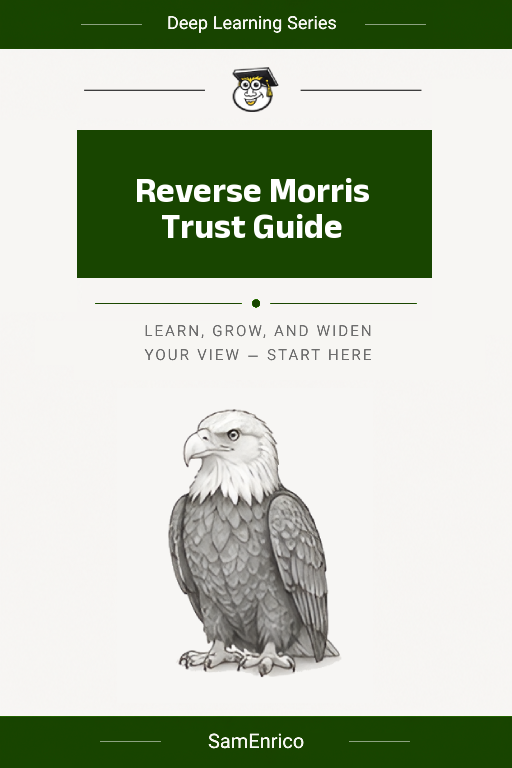
Reverse Morris Trust Guide
Spin off and merge for tax free corporate separati
Spin off and merge for tax free corporate separation. This brief covers complex IRS requirements for this specialized exit structure.
Formats
About this book
Free sample
Chapter 1: The Lobster Trap--For a chief financial officer, few words inspire as much dread as “double taxation.” The scenario plays out in boardrooms across America every quarter: a division once considered core has become a distraction. It is profitable, perhaps generating 200millioninannual EBITDA,butitnolongerfitsthestrategicvision.Theboardwantstosell.Theinvestmentbankershaveidentifiedawillingbuyer.Thepriceisright—200 million in annual EBITDA, but it no longer fits the strategic vision. The board wants to sell. The investment bankers have identified a willing buyer. The price is right—200millioninannual EBITDA,butitnolongerfitsthestrategicvision.Theboardwantstosell.Theinvestmentbankershaveidentifiedawillingbuyer.Thepriceisright—2.5 billion in cash.Then the tax director speaks up.
“That 2.5billionwillbetaxedat212.5 billion will be taxed at 21% at the corporate level,” she says. “That’s 2.5billionwillbetaxedat21525 million gone immediately. Then, when we distribute the remaining 1.975billiontoshareholders,they’llpayanother23.81.975 billion to shareholders, they’ll pay another 23.8% in federal capital gains taxes on the dividend—roughly 1.975billiontoshareholders,they’llpayanother23.8470 million. Total tax bill: nearly $1 billion.”The room goes silent. A transaction that promised to unlock shareholder value now looks like a destruction of value.
The buyer walks away. The division remains. The CEO blames the tax code.This is the lobster trap. It is the reason thousands of corporate divestitures never happen. It is the reason conglomerates stay conglomerates long after their business models have become obsolete.
And it is the problem that the Reverse Morris Trust was designed to solve.The lobster trap metaphor is more apt than most tax practitioners realize. Lobster traps are designed with a simple, cruel geometry: a lobster can enter the trap easily, drawn by the promise of food, but the entrance funnels into a narrow opening lined with inward-pointing wires. The lobster can push through going in, but when it tries to exit, the wires dig in and hold it fast. The trap does not need a locking mechanism. The lobster’s own biology creates the prison.Corporate divestitures are the same.
The tax code does not explicitly prohibit the sale of a subsidiary. The door is wide open. But when a C Corporation tries to exit—trying to convert a non-core division into cash for shareholders—the tax wires dig in. Corporate-level tax. Shareholder-level tax.…
This is the end of the free sample. Get the eBook to keep going. Buy now
Contents
- Chapter 1
- Chapter 2
- Chapter 3
- Chapter 4
- Chapter 5
- Chapter 6
- Chapter 7
- Chapter 8
- Chapter 9
- Chapter 10
- Chapter 11
- Chapter 12
Details
- Author
- Williford Celestine
- Publisher
- SamEnrico
- Language
- English
- Genre
- Non-Fiction, Startup Guide, Tax Free Exit
- Released
- 2026-06-01
- Pages (approx.)
- 154
- Available as
- eBook, Audiobook

Read better in the ZLOADR app
Your eBooks on your phone or tablet. Sign in with your SamEnrico account and start reading.
More by Williford Celestine
 Affirmations for Confidence BuildingWilliford Celestine$11.99
 First Responder Stress GuideWilliford Celestine$11.99
 Goal Line Stand WillpowerWilliford Celestine$11.99
 Talking to Principal About BullyingWilliford Celestine$11.99
 Competitive Analysis Validation ToolWilliford Celestine$11.99
 Intermittent Fasting for DiabetesWilliford Celestine$11.99
 TM for PhysicistsWilliford Celestine$11.99
 Saudi Green Tax CreditsWilliford Celestine$11.99
 HGH Cycling ProtocolsWilliford Celestine$11.99
 The Last of the Mohicans: How One Man Bought Every Surviving Copy of a Lost ClassicWilliford Celestine$11.99
 Mozart's Musical Fireworks: The Boy Who Dazzled EuropeWilliford Celestine$11.99
 Chains of the Forgotten: The Lost Prisoners of Alcatraz’s Secret WingWilliford Celestine$11.99