
Non-FictionAI OperatorInformation GovernanceRetention Management
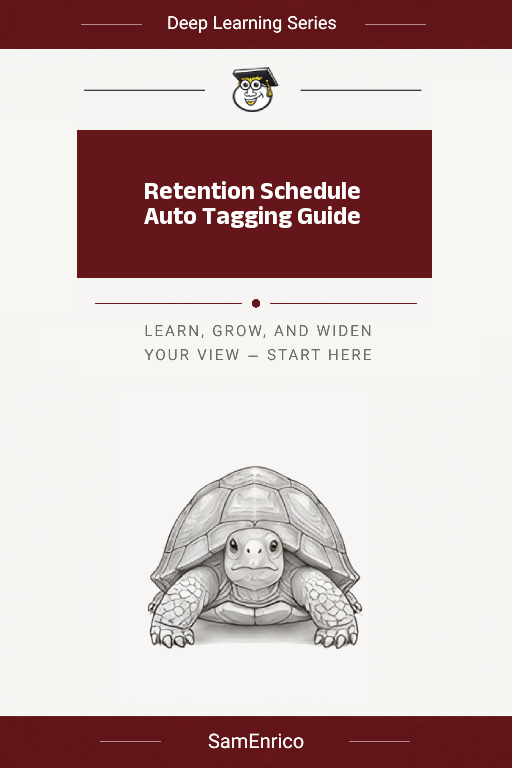
Retention Schedule Auto Tagging Guide
Classify documents into record series and apply re
Classify documents into record series and apply retention rules automatically. Flag records for disposition review when retention periods expire.
Formats
About this book
Free sample
Chapter 1: The Schedule Trap--–- In a windowless conference room on the forty-second floor of a Manhattan high-rise, a senior compliance officer named Sarah stared at a spreadsheet that contained 1,847 rows. Each row represented a Record Series. Each column represented a retention rule, a cutoff trigger, a regulatory citation, or a disposition action. She had been tasked with mapping this spreadsheet—her organization's official retention schedule—into a new automated records management system. The project had a deadline of six months.
Eighteen months later, the spreadsheet had grown to 2,331 rows, the compliance team had turned over twice, and exactly zero documents had been auto-tagged. The system was not the problem. The schedule was.This scene repeats itself daily in legal departments, records management offices, and IT project rooms across the globe. Organizations spend millions of dollars on sophisticated auto-classification and retention enforcement platforms—Microsoft Purview, Feith, Litera, IBM, Open Text—only to discover that the software cannot fix a broken schedule. The vendors promise automation.
The consultants promise efficiency. The regulators promise penalties for failure. But no one warns you about the fundamental truth that this chapter exists to expose: you cannot automate what you have not structured.The Retention Schedule Auto Tagging Guide exists because the market is flooded with books about records management theory and software implementation, but almost nothing bridges the critical gap between the two. That gap is Chapter 1. This chapter is not an overview.
It is not an introduction. It is a surgical dissection of the single most common point of failure in auto-tagging projects: the assumption that your existing retention schedule, as written for human readers, can be fed directly into a machine and expected to work.Over the next forty pages, you will learn why "Date Created plus 7 years" is a trap, why "until superseded" is a poison phrase, and why your legal department's carefully crafted schedule language is probably un-automatable as written. You will learn a new vocabulary: Basis Fields, Cutoff Triggers, Event-Based vs. End-of-Period retention, and the three questions every Record Series must answer before any code is written. You will…
This is the end of the free sample. Get the eBook to keep going. Buy now
Contents
- Chapter 1
- Chapter 2
- Chapter 3
- Chapter 4
- Chapter 5
- Chapter 6
- Chapter 7
- Chapter 8
- Chapter 9
- Chapter 10
- Chapter 11
- Chapter 12
Details
- Author
- Byrne Shawnna
- Publisher
- SamEnrico
- Language
- English
- Genre
- Non-Fiction, AI Operator, Information Governance, Retention Management
- Released
- 2026-05-29
- Pages (approx.)
- 159
- Available as
- eBook, Audiobook

Read better in the ZLOADR app
Your eBooks on your phone or tablet. Sign in with your SamEnrico account and start reading.
More by Byrne Shawnna
 Financial Stress And Food Insecurity GuideByrne Shawnna$11.99
 Vaccine Exemption GuidelinesByrne Shawnna$11.99
 The Sibling Death Childhood LossByrne Shawnna$11.99
 Breathwork ResilienceByrne Shawnna$11.99
 Gaming Relationship Strain GuideByrne Shawnna$11.99
 The Forgiving Teen GuideByrne Shawnna$11.99
 Lawyer Trial PressureByrne Shawnna$11.99
 Pill Factory: The Fall of the Florida Pain ClinicsByrne Shawnna$11.99
 Archimedes: The Mind of SyracuseByrne Shawnna$11.99
 Tesla's Lightning: The Man Who Harnessed the SkyByrne Shawnna$11.99
 How to Become a Athletic TrainerByrne Shawnna$11.99
 The Dancer's Guide to Salsa RuedaByrne Shawnna$11.99
You may also like
 Hong Kong Handover 1997Dunn Johnnie$11.99
 Zumba For Postnatal Recovery CourseNeal Christian$11.99
 Zumba for BeginnersLadner Nikia$11.99
 YouTube Comment Mining GuideHumes Pandora$12.99
 Worry Box MeditationCarlin Rudy$11.99
 Workplace Stress MeditationNguyen Lynn$11.99
 Workplace Stress and Sleep RepairHawley Ivory$11.99
 Workplace Perfectionism CureDelaney Jeffry$11.99
 Workplace Injustice Anger GuideWallen Isabelle$11.99
 Work Addiction and Burnout LinkGreenwood Ester$11.99
 Women in Yoga and WellnessBeattie Galina$11.99
 Women in Stand Up ComedyChun Evangeline$11.99