
Non-FictionSelf-HelpHabit Substitution
Retail Therapy Replacement Guide eBook
Substitutes shopping urges with free, healthy alte
Substitutes shopping urges with free, healthy alternatives.
Formats
Free sample
Chapter 1: The Receipt of Regret--–- The package arrived on a Tuesday. You don't remember ordering it. Or rather, you remember the click—the satisfying little thunk of the "Place Order" button—but the feeling that accompanied it has already evaporated, leaving behind only this: a cardboard box on your doorstep, a slight drop in your bank account, and a vague sense of unease that you can't quite name. You open the box. The item inside is fine.
It's not wrong, exactly. It's just... not the thing you were looking for. You weren't really looking for a thing at all.This is the Receipt of Regret. It is not the grand, catastrophic financial collapse that movies warn you about.
It is quieter, more insidious, and far more common. It is the $40 candle you bought after a terrible work call. The $200 dress you ordered at 11 PM while scrolling in bed. The $15 phone case you didn't need, the fifth one this year, each one purchased in a slightly different emotional state. You tell yourself it's just a little treat.
You deserve it. But when the package arrives, the treat feels hollow. The regret doesn't roar; it whispers. Why did I do that again?If you are reading this book, you already know this whisper. You have felt the gap between the high of the click and the hangover of the arrival.
You may have called it "retail therapy" and laughed it off, or you may have hidden a few packages from your partner, or you may have checked your credit card statement with your eyes half-closed, as if not looking too closely would make the number smaller. This chapter is not here to shame you. It is here to name what is happening, to pull the Receipt of Regret out of the shadow of private guilt and hold it up to the light where it can finally be examined. Because you cannot fix what you cannot see.The Emotional Void: Why "Nothing" Feels Like Something Is Missing Every shopping binge begins with a void. Not a physical empty space in your closet—though that may be how you justify it—but an emotional one.
Psychologists call this a deficit state: a specific feeling of lack that your brain is desperate to resolve. Boredom, loneliness, exhaustion, anxiety, helplessness, anger. These are not pleasant states to inhabit. The human nervous system is wired to seek relief from discomfort, and it will take relief in whatever form is most immediately available. For millions of people today, the most immediately available form of relief is a few taps on a smartphone and the promise of a package in two days.Here is the crucial distinction that most people never make: there is utilitarian shopping and there is emotional shopping.
Utilitarian shopping is buying a new toothbrush because yours is frayed, or a winter coat because your old one no longer zips, or groceries because you need to eat. Emotional shopping is buying something—anything—to change how you feel. The object itself is almost incidental. You are not shopping for a candle; you are shopping for the feeling that a candle represents: calm, coziness, self-care, control. And because no physical object can permanently deliver an emotional state, you will need to shop again.
And again. And again.This book is not about becoming a monk who owns nothing. It is not about deprivation or moral purity. It is about learning to recognize the difference between a need (I am out of toothpaste) and a void (I am lonely, bored, or anxious, and I am reaching for a purchase to numb that feeling). Once you can see the void, you have a choice.
You can continue to fill it with things that will never fit—because you cannot buy your way out of an emotion—or you can learn to fill it with what it actually requires: presence, movement, connection, creation, or rest. All of which, as this book will show you, cost exactly nothing.Doom Spending vs. The Daily Fix: Two Faces of the Same Impulse Not all emotional shopping looks the same. In fact, it tends to cluster into two distinct patterns, and recognizing which one you lean toward is the first step toward replacing it.Doom Spending is shopping driven by large-scale, often global anxiety. You feel powerless about the economy, the climate, political instability, or a pandemic.
You cannot control any of it, so you buy something you can control: a new sweater, a backup generator, a "prepper" supply of canned goods, or simply a small luxury that makes you feel, for a moment, like you are not helpless. Doom spending spiked dramatically during the COVID-19 lockdowns, during the 2008 financial crisis, and during any period of heightened news-cycle dread. The psychology is straightforward: when the world feels chaotic, buying something restores an illusion of order. You may not be able to fix inflation, but you can buy that dress on sale. You may not be able to stop a war, but you can curate the perfect home office.Momentary Stress Spending is smaller, faster, and more frequent.
It is the latte you buy after a frustrating meeting. The $5 trinket at the checkout counter. The "just because" gift you send yourself after an argument with your partner. This kind of spending is not about global chaos; it is about the small, daily abrasions of life. A rude email.
A sleepless night. A cancelled plan. Each micro-stress triggers a micro-purchase, and over the course of a month, those micro-purchases add up to a significant drain on your finances and a significant accumulation of clutter.Both forms of emotional shopping share the same engine: an uncomfortable feeling that you want to escape, and a learned association between "buying" and "feeling better." The association is learned, not innate. No baby is born wanting to swipe a credit card. You were taught—by advertising, by social media, by a culture that equates consumption with self-care—that a purchase is the fastest path to relief.
And because it does provide relief for a few seconds or minutes, the habit is reinforced. This is called negative reinforcement: you remove an unpleasant feeling (anxiety, boredom) by performing an action (shopping), and the removal makes you more likely to repeat the action next time the feeling arises.The problem is not your willpower. The problem is that you have built a neural pathway that says uncomfortable feeling → buy something. This book exists to help you build a new pathway: uncomfortable feeling → free, healthy action that actually addresses the feeling. Not because you are broken, but because your current coping mechanism is expensive, isolating, and temporary.
You deserve a better one.The Shame Spiral: Why Guilt Makes It Worse One of the most destructive aspects of emotional shopping is what happens after the purchase. You click "buy." You feel a brief lift. Then the package arrives, the novelty fades, and you look at your bank account. What follows is almost predictable: shame.You tell yourself you have no discipline. You remember the financial goals you set last month.
You think about the debt you are carrying. You hide the package from your partner or roommates. You swear this…
This is the end of the free sample. Get the eBook to keep going. Buy now
About this book
Details
- Author
- Simpkins Samual
- Publisher
- SamEnrico
- Language
- English
- Genre
- Non-Fiction, Self-Help, Habit Substitution
- Released
- 2026-06-06
- Pages (approx.)
- 136
- Available as
- eBook, Audiobook

Read better in the ZLOADR app
Your eBooks on your phone or tablet. Sign in with your SamEnrico account and start reading.
More by Simpkins Samual
 Breach Notification Template LibrarySimpkins Samual$11.99
 The Monk Who Fasted to DeathSimpkins Samual$11.99
 The Laundromat BedroomSimpkins Samual$11.99
 Dream Incubation GuideSimpkins Samual$11.99
 Gut Health for EnergySimpkins Samual$11.99
 Accessory Lifts Strength GuideSimpkins Samual$11.99
 The TM Beginners Mistake GuideSimpkins Samual$11.99
 Return To Office BurnoutSimpkins Samual$11.99
 The Lost Voyage of the Kaohsiung: A Pacific Rescue MiracleSimpkins Samual$11.99
 Echoes of the Ice: The Lost Library of UgaritSimpkins Samual$11.99
 Blood and Obsidian: The Spy of QuetzalcoatlSimpkins Samual$11.99
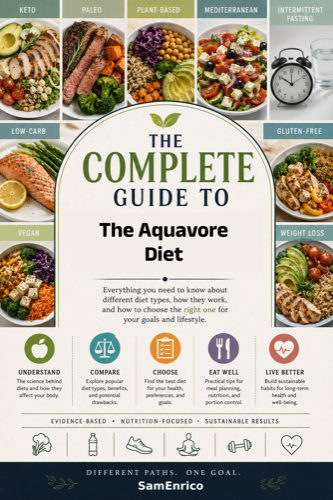 The Complete Guide to the Aquavore DietSimpkins Samual$11.99
You may also like
 Hong Kong Handover 1997Dunn Johnnie$11.99
 Zumba For Postnatal Recovery CourseNeal Christian$11.99
 Zumba for BeginnersLadner Nikia$11.99
 YouTube Comment Mining GuideHumes Pandora$12.99
 Worry Box MeditationCarlin Rudy$11.99
 Workplace Stress MeditationNguyen Lynn$11.99
 Workplace Stress and Sleep RepairHawley Ivory$11.99
 Workplace Perfectionism CureDelaney Jeffry$11.99
 Workplace Injustice Anger GuideWallen Isabelle$11.99
 Work Addiction and Burnout LinkGreenwood Ester$11.99
 Women in Yoga and WellnessBeattie Galina$11.99
 Women in Stand Up ComedyChun Evangeline$11.99