
Non-FictionSelf-HelpCareer Transitions
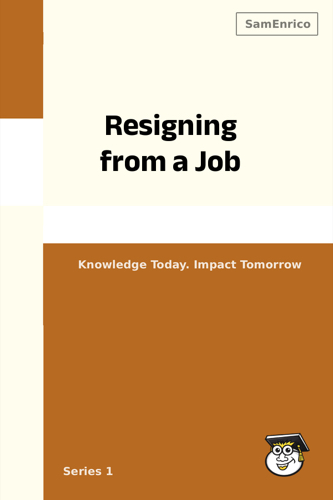
Resigning from a Job
Leaves gracefully without burning bridges.
Leaves gracefully without burning bridges.
Formats
About this book
Free sample
Chapter 1: The Red Flag Audit...--Most people do not quit on a Tuesday afternoon in a moment of calm clarity. They quit on a Thursday after a passive-aggressive email, or on a Monday following a skipped promotion, or in a parking lot cry after a performance review that felt more like an indictment of their soul. The decision to resign is almost always forged in emotion. But the timing of that decision—whether you leave six months too late or exactly when you should—is determined by something else entirely. It is determined by whether you built an early warning system before you needed one.This chapter is that early warning system.
It is not about whether you should quit—that comes later. It is about teaching you how to know, with uncomfortable precision, when the answer is yes. We will dismantle the psychological traps that keep people in dead-end jobs for years. We will build your personal "Kill Criteria"—a written, measurable list of conditions that trigger your exit automatically. And we will draw a sharp, life-saving line between a toxic environment (leave now, skip the negotiation) and a good enough job (boring but salvageable, possibly fixable with better boundaries).By the end of this chapter, you will not be wondering if you should quit.
You will know. And more importantly, you will know exactly which chapters of this book to read next, because not all resignations are the same.The Three Traps That Keep You Stuck Before we build your escape route, we must first map the prison. Behavioral economists and organizational psychologists have identified three nearly universal cognitive traps that cause people to stay in jobs long after the job has stopped serving them. These traps are not signs of weakness. They are features of how the human brain processes loss, identity, and social risk.
But once you see them, they lose their power.Trap Number One: The Sunk Cost Fallacy Imagine you have waited in line for forty-five minutes to buy concert tickets. When you reach the front, you learn the price has doubled. Do you buy…
This is the end of the free sample. Get the eBook to keep going. Buy now
Contents
- Chapter 1
- Chapter 2
- Chapter 3
- Chapter 4
- Chapter 5
- Chapter 6
- Chapter 7
- Chapter 8
- Chapter 9
- Chapter 10
- Chapter 11
- Chapter 12
Details
- Author
- Farrington Kelsey
- Publisher
- SamEnrico
- Language
- English
- Genre
- Non-Fiction, Self-Help, Career Transitions
- Released
- 2026-06-09
- Pages (approx.)
- 120
- Available as
- eBook, Audiobook

Read better in the ZLOADR app
Your eBooks on your phone or tablet. Sign in with your SamEnrico account and start reading.
More by Farrington Kelsey
 The Resentment Release WorkbookFarrington Kelsey$11.99
 IBS And Caffeine ManagementFarrington Kelsey$11.99
 The Acceptance of EmotionsFarrington Kelsey$11.99
 Closing With Call To ActionFarrington Kelsey$11.99
 Alcohol Detox Blood WorkFarrington Kelsey$11.99
 Catherine Philosopher CorrespondenceFarrington Kelsey$11.99
 Gut Master GuideFarrington Kelsey$11.99
 The Silk and the Spy: The Untold Love Affair That Changed Cold War EspionageFarrington Kelsey$11.99
 The Poisoned Medicine: Colombia's Deadly Cartel Conspiracy (1940s)Farrington Kelsey$11.99
 How to Produce Eggshell Acrylic Interior PaintFarrington Kelsey$11.99
 How to Produce Trail and Snack MixesFarrington Kelsey$11.99
 Marketing Strategy Time BlocksFarrington Kelsey$12.99
You may also like
 Hong Kong Handover 1997Dunn Johnnie$11.99
 Zumba For Postnatal Recovery CourseNeal Christian$11.99
 Zumba for BeginnersLadner Nikia$11.99
 YouTube Comment Mining GuideHumes Pandora$12.99
 Worry Box MeditationCarlin Rudy$11.99
 Workplace Stress MeditationNguyen Lynn$11.99
 Workplace Stress and Sleep RepairHawley Ivory$11.99
 Workplace Perfectionism CureDelaney Jeffry$11.99
 Workplace Injustice Anger GuideWallen Isabelle$11.99
 Work Addiction and Burnout LinkGreenwood Ester$11.99
 Women in Yoga and WellnessBeattie Galina$11.99
 Women in Stand Up ComedyChun Evangeline$11.99