
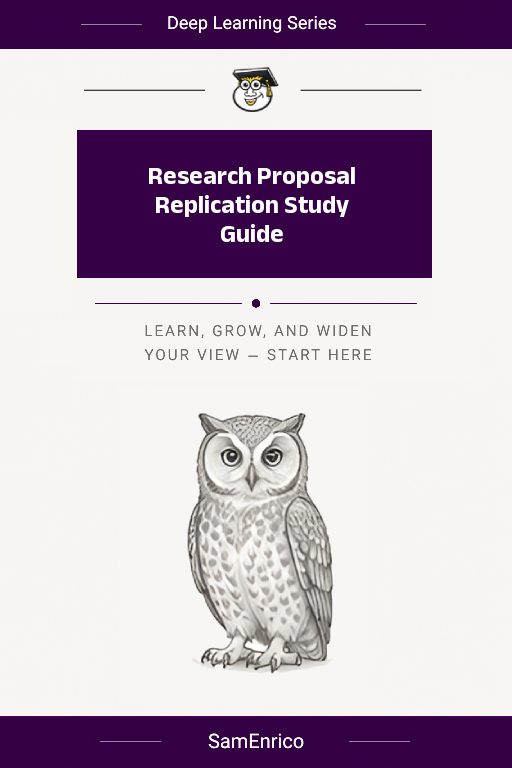
Research Proposal Replication Study Guide Audiobook
Justify direct or conceptual replication by showin
Justify direct or conceptual replication by showing theoretical importance and methodological improvements.
Formats
Free sample
Chapter 1: The Permission Slip--When I first proposed a replication study for my dissertation, my advisor looked at me like I had suggested we burn down the department’s copy machine and dance around the ashes. “That’s not original,” she said. “You need to find something new.” I nodded, walked back to my office, and spent the next six weeks inventing a study that no one would ever replicate because it was too complicated, too expensive, and frankly not very interesting. I collected the data, ran the analyses, found a p-value just below .05, wrote it up, and graduated. And then I never thought about that study again.That is not science.
That is a ritual.Somewhere along the way, academic research stopped being about discovering truth and started being about producing novelty. We reward the shiny, the surprising, the counterintuitive—preferably with a p-value that sparkles. We punish the mundane, the confirmatory, the act of checking someone else’s work. A graduate student who proposes to replicate a famous study is told they lack ambition. A faculty member who publishes a replication is told they lack impact.
And so the cycle continues: novel study after novel study, each one a fresh start, each one pretending that nothing came before it that needed verifying.This book exists because that cycle is broken.The replication crisis of the 2010s did not happen because a few bad actors faked their data. It happened because the incentive structure of science systematically discouraged the one activity that separates science from storytelling: checking your work. When a hundred studies were re-run in the early 2010s, only about forty percent produced the same results. Think about that. If a surgeon told you that your operation had a forty percent chance of working, you would find another surgeon.
If a bridge builder told you that forty percent of their bridges stayed standing, you would not drive across. But in psychology, medicine, economics, and even some corners of physics, we have been publishing findings with a success rate that would get any other profession sued into oblivion.The good news is that the crisis is over. Not because everything is fixed—it isn’t—but because the conversation has shifted. Replication is no longer a dirty word. Major journals now publish replication studies.
Funding agencies set aside money for replication projects. And most importantly, the best graduate programs now teach replication as a…
This is the end of the free sample. Get the Audiobook to keep going. Buy now
About this book
Details
- Author
- Santana Rosalee
- Publisher
- SamEnrico
- Language
- English
- Genre
- research, Student's Shortcut
- Released
- 2026-05-30
- Pages (approx.)
- 147
- Available as
- eBook, Audiobook

Listen in the VoxFlicks app
Audiobooks and audio dramas wherever you go. Sign in with your SamEnrico account and press play.
More by Santana Rosalee
 The Trance Depth Scale WorkbookSantana Rosalee$11.99
 The Anti Imposter ManifestoSantana Rosalee$11.99
 The Balloon Release TechniqueSantana Rosalee$11.99
 Anti Dilution Provisions DatabaseSantana Rosalee$11.99
 Anger In LGBTQ CouplesSantana Rosalee$11.99
 The Restaurant Chef Stress ManualSantana Rosalee$11.99
 Pet Loss For BuddhistsSantana Rosalee$11.99
 OCD and AutismSantana Rosalee$11.99
 Gov Mayor Master GuideSantana Rosalee$11.99
 The Bone Orchard's Guardian: The Tale of the AdzeSantana Rosalee$11.99
 The Silk Road of Code: Al-Kashi’s Mathematical Legacy in Central AsiaSantana Rosalee$11.99
 Screams in the Sky: The I-35W Bridge Collapse and the Amusement Park That Wasn'tSantana Rosalee$11.99
You may also like
 Harvard Extension School Research OpportunitiesSykes Olimpia$11.99
 Translational Research Potential Without PubsGibbs Wm$12.99
 Research Supervision Models ComparedPonder Peg$12.99
 Research Replication Projects Without PubsMilam Susanna$12.99
 Research Proposal That Hides No PublicationsPatel Maisha$12.99
 Research Proposal Scoring RubricOsullivan Mammie$12.99
 Research Proposal Sample AnalysisJasper Faustino$12.99
 Research Proposal Revision Strategies ManualWhiting Mavis$12.99
 Research Proposal Revision ProcessWhalen Dayna$12.99
 Research Proposal Problem Statement ManualRunyon Aja$12.99
 Research Proposal Peer Review Process GuideTurnbull Almeda$12.99
 Research Proposal Peer Review GuideCullen Danyel$12.99