
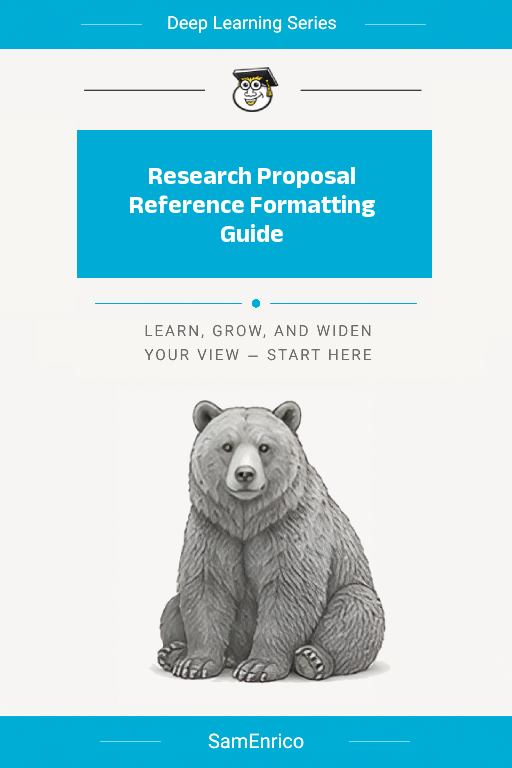
Research Proposal Reference Formatting Guide Audiobook
Master APA MLA or Chicago citations to avoid techn
Master APA MLA or Chicago citations to avoid technical rejections before content is even read.
Formats
Free sample
Chapter 1: The Corpse on Page One--–- Dr. Elena Vasquez had spent eighteen months designing her study on cognitive decline in bilingual aging populations. She had secured buy-in from three collaborating universities, pre-registered her hypotheses, and obtained IRB approval across four institutions. Her literature review was meticulous. Her methodology was innovative.
Her budget justification was a work of art. The proposal landed on the desk of Dr. James Okonkwo, a senior editor at a major research foundation, at 9:47 AM on a Tuesday. By 9:52 AM, it was in the rejection pile. Dr.
Okonkwo had not read a single sentence of her literature review. He had not evaluated her methodology. He had not even glanced at her budget. What he saw—in those first five minutes—was a reference list with three different font sizes, a parenthetical citation that read "(Smith et. al., 2019)" with an extra period after "al," and a missing hanging indent on the sixth reference.
He did not think, "This researcher might have made a typo." He thought, "If she cannot follow basic formatting rules, how can I trust her to follow research protocols?" Elena’s brilliant study died on page one. Not because the science was wrong. Because the formatting was.This chapter exists to ensure that never happens to you.The Thirty-Second Judgement: What Reviewers Actually Do Before we teach you how to format citations correctly—and we will, extensively, in Chapters 3 through 5—we must first understand the psychological reality of the review process. Most new researchers believe that proposals are read carefully, line by line, with reviewers weighing the intellectual merit of each argument. This is a comforting fiction.
The truth is far more brutal and far more useful to know.Reviewers are overworked. A typical grant reviewer at a federal agency like the National Science Foundation or the National Institutes of Health reads between fifty and one hundred proposals per cycle. Each proposal is expected to receive between fifteen and thirty minutes of attention. But reviewers also have full-time jobs: running labs, teaching courses, advising students, serving on committees. The actual time spent on a first pass of a proposal is often closer to five minutes.
Some reviewers admit to as little as thirty seconds before making an initial "keep or reject" judgment. This is not laziness or malice. It is cognitive triage. Faced with an overwhelming volume of material, the brain creates shortcuts.In that…
This is the end of the free sample. Get the Audiobook to keep going. Buy now
About this book
Details
- Author
- Currier Dorla
- Publisher
- SamEnrico
- Language
- English
- Genre
- research, Student's Shortcut
- Released
- 2026-05-29
- Pages (approx.)
- 142
- Available as
- eBook, Audiobook

Listen in the VoxFlicks app
Audiobooks and audio dramas wherever you go. Sign in with your SamEnrico account and press play.
More by Currier Dorla
 Medical Appointment TriggersCurrier Dorla$11.99
 Synthetic Biology GuideCurrier Dorla$11.99
 Occupational Chemical Exposure GuideCurrier Dorla$11.99
 Senior Housing Subsidy GuideCurrier Dorla$11.99
 Phobia Release Script TemplatesCurrier Dorla$11.99
 Pet Loss For VeterinariansCurrier Dorla$11.99
 Thread Lift Collagen Stimulation GuideCurrier Dorla$11.99
 Neighbor Dispute AngerCurrier Dorla$11.99
 Time Blocking For ADHDCurrier Dorla$11.99
 Leaked: The Royal Scandal That Shook a KingdomCurrier Dorla$11.99
 The Lament of Erysichthon: A Feast of ConsequencesCurrier Dorla$11.99
 The Ballad of Beowulf: Heroic Tales of Ancient EnglandCurrier Dorla$11.99
You may also like
 Harvard Extension School Research OpportunitiesSykes Olimpia$11.99
 Translational Research Potential Without PubsGibbs Wm$12.99
 Research Supervision Models ComparedPonder Peg$12.99
 Research Replication Projects Without PubsMilam Susanna$12.99
 Research Proposal That Hides No PublicationsPatel Maisha$12.99
 Research Proposal Scoring RubricOsullivan Mammie$12.99
 Research Proposal Sample AnalysisJasper Faustino$12.99
 Research Proposal Revision Strategies ManualWhiting Mavis$12.99
 Research Proposal Revision ProcessWhalen Dayna$12.99
 Research Proposal Problem Statement ManualRunyon Aja$12.99
 Research Proposal Peer Review Process GuideTurnbull Almeda$12.99
 Research Proposal Peer Review GuideCullen Danyel$12.99