
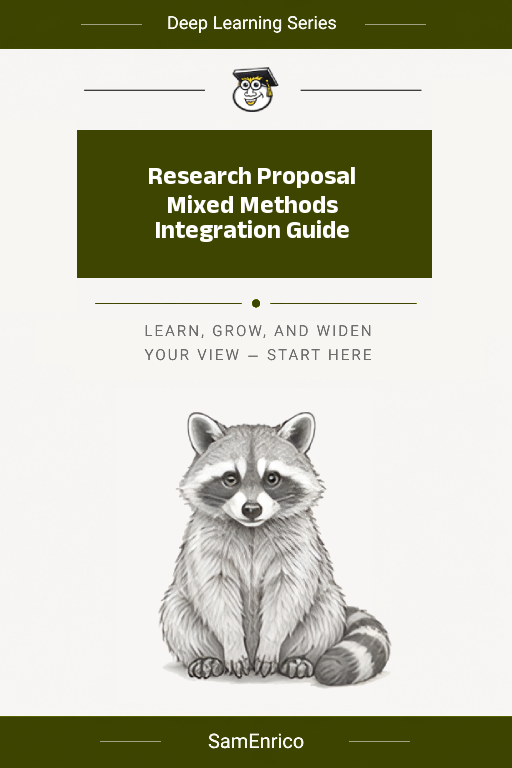
Research Proposal Mixed Methods Integration Guide
Combine qualitative and quantitative components wi
Combine qualitative and quantitative components with clear integration points and meta inference strategies.
Formats
About this book
Free sample
Chapter 1: The Integration Imperative--The most expensive mistake in academic research is not a failed hypothesis or a null finding. It is the quiet, unacknowledged waste that occurs when a researcher collects qualitative interviews and quantitative surveys, analyzes them separately, writes them up in adjacent chapters, and calls the result “mixed methods.” This book exists because that mistake has become standard practice. Doctoral committees approve it. Grant reviewers overlook it. Journals publish it.
And yet, from a methodological standpoint, collecting two kinds of data without a deliberate, transparent mechanism for making them speak to one another is not mixed methods at all. It is multimethod research dressed in borrowed clothing. The difference is not semantic. It is the difference between a sum and a synthesis, between description and discovery, between a proposal that merely ticks a box and one that transforms how we understand a problem.If you are reading this book, you have likely already committed to using mixed methods in your dissertation or grant proposal. You may have taken a course, read a textbook, or heard a advisor say that mixed methods is “powerful” or “cutting‑edge.” But somewhere between that initial enthusiasm and the blank page of your proposal, you may have encountered a troubling question: How exactly do I make these two things work together?
The textbooks tell you what mixed methods is. They give you typologies and diagrams and philosophical justifications. What they rarely give you is a builder’s blueprint for integration—the specific, actionable steps for designing a study where the qualitative and quantitative strands are not merely concurrent but conversational, not merely sequential but synergistic.This chapter is the foundation upon which the entire book rests. It does three things. First, it draws a clear and consequential line between multimethod research (doing two things separately) and truly mixed methods research (creating a whole greater than the sum of its parts).
Second, it introduces the concept of yield—the unique insights that emerge only from the interface between qualitative and quantitative data—and its unhappy opposite, research waste. Third, it provides a practical framework for rewriting…
This is the end of the free sample. Get the eBook to keep going. Buy now
Contents
- Chapter 1
- Chapter 2
- Chapter 3
- Chapter 4
- Chapter 5
- Chapter 6
- Chapter 7
- Chapter 8
- Chapter 9
- Chapter 10
- Chapter 11
- Chapter 12
Details
- Author
- Granger Daysi
- Publisher
- SamEnrico
- Language
- English
- Genre
- research, Student's Shortcut, Mixed Methods
- Released
- 2026-05-30
- Pages (approx.)
- 160
- Available as
- eBook, Audiobook

Read better in the ZLOADR app
Your eBooks on your phone or tablet. Sign in with your SamEnrico account and start reading.
More by Granger Daysi
 The Real Killer Still FreeGranger Daysi$11.99
 Reconstruction of Cult HomicidesGranger Daysi$11.99
 Bedwetting and Dream ConnectionGranger Daysi$11.99
 Primary Insurance Amount GuideGranger Daysi$11.99
 Peg System For PharmacologyGranger Daysi$11.99
 Partition Of India 1947Granger Daysi$11.99
 Dream Journaling for CreativityGranger Daysi$11.99
 Pomodoro for Police OfficersGranger Daysi$11.99
 The Vanishing of the Last Viking KingGranger Daysi$11.99
 The Magic Realism Revolution: Gabriel García Márquez and Europe's Literary Awakening (1980-2000)Granger Daysi$11.99
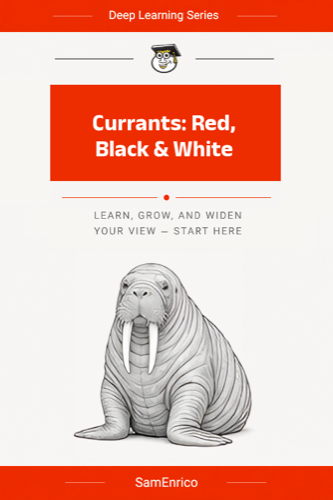 Currants: Red, Black & WhiteGranger Daysi$11.99
 How to Produce a Potato PlanterGranger Daysi$11.99
