
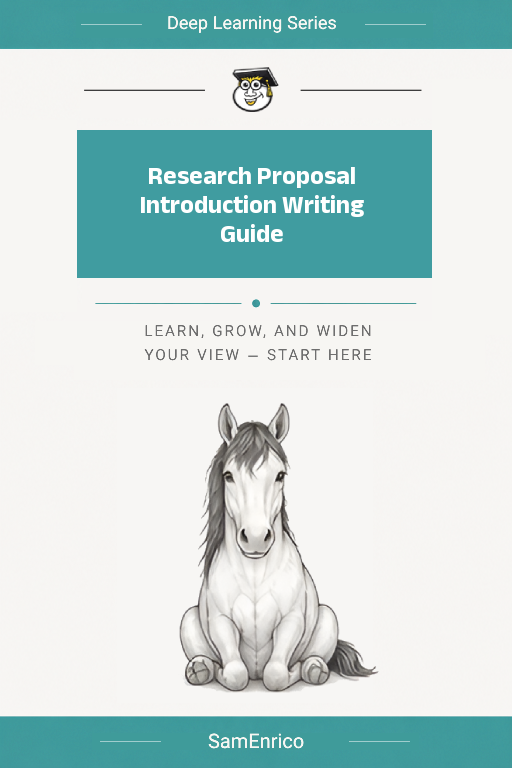
Research Proposal Introduction Writing Guide
Move from broad context to specific gap in five pa
by Crump Altha
Move from broad context to specific gap in five paragraphs that establish your scholarly authority.
Formats
About this book
Free sample
Chapter 1: The Bleeding Page--Your introduction is bleeding out from paragraph two, and you do not even know it.The reviewer has already decided. Not after reading your methods. Not after evaluating your significance statement. Not even after finishing your introduction. The decision happened somewhere between the first sentence of paragraph two and the third sentence of paragraph three—a span of approximately ninety words and eleven seconds of reading time.
You were still setting up background. They were already checking out.This is not an exaggeration. It is the consensus finding from decades of research on grant proposal review processes, synthesized across the major academic writing guides that dominate the best-seller lists. Booth, Colomb, and Williams documented it in The Craft of Research. Swales encoded it in his CARS model.
Graff and Birkenstein built an entire pedagogical movement around the single most important sentence in academic writing. And yet, year after year, thousands of research proposals—many containing genuinely good ideas, solid methods, and important questions—are rejected not because the research is weak, but because the introduction failed to do its job.The job of an introduction is not to summarize. The job of an introduction is to wound.Before you recoil from that metaphor, consider what a wound does. A wound creates urgency. A wound demands attention.
A wound cannot be ignored. When you cut your finger, you do not continue typing. You stop. You look. You address the wound.
That is exactly what your introduction must do to the reviewer: create a small, sharp wound of intellectual curiosity that forces them to stop skimming and start reading.Most writers get this exactly backwards. They believe the introduction is a gentle on-ramp—a polite invitation to consider their topic. They start broad, then narrow. They establish common ground. They provide necessary background.
They define terms. They cite foundational sources. And somewhere around paragraph four, they finally get around to the problem.By then, the reviewer is gone.The "And Then?" Phenomenon Let me show you what this looks like in practice. Here is a real opening paragraph from a rejected…
This is the end of the free sample. Get the eBook to keep going. Buy now
Contents
- Chapter 1
- Chapter 2
- Chapter 3
- Chapter 4
- Chapter 5
- Chapter 6
- Chapter 7
- Chapter 8
- Chapter 9
- Chapter 10
- Chapter 11
- Chapter 12
Details
- Author
- Crump Altha
- Publisher
- SamEnrico
- Language
- English
- Genre
- research, Student's Shortcut
- Released
- 2026-05-30
- Pages (approx.)
- 157
- Available as
- eBook, Audiobook

Read better in the ZLOADR app
Your eBooks on your phone or tablet. Sign in with your SamEnrico account and start reading.
More by Crump Altha
 Triggers and Eating BehaviorsCrump Altha$11.99
 Drone Delivery InvestmentCrump Altha$11.99
 Sam Sheppard Case Cold Case ReviewCrump Altha$11.99
 Postpartum Oversupply ManagementCrump Altha$11.99
 The IBS Sleep ConnectionCrump Altha$11.99
 Pet Loss For Shelter WorkersCrump Altha$11.99
 CGRP Antagonist GuideCrump Altha$11.99
 Mario Cuomo SonCrump Altha$11.99
 Passive Aggressive PartnerCrump Altha$11.99
 Raven’s Shadow: A Spy Among the SpiritsCrump Altha$11.99
 The Thinkers' Revolution: Enlightenment Minds That Lit the WorldCrump Altha$11.99
 Frozen Echoes: The Lost Expedition of the KarlukCrump Altha$11.99
You may also like
 Scientific Research On TM GuideMartens Nathanial$11.99
 Research Proposal Methodology Section MasteryPauley Debroah$11.99
 Research Proposal Appendix CompilationRaines Tyisha$11.99
 Academic Researcher Distraction GuideFord Virgil$11.99
 TM Research and ScienceCovert Nicki$11.99
 Social Anxiety Research ReviewRoberge Cole$11.99
 Research Proposal Significance Section GuideBock Tory$12.99
 Research Proposal Reviewer PsychologyLugo Tawanda$11.99
 Research Proposal Research Questions DesignLara Robbi$11.99
 Research Proposal References and CitationsPatten Shanice$11.99
 Research Proposal Mixed Methods DesignCameron Omega$11.99
 Research Proposal Data Management PlanAnderson Roberto$12.99