
researchStudent's ShortcutMaster Thesis
Research Proposal for Master Thesis eBook
Scale a proposal appropriately for a two year mast
Scale a proposal appropriately for a two year master's project.
Formats
Free sample
Chapter 1: The 24-Month Trap--Most master’s students begin their thesis journey with a hidden flaw buried inside their ambition. They do not know it yet. Their advisors may not have told them. The flaw is not a lack of intelligence, poor writing skills, or a weak work ethic. The flaw is far more subtle and far more dangerous.
It is the assumption that a master’s thesis should look like a scaled-down Ph D.This assumption has derailed more graduate careers than any other single cause. Students who fall into this trap spend their first six months reading hundreds of papers, their next six months collecting far too much data, and their final twelve months drowning in analysis they never learned how to perform. Some of them finish—exhausted, bitter, and late. Many do not finish at all. They join the silent statistics of master’s programs across the country: students who passed their coursework, satisfied their language requirements, and completed their comprehensive exams, only to disappear into the fog of an over-scoped, under-planned thesis project.This book exists to prevent that outcome.Before you write a single page of your proposal, before you schedule your first committee meeting, before you open a single PDF, you need to internalize one truth: a successful master’s thesis is a training exercise in focused, systematic inquiry—not a miniature dissertation.
The goal is not to change your field. The goal is to demonstrate that you can design, execute, and defend a modest, credible research project within a fixed timeframe. That is it. That is the entire game.This chapter will rewire your understanding of what a master’s thesis should be. It will draw a clear line between doctoral work, master’s work, and non-thesis options.
It will give you a hard reality check on page counts, timelines, and scope. And it will end with a self-diagnostic quiz that will tell you—right now—whether you are already heading into the 24-month trap.The Three Levels of Graduate Research Projects Every incoming master’s student has seen a Ph D dissertation. You may have read one during your undergraduate research methods course. You may have attended a friend’s dissertation defense. You may have skimmed a few chapters while deciding on your own topic.
Whatever your exposure, you have absorbed a mental model of what “serious research” looks like. That model is almost certainly calibrated to the wrong level.Let us correct that calibration now.Level One: The Doctoral Dissertation A Ph D dissertation makes a major, original contribution to a field. The key word is major. A doctoral project typically involves multiple studies, multiple contexts, or multiple data sources triangulated against each other. A dissertation in psychology might include three experiments testing the same hypothesis under different conditions.
A dissertation in political science might compare policy outcomes across three countries or four decades. A dissertation in education might combine a large-scale survey, a set of interviews, and an analysis of administrative data.The doctoral student is expected to demonstrate not just competence but mastery. They must show that they can identify a gap in the literature, design a rigorous study to address that gap, execute that study independently, analyze the results using appropriate techniques, and situate their findings within the broader theoretical conversation. The standard length for a Ph D dissertation in most social science and humanities fields ranges from 200 to 300 pages. The timeline is typically four to seven years.Level Two: The Master’s Thesis A master’s thesis makes a modest, demonstrable contribution in a single context.
The key words are modest and single context. Where a doctoral student might ask, “How does social media use affect mental health across three different age groups in two countries?” a master’s student asks, “How does daily Instagram use correlate with anxiety scores among 14-to-16-year-olds in a single urban high school?”Notice what changed. The doctoral question compares across groups and across nations. The master’s question stays inside one group and one location. The doctoral question requires multiple data collection efforts.
The master’s question requires one.This does not mean the master’s thesis is trivial. A deep, focused answer to a small question is often more impressive than a shallow treatment of a large one. A master’s student who conducts fifteen in-depth interviews with teenagers in one school and produces a nuanced, theoretically-grounded analysis of their Instagram use has done excellent work. A master’s student who tries to survey five hundred teenagers across three schools, conduct focus groups with their parents, and analyze school district social media policies all at once has done something else entirely: they have guaranteed their own failure.The standard length for a master’s thesis in most social science and humanities fields ranges from 125 to 150 pages, including figures, tables, and references. The timeline is typically eighteen to twenty-four months from start to finish.Level Three: The Major Paper (Non-Thesis Option)Some master’s programs offer a major paper option in place of a thesis.
This is not a research study. It is a comprehensive literature review that synthesizes existing research on a specific topic and identifies directions for future inquiry. A major paper makes no claim to new empirical findings. It does not require IRB approval, data collection, or statistical analysis. It demonstrates that the student can read widely, think critically, and write clearly.
The length is typically 50 to 75 pages.The major paper is not a “lesser” option. It is a different kind of training. Students who plan to enter professional practice (social work, public administration, teaching) often choose the major paper because it focuses on applying existing knowledge rather than generating new knowledge. Students who plan to pursue a Ph D almost always choose the thesis because it provides essential research training. Neither choice is superior.
They are simply different paths.Why This Distinction Matters If you are writing a master’s thesis, you are aiming for Level Two. Not Level One. Not Level Three. Level Two.This sounds obvious. But in practice, master’s students consistently pitch Level One projects to their advisors.
They propose comparing three different populations. They propose collecting both survey and interview data without a clear rationale for why both are needed. They propose using advanced statistical techniques they have never learned. They propose timelines that would be ambitious for a Ph D student, let alone a master’s student with two years and a full course load.When their advisors say “this is too much,” these students hear “you are not smart enough.” That is not what their advisors mean. Their advisors mean: “You have not yet learned how to scope a project correctly.
Let me teach you.”This chapter is the first lesson.The Hard Reality Check: Pages, Pages, Pages Let us talk about page counts. They matter less than you think, but they reveal more than you realize.A typical master’s thesis runs 125 to 150 pages. That sounds intimidating. But here is what those pages actually contain:Chapter 1: Introduction (10-15 pages). You introduce your topic, state your problem, articulate your purpose, and preview your study.Chapter 2: Literature Review (25-35 pages).
You synthesize existing research, identify your gap, and establish your theoretical framework.Chapter 3: Methodology (15-20 pages). You describe your research…
This is the end of the free sample. Get the eBook to keep going. Buy now
About this book
Details
- Author
- Broughton Everette
- Publisher
- SamEnrico
- Language
- English
- Genre
- research, Student's Shortcut, Master Thesis
- Released
- 2026-06-09
- Pages (approx.)
- 159
- Available as
- eBook, Audiobook

Read better in the ZLOADR app
Your eBooks on your phone or tablet. Sign in with your SamEnrico account and start reading.
More by Broughton Everette
 Triathlon Transition HypnosisBroughton Everette$11.99
 Test Anxiety Coping WorkbookBroughton Everette$11.99
 Tana Mongeau TanaconBroughton Everette$11.99
 Venezuelan Family Reunification GuideBroughton Everette$11.99
 Shortage Management StrategiesBroughton Everette$11.99
 Self Esteem for Aging AcademicBroughton Everette$11.99
 European Talent AttractionBroughton Everette$11.99
 Tangaroa's Whisper: The Vanishing Navigator of the PacificBroughton Everette$11.99
 Viper's Crown: The Untold Rise of Queen TomyrisBroughton Everette$11.99
 Growing DiplolaenaBroughton Everette$11.99
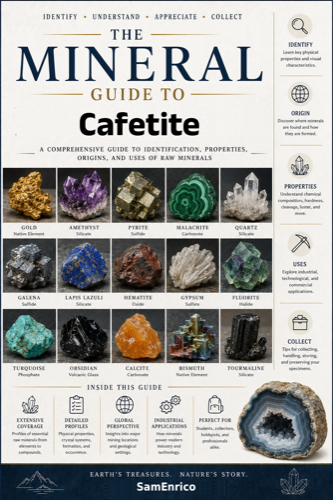 The Mineral Guide to CafetiteBroughton Everette$11.99
 Cooperative Green Energy FinancingBroughton Everette$12.99
You may also like
 Scientific Research On TM GuideMartens Nathanial$11.99
 Research Proposal Methodology Section MasteryPauley Debroah$11.99
 Research Proposal Appendix CompilationRaines Tyisha$11.99
 Academic Researcher Distraction GuideFord Virgil$11.99
 TM Research and ScienceCovert Nicki$11.99
 Social Anxiety Research ReviewRoberge Cole$11.99
 Research Proposal Significance Section GuideBock Tory$12.99
 Research Proposal Reviewer PsychologyLugo Tawanda$11.99
 Research Proposal Research Questions DesignLara Robbi$11.99
 Research Proposal References and CitationsPatten Shanice$11.99
 Research Proposal Mixed Methods DesignCameron Omega$11.99
 Research Proposal Data Management PlanAnderson Roberto$12.99