
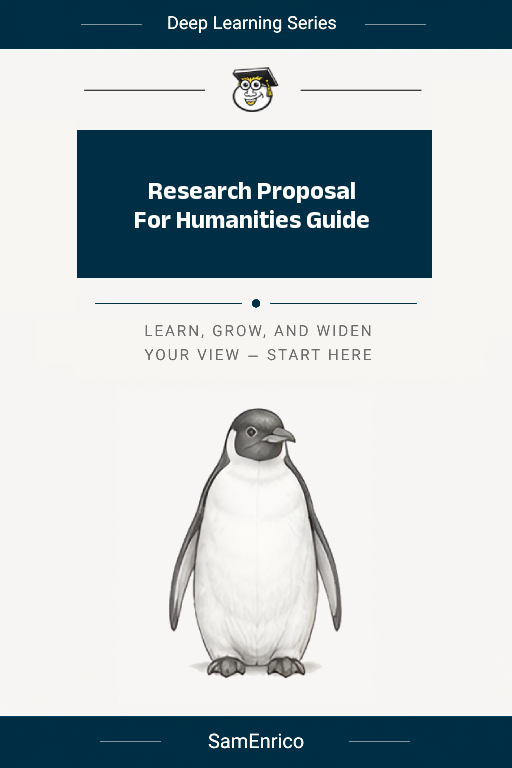
Research Proposal For Humanities Guide Audiobook
Focus on archival access theoretical frameworks an
Focus on archival access theoretical frameworks and original interpretation in arts and humanities proposals.
Formats
Free sample
Chapter 1: The Ghost in the Finding Aid--–- You think your problem is that you haven't found the right document. That's wrong. Your problem is that you believe "finding" is the hard part. The hard part is proving that what's missing matters more than what is present. This chapter will ruin the treasure hunt for you forever.
Good.The Lie They Told You About Research Every graduate student hears some version of the same story. You will go to the archive. You will open a box. Inside that box, waiting like a buried artifact, will be The Document. This document will contain the evidence you need.
You will return home, write your proposal, and the funding will follow.This is a fairy tale. Worse, it is a fairy tale that produces failed proposals.The truth is more uncomfortable but infinitely more generative: archives are not neutral warehouses of facts. They are mausoleums of selection. Every document that survives does so because someone, at some point, decided it was worth keeping. And every decision to keep something is simultaneously a decision to let something else disappear.
The archivist who labeled a folder "Miscellaneous" made a theoretical choice. The librarian who cataloged a collection of letters under "Personal Correspondence" rather than "Political Activism" made an argument about what matters. The donor who burned her mother's diaries before donating the rest made an intervention into history.Your proposal's job is not to pretend these choices didn't happen. Your proposal's job is to name them, analyze them, and build an argument on their ruins.The Three Confusions That Kill Proposals Before They Begin Before we can build better proposals, we need to clear away three misunderstandings that plague humanities research. These confusions appear in draft after draft, and they consistently signal to reviewers that the applicant has not yet learned to think critically about archives.Confusion One: The Archive as a Place Most first-time proposal writers treat "the archive" as a location.
"I will go to the British Library," they write, or "I will consult the archives of the Catholic Church in Rome." This is not wrong, but it is incomplete. An archive as a physical site is a building with reading rooms, desks, pencils that cannot be removed, and staff who have seen hundreds of researchers just like you.But reducing the archive to its physical form misses everything that matters. Two different researchers…
This is the end of the free sample. Get the Audiobook to keep going. Buy now
About this book
Details
- Author
- Hutcherson Leta
- Publisher
- SamEnrico
- Language
- English
- Genre
- research, Student's Shortcut
- Released
- 2026-06-01
- Pages (approx.)
- 124
- Available as
- eBook, Audiobook

Listen in the VoxFlicks app
Audiobooks and audio dramas wherever you go. Sign in with your SamEnrico account and press play.
More by Hutcherson Leta
 Edge Computing CapitalHutcherson Leta$11.99
 Sleep Disturbance TriggersHutcherson Leta$11.99
 Essential Vitamins Daily GuideHutcherson Leta$11.99
 Sheppard Case Bloody HandprintHutcherson Leta$11.99
 The Sales Presentation PlaybookHutcherson Leta$11.99
 Permissive vs Authoritarian ScriptsHutcherson Leta$11.99
 Sound Sensitivity MigraineHutcherson Leta$11.99
 Self Care Time BlockingHutcherson Leta$11.99
 Anger And Trauma BondHutcherson Leta$11.99
 The Iron Poet: Isambard Kingdom Brunel and the Victorian Age of IngenuityHutcherson Leta$11.99
 Silk and Sabotage: The Duchess Who Outmaneuvered the CrownHutcherson Leta$11.99
 The Lost Excalibur: Secrets of the Forgotten SwordHutcherson Leta$11.99
You may also like
 Scientific Research On TM GuideMartens Nathanial$11.99
 Research Proposal Methodology Section MasteryPauley Debroah$11.99
 Research Proposal Appendix CompilationRaines Tyisha$11.99
 Academic Researcher Distraction GuideFord Virgil$11.99
 TM Research and ScienceCovert Nicki$11.99
 Social Anxiety Research ReviewRoberge Cole$11.99
 Research Proposal Significance Section GuideBock Tory$12.99
 Research Proposal Reviewer PsychologyLugo Tawanda$11.99
 Research Proposal Research Questions DesignLara Robbi$11.99
 Research Proposal References and CitationsPatten Shanice$11.99
 Research Proposal Mixed Methods DesignCameron Omega$11.99
 Research Proposal Data Management PlanAnderson Roberto$12.99