
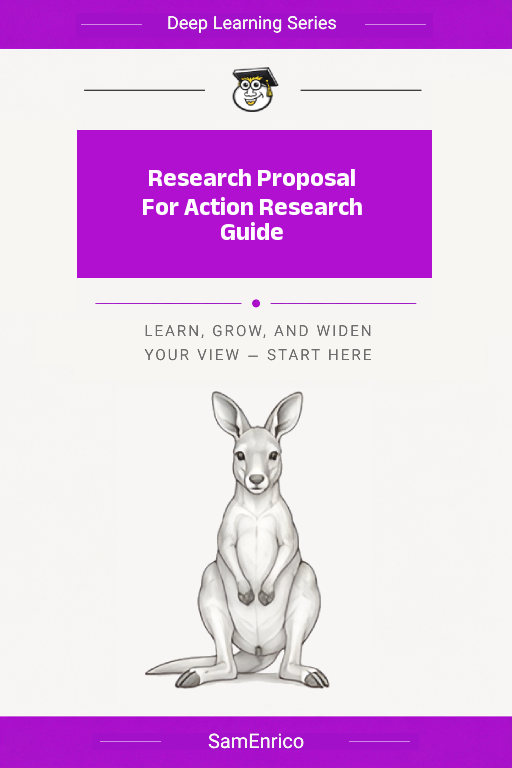
Research Proposal For Action Research Guide
Structure participatory cycles and implementation
Structure participatory cycles and implementation plans for education or community based graduate work.
Formats
About this book
Free sample
Chapter 1: Participation Is Everything--–- The email arrived at 11:47 PM on a Sunday. Maria, a second-year master’s student in community psychology, had been working on her research proposal for six weeks. She had read thirty articles. She had drafted her research questions thirteen times. She had a spreadsheet of potential community partners.
And now her advisor had sent four words that made her want to throw her laptop across the room: “This isn’t action research.”Maria had followed the template. Problem statement? Check. Literature review? Check.
Methodology section describing interviews and surveys? Check. Timeline with specific weeks for each activity? Check. She had done everything her university’s research methods course had taught her.
So why wasn’t it action research?The answer is simple, and it is the entire reason this book exists: Maria wrote a proposal about people, not with them. She treated her future participants as sources of data to be extracted, not as co-researchers to be partnered with. Her proposal was a traditional research proposal dressed in action research clothing. And her advisor—rightly—called her on it.This chapter is for everyone who has ever received that feedback. It is for the graduate student who knows they want to do participatory work but doesn’t know how to translate that desire into a proposal that committees will approve.
It is for the teacher who wants to study their own classroom but keeps being told their design is “not rigorous enough.” It is for the community organizer who is tired of academics extracting knowledge from their neighborhood and leaving nothing behind.The argument of this chapter—and of this entire book—is that participation is not a seasoning you sprinkle on top of a traditional research design. It is the main ingredient. It changes everything: your research questions, your methods, your timeline, your ethics, your relationship with your committee, and even your definition of what counts as “data.” Once you understand participation as the central variable, you will never look at a proposal template the same way again.This chapter will do three things. First, it will dismantle…
This is the end of the free sample. Get the eBook to keep going. Buy now
Contents
- Chapter 1
- Chapter 2
- Chapter 3
- Chapter 4
- Chapter 5
- Chapter 6
- Chapter 7
- Chapter 8
- Chapter 9
- Chapter 10
- Chapter 11
- Chapter 12
Details
- Author
- Moody Natalie
- Publisher
- SamEnrico
- Language
- English
- Genre
- research, Student's Shortcut
- Released
- 2026-05-29
- Pages (approx.)
- 158
- Available as
- eBook, Audiobook

Read better in the ZLOADR app
Your eBooks on your phone or tablet. Sign in with your SamEnrico account and start reading.
More by Moody Natalie
 Weekly Anger Check InMoody Natalie$11.99
 The Demo Presentation GuideMoody Natalie$11.99
 IBS For Vegans GuideMoody Natalie$11.99
 Fitness Tech InvestmentMoody Natalie$11.99
 Meadow of Wildflowers ScriptMoody Natalie$11.99
 Scripted Self Trance ManualMoody Natalie$11.99
 The CEO Pressure CookerMoody Natalie$11.99
 Time Blocking For PerfectionistsMoody Natalie$11.99
 OCD in SeniorsMoody Natalie$11.99
 The Golden Brewmasters of Nubia: Crafting Civilization’s First Fermented LegacyMoody Natalie$11.99
 Beneath the Black Ice: The Frozen Whispers of the Franklin ExpeditionMoody Natalie$11.99
 Private Label Dropshipping ModelsMoody Natalie$11.99
You may also like
 Scientific Research On TM GuideMartens Nathanial$11.99
 Research Proposal Methodology Section MasteryPauley Debroah$11.99
 Research Proposal Appendix CompilationRaines Tyisha$11.99
 Academic Researcher Distraction GuideFord Virgil$11.99
 TM Research and ScienceCovert Nicki$11.99
 Social Anxiety Research ReviewRoberge Cole$11.99
 Research Proposal Significance Section GuideBock Tory$12.99
 Research Proposal Reviewer PsychologyLugo Tawanda$11.99
 Research Proposal Research Questions DesignLara Robbi$11.99
 Research Proposal References and CitationsPatten Shanice$11.99
 Research Proposal Mixed Methods DesignCameron Omega$11.99
 Research Proposal Data Management PlanAnderson Roberto$12.99