
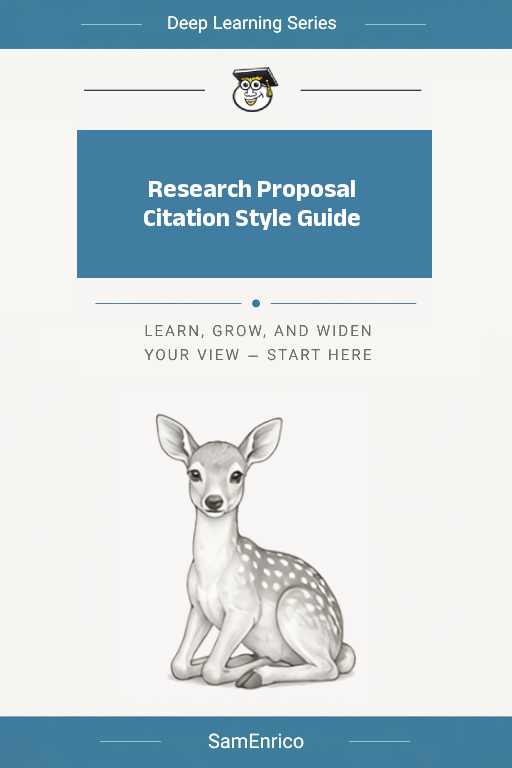
researchStudent's ShortcutCitation Management
Research Proposal Citation Style Guide
Format references flawlessly in APA, MLA, Chicago,
by Falls Trina
Format references flawlessly in APA, MLA, Chicago, or discipline specific styles to demonstrate professional attention.
Formats
About this book
Free sample
Chapter 1: The Silent Saboteur--–- Dr. Elena Vasquez stared at the rejection letter in her inbox, her Ph D defense slipping further onto the horizon. "The proposal exhibits insufficient attention to source documentation," the reviewer wrote. "Several references contain missing DOIs, inconsistent author formatting, and at least one citation that could not be verified." Six months of work. Seventy-three sources.
And one missing period—a single misplaced comma in a DOI string—had been enough to convince a funding panel that she was sloppy. Elena closed her laptop and wept.Her story is not unique.Every year, thousands of research proposals—brilliant ideas, methodologically sound, potentially field-changing—are rejected not because the science was weak or the argument flawed, but because the citations failed to demonstrate what reviewers silently demand: professional trustworthiness. The academic world runs on trust. And trust, in the context of a proposal, is communicated through the quiet, meticulous architecture of attribution.This book exists because that architecture deserves to be understood, not feared.Before we dive into the mechanical rules of APA, MLA, Chicago, or any other style, we must answer a more fundamental question: Why do citations matter at all? Why would a funding panel reject a groundbreaking study over a missing DOI?
Why do professors circle improper comma placement in red pen and deduct points as if the error were a factual mistake? The answer reveals something profound about the nature of academic work itself.Citations are not bureaucratic hurdles. They are not decorative flourishes attached to the end of a sentence. They are the circulatory system of scholarly communication—the mechanism by which ideas travel, credibility flows, and knowledge builds upon itself across generations. When that system fails, even slightly, the entire organism suffers.
This chapter will show you why.The Three Functions of Citation in a Research Proposal Every citation you write serves three distinct purposes, whether you realize it or not. Understanding these functions transforms citation from a chore into a strategic tool.Function One: Intellectual Honesty The most obvious function of citation is also the most morally significant: giving credit where credit…
This is the end of the free sample. Get the eBook to keep going. Buy now
Contents
- Chapter 1
- Chapter 2
- Chapter 3
- Chapter 4
- Chapter 5
- Chapter 6
- Chapter 7
- Chapter 8
- Chapter 9
- Chapter 10
- Chapter 11
- Chapter 12
Details
- Author
- Falls Trina
- Publisher
- SamEnrico
- Language
- English
- Genre
- research, Student's Shortcut, Citation Management
- Released
- 2026-05-30
- Pages (approx.)
- 151
- Available as
- eBook, Audiobook

Read better in the ZLOADR app
Your eBooks on your phone or tablet. Sign in with your SamEnrico account and start reading.
More by Falls Trina
 Estate Settlement for WidowsFalls Trina$11.99
 Reconstruction of Drowning DeathsFalls Trina$11.99
 Memory Palace For Music NotesFalls Trina$11.99
 Imposter Networking GuideFalls Trina$11.99
 Inaccessible Medical Equipment FightFalls Trina$11.99
 The Jackson 5 to MichaelFalls Trina$11.99
 Pomodoro for StudentsFalls Trina$11.99
 Hydration Before Hypnosis ListeningFalls Trina$11.99
 The Fall and Rise of the Taepyeongyang Tigers: A Baseball Miracle in the Shadow of WarFalls Trina$11.99
 The Alchemist’s Secret: Paracelsus and the Birth of Modern MedicineFalls Trina$11.99
 How to Become a Host/hostessFalls Trina$11.99
 Citron: Harvesting EtrogFalls Trina$11.99
You may also like
 Scientific Research On TM GuideMartens Nathanial$11.99
 Research Proposal Methodology Section MasteryPauley Debroah$11.99
 Research Proposal Appendix CompilationRaines Tyisha$11.99
 Academic Researcher Distraction GuideFord Virgil$11.99
 TM Research and ScienceCovert Nicki$11.99
 Social Anxiety Research ReviewRoberge Cole$11.99
 Research Proposal Significance Section GuideBock Tory$12.99
 Research Proposal Reviewer PsychologyLugo Tawanda$11.99
 Research Proposal Research Questions DesignLara Robbi$11.99
 Research Proposal References and CitationsPatten Shanice$11.99
 Research Proposal Mixed Methods DesignCameron Omega$11.99
 Research Proposal Data Management PlanAnderson Roberto$12.99