
Research Manager eBook
A Coursebook on Research Manager
A Coursebook on Research Manager
Formats
Free sample
Chapter 1: The Identity Trap--–- Dr. Elena Vasquez had won the Young Investigator Award, published back-to-back papers in Nature, and secured a five-year, 2.1milliongrantfromthe National Institutesof Health.Byeveryexternalmetric,shewasarisingstarinneuroimmunology.Butonarainy Tuesdayin November,shefoundherselfsittinginherdarkenedofficeat11:47PM,staringatanemailthatwouldtakeherthirty−sevenminutestowritebecauseshecouldn′tdecidewhetherthetonewas"tooharsh"or"notharshenough."Theemailwasaddressedtoafirst−yearpostdocwhohadmislabeledthreecriticalreagenttubes.Themislabelinghadcostthelabtwoweeksofworkandapproximately2.1 million grant from the National Institutes of Health. By every external metric, she was a rising star in neuroimmunology. But on a rainy Tuesday in November, she found herself sitting in her darkened office at 11:47 PM, staring at an email that would take her thirty-seven minutes to write because she couldn't decide whether the tone was "too harsh" or "not harsh enough." The email was addressed to a first-year postdoc who had mislabeled three critical reagent tubes. The mislabeling had cost the lab two weeks of work and approximately 2.1milliongrantfromthe National Institutesof Health.Byeveryexternalmetric,shewasarisingstarinneuroimmunology.Butonarainy Tuesdayin November,shefoundherselfsittinginherdarkenedofficeat11:47PM,staringatanemailthatwouldtakeherthirty−sevenminutestowritebecauseshecouldn′tdecidewhetherthetonewas"tooharsh"or"notharshenough."Theemailwasaddressedtoafirst−yearpostdocwhohadmislabeledthreecriticalreagenttubes.Themislabelinghadcostthelabtwoweeksofworkandapproximately4,800 in wasted antibodies.
Elena knew the postdoc needed correction. She also knew she was avoiding going home because her spouse had started saying things like "you work in a lab, not an emergency room" and "I remember when you used to talk about something other than grant deadlines."Elena's story is not unusual. In fact, it is so common among research managers that it has a name: The Identity Trap. The Identity Trap is what happens when an exceptional researcher is promoted into management but never stops thinking like a solo scientist. Elena could design a flawless experiment.
She could spot a flawed control group from fifty paces. She could recite the citation impact factor of every journal in her field. But she could not, to save her career, figure out how to tell a junior colleague that a mistake had been made without either exploding in frustration or dissolving into apologetic vagueness. She was trapped between the person she had been trained to be—a rigorous, independent, competitive researcher—and the person her team now needed her to become: a coach, a delegator, a conflict navigator, and a strategic leader who thought in years, not hours at the bench.This chapter is about escaping that trap. It is about the psychological and behavioral transformation required to move from being the smartest person in the room to being the person who makes everyone else in the room smarter.
We will explore why great researchers fail as managers, what the Identity Trap feels like from the inside, and—most importantly—the specific, learnable skills that will get you out.The Accidental Manager Syndrome Let us begin with a hard truth that most academic and research institutions will never tell you: You were promoted because of your research excellence, not your management potential. Your university, your department chair, your funding agency—none of them checked to see if you knew how to run a team meeting, conduct a performance review, or manage a budget variance. They checked your publication record, your grant funding, and your letters of recommendation from other brilliant researchers who were also never trained to manage. The result is a global epidemic of what organizational psychologists call "accidental managers."In the private sector, approximately 82% of managers report receiving no formal training before assuming their first management role, according to a 2022 study by the Management Research Group. In academic research, that number climbs to over 90%.
Think about what that means. We ask newly promoted principal investigators to do things that would terrify a seasoned corporate executive: hire and fire staff, manage million-dollar budgets, navigate complex legal and ethical regulations, resolve interpersonal conflicts, mentor early-career scientists, and maintain a cutting-edge research program—all while continuing to conduct their own research. And we give them a one-day workshop on "leadership basics" if they are lucky.The consequences are not merely uncomfortable. They are expensive, dangerous, and career-ending. A 2021 analysis of grant funding outcomes found that labs led by PIs who scored in the bottom quartile on management competency were 47% more likely to experience a compliance finding, 38% more likely to have a postdoc leave before completing two years, and 52% less likely to receive a competitive renewal.
Burnout among accidental managers is so common that it has its own academic literature: a systematic review of PI mental health found that 41% of principal investigators reported symptoms consistent with moderate to severe burnout, with the highest rates among those who had been managing for 2-5 years—precisely the period when the identity conflict is most acute.The Identity Trap is not a character flaw. It is a structural problem. You were trained for one job and asked to do another. The fact that you are struggling does not mean you are a bad scientist. It means you are a human being who has been set up to fail.
And the first step toward becoming a strategic leader is to stop blaming yourself for not knowing skills you were never taught.Intellectual Respect vs. Hierarchical Authority The core of the Identity Trap lies in a fundamental confusion between two very different kinds of power that you hold simultaneously but which operate by entirely different rules.The first is intellectual respect. This is the authority you earned through your scientific contributions. When you publish a groundbreaking paper, when you deliver a brilliant seminar, when you spot a flaw in a colleague's experimental design that everyone else missed—you generate intellectual respect. People listen to you because you are smart, because you have proven yourself, because you know things they do not know.
Intellectual respect is fragile, earned incrementally over years, and can be lost with a single retraction or a single public mistake.The second is hierarchical authority. This is the authority conferred by your position. You are the principal investigator. You control the grant money. You decide who gets hired, who gets promoted, whose contract is renewed, and whose project is funded.
When you say, "We are going to pivot to a different research direction," your team may disagree intellectually, but they will comply because you hold hierarchical authority. Hierarchical authority is not earned through brilliance. It is granted by the institution. And it operates not through persuasion but through legitimate power over resources and careers.Here is where the trap snaps shut: New managers almost always try to lead using intellectual respect alone. They believe that if they are smart enough, if they work hard enough, if they just explain things clearly enough, their team will naturally follow.
They avoid using hierarchical authority because it feels like cheating, or bullying, or an admission that they cannot win people over on the merits of their ideas. So they over-explain, they over-negotiate, they turn every decision into a committee deliberation, and they exhaust themselves trying to be "the smartest person in the room" instead of being "the boss."Elena Vasquez, the neuroimmunologist from our opening story, fell into this trap with devastating precision. She spent hours writing and rewriting emails to her postdocs because she wanted every correction to feel "collegial." She held ninety-minute lab meetings in which junior researchers debated experimental directions endlessly because she was afraid to say "we are doing it my way." She never used the phrase "because I am the PI" even…
This is the end of the free sample. Get the eBook to keep going. Buy now
About this book
Details
- Author
- Morrissey Diann
- Publisher
- SamEnrico
- Language
- English
- Genre
- research, Informative, Educational
- Released
- 2026-05-07
- Pages (approx.)
- 148
- Available as
- eBook, Audiobook

Read better in the ZLOADR app
Your eBooks on your phone or tablet. Sign in with your SamEnrico account and start reading.
More by Morrissey Diann
 Meeting Fatigue Reduction GuideMorrissey Diann$11.99
 In Terrorem Clause Will GuideMorrissey Diann$11.99
 Facebook Old Friend ComparisonMorrissey Diann$11.99
 The RLS Sleep Hygiene ProtocolMorrissey Diann$11.99
 Sylvia Earle Deep Sea CallingMorrissey Diann$11.99
 Orpheus and the Shadow Chorus: A Lyre’s Last StandMorrissey Diann$11.99
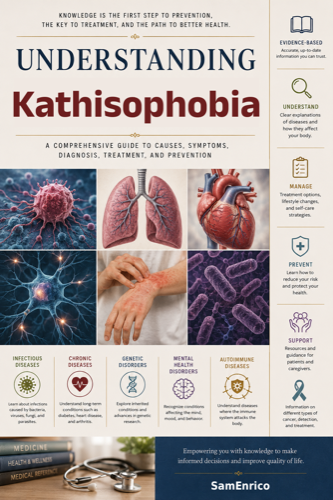 Understanding KathisophobiaMorrissey Diann$17.99
 Crisis vs Maintenance DistinctionMorrissey Diann$12.99
 Executive Talent Mobility GuideMorrissey Diann$12.99
 How to Start a Hobby in Spoon CollectingMorrissey Diann$11.99