
Non-FictionProfessional's Cheat SheetMediation Skills
Remote Team Conflict Tools eBook
Use software tools for remote conflict resolution.
by Marin Shara
Use software tools for remote conflict resolution. Anonymous feedback, polls, and mediation platforms.
Formats
Free sample
Chapter 1: The 3AM Slack Message--The notification buzzes at 3:14 AM. You are the manager of a distributed team across four time zones. You roll over, squint at the glowing screen, and read: “We need to talk. This isn’t working.”No context. No emoji.
No previous tension you can recall. Your heart rate doubles. Your mind races through every email you sent last week, every Zoom call where you might have seemed distracted, every deadline you pushed. You do not fall back asleep. By morning, you have imagined six different disasters, drafted three defensive replies in your head, and seriously considered quitting.This is not an outlier.
This is the daily reality of remote leadership.The problem is not that remote teams fight more than co-located teams. Research suggests the opposite—remote teams actually report fewer total conflicts. The problem is that when remote teams do fight, the conflicts escalate faster, last longer, and cause more damage because the natural repair mechanisms of physical proximity do not exist. There is no accidental hallway conversation to clear the air. No shared coffee machine to exchange awkward smiles.
No body language to signal “I’m sorry” without saying the words.Instead, there is the text message. The email. The Slack thread that spirals from professional disagreement to personal attack in twelve replies. And there is the 3AM notification that turns a manageable misunderstanding into a career crisis.This book is not about avoiding conflict. That is impossible, and frankly, undesirable—teams that never fight are teams that never innovate.
This book is about engineering conflict resolution into the infrastructure of remote work using software tools, anonymous feedback systems, polling protocols, and mediation platforms. It is about replacing intuition with infrastructure, hope with process, and silent suffering with structured resolution.But before we get to the tools, we have to understand the disease.The Disappearance of Context In a physical office, communication is rich with context. You see if someone is rushing to a meeting, if they are sick, if they just had a difficult call, if they are joking or serious. You hear tone, volume, pace, and hesitation. You observe posture, eye contact, facial tension, and micro-expressions that last a fraction of a second but convey entire emotional states.Remote work strips almost all of that away.The average remote worker now spends 78% of their professional communication time on text-based channels—Slack, Teams, email, Asana comments, Basecamp threads, and Whats App groups.
Text is the lowest-bandwidth communication medium humans have ever used at scale. It conveys words, yes. But it strips tone, intent, emotion, urgency, and relationship history. What remains is pure propositional content, which is precisely the aspect of communication most prone to misinterpretation.Consider the word “Fine.”Spoken with a smile and a shrug, it means “acceptable, no problem.” Spoken with a sigh and averted eyes, it means “I am upset but do not want to discuss it.” Spoken with sharp emphasis and crossed arms, it means “I am very upset and you should know why.” Now type “Fine” in a Slack message. What does it mean?
No one knows. And because humans are prediction machines that hate ambiguity, the recipient will fill the gap with the worst possible interpretation. This is called negativity bias—the evolved tendency to treat ambiguous stimuli as threatening because, for our ancestors, mistaking a stick for a snake was less dangerous than mistaking a snake for a stick.In remote text communication, every “Fine” is a stick that might be a snake. And the brain chooses snake every time.This is the fog of remote work. And it is where small spats become big blowups.The 56% Problem The data on remote miscommunication is sobering.
A 2023 study of 2,500 distributed workers found that 56% reported regular misunderstandings with teammates that required clarification. Of those, 31% said the misunderstandings escalated into “significant tension” lasting more than a week. And 12% said a single text-based misunderstanding led to a formal HR complaint or a resignation.Think about that: one in eight remote workers has experienced a misunderstanding severe enough to threaten their job or leave it. And the trigger was almost always a text message.The mechanism is straightforward. Text-based communication has three structural flaws that make conflict more likely:Flaw One: Absence of Repair Cues.
In person, if you say something hurtful, you see the wince immediately and can apologize before the sentence finishes. In text, you fire the message into the void. The recipient reads it alone, in their own emotional state, at their own pace. By the time you realize you have caused harm, the harm has already been fully absorbed and processed—often into resentment.Flaw Two: The Interpretation Gap. Research on “emotional accuracy” in text shows that people correctly identify the sender’s intended emotion only 56% of the time.
That is barely better than chance. And when they are wrong, they systematically overestimate negative emotions. A neutral “Okay” is read as passive-aggressive. A rushed “Got it” is read as annoyed. A brief “Thanks” is read as sarcastic.
The sender meant nothing by it. The receiver felt attacked.Flaw Three: Asymmetric Response Time. In person, conversations are synchronous. You speak, I respond, you react. In text, hours or days can pass between messages.
This delay allows the worst-case interpretation to calcify. By the time the sender clarifies, the recipient has already constructed an entire narrative of victimhood and blame. The clarification arrives too late to unring the bell.These flaws do not make remote work impossible. They make remote work different. And different requires different tools.The Failure Mode: Waiting for HRMost organizations approach conflict the same way they approach everything else: with periodic, manager-led, backward-looking reviews.
Annual engagement surveys. Quarterly HR check-ins. Monthly one-on-ones where conflict is one agenda item among twenty.This is a failure mode.The problem with periodic conflict resolution is that conflict does not operate on a schedule. Tension accumulates in real time, between messages, in the gaps between meetings. By the time the monthly one-on-one arrives, the participants have already decided who is right, who is wrong, and whether they trust the manager to care.
The conflict is no longer a problem to solve. It is a story to defend.Worse, waiting for HR transforms every conflict into a high-stakes formal proceeding. The moment HR is involved, the language shifts from “we have a problem” to “you have a complaint.” Defenses go up. Allies are identified. Documentation begins.
The goal stops being resolution and starts being victory.This is not a criticism of HR professionals. Most HR teams are understaffed, overworked, and trained for compliance, not real-time mediation. The problem is structural: HR is designed for the exception, not the everyday. And in remote teams, everyday misunderstandings are the rule.What remote teams need instead is real-time resolution infrastructure—tools and protocols that address friction before it calcifies, that normalize conflict as a process problem rather than a personality defect, and that give every team member the agency to de-escalate without calling a meeting or filing a report.That infrastructure is what this book provides. But before we build it, we need a common language for understanding what kind of conflict we are facing.…
This is the end of the free sample. Get the eBook to keep going. Buy now
About this book
Details
- Author
- Marin Shara
- Publisher
- SamEnrico
- Language
- English
- Genre
- Non-Fiction, Professional's Cheat Sheet, Mediation Skills
- Released
- 2026-05-29
- Pages (approx.)
- 150
- Available as
- eBook, Audiobook

Read better in the ZLOADR app
Your eBooks on your phone or tablet. Sign in with your SamEnrico account and start reading.
More by Marin Shara
 Remote Work Natural Light StrategyMarin Shara$11.99
 The Digital Minimalism GuideMarin Shara$11.99
 Financial Stress Tax Season CopingMarin Shara$11.99
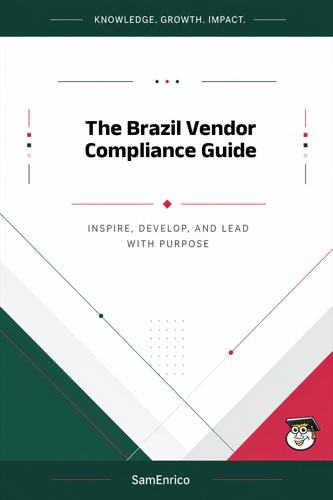 The Brazil Vendor Compliance GuideMarin Shara$11.99
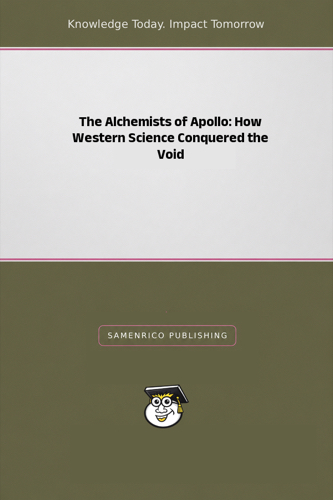 The Alchemists of Apollo: How Western Science Conquered the VoidMarin Shara$11.99
 Patient Service SpecialistMarin Shara$11.99
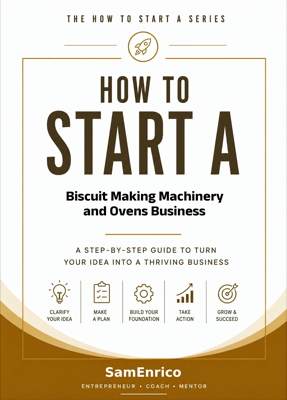 How to Start a Biscuit Making Machinery and Ovens Business (Beginners Guide)Marin Shara$11.99
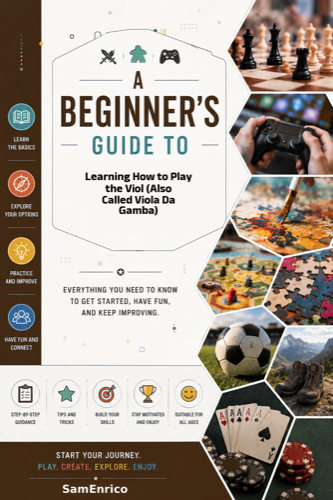 Learn to Play the Viol (Also Called Viola Da Gamba)Marin Shara$11.99
You may also like
 Hong Kong Handover 1997Dunn Johnnie$11.99
 Zumba For Postnatal Recovery CourseNeal Christian$11.99
 Zumba for BeginnersLadner Nikia$11.99
 YouTube Comment Mining GuideHumes Pandora$12.99
 Worry Box MeditationCarlin Rudy$11.99
 Workplace Stress MeditationNguyen Lynn$11.99
 Workplace Stress and Sleep RepairHawley Ivory$11.99
 Workplace Perfectionism CureDelaney Jeffry$11.99
 Workplace Injustice Anger GuideWallen Isabelle$11.99
 Work Addiction and Burnout LinkGreenwood Ester$11.99
 Women in Yoga and WellnessBeattie Galina$11.99
 Women in Stand Up ComedyChun Evangeline$11.99