
Non-FictionBusiness BriefReference
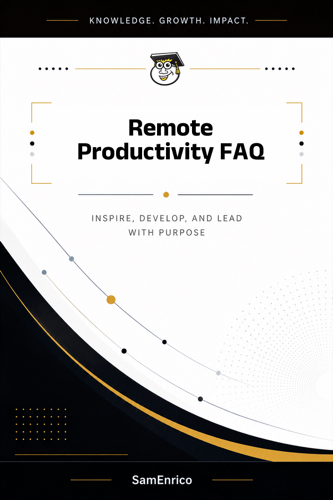
Remote Productivity FAQ Audiobook
Answers to common questions about measuring remote
Answers to common questions about measuring remote work.
Formats
Free sample
Chapter 1: The Outcome Obsession--–- The email arrived at 11:47 PM. Sarah, a senior graphic designer, had been offline since 3:00 PM after finishing her assigned projects for the day. She spent the afternoon taking her daughter to a dentist appointment, reading a design blog, and thinking about a tricky layout problem. But when she saw her manager’s 11:47 PM email—“Just checking in, haven’t seen you online since early afternoon”—her stomach dropped. She opened her laptop, sent a few Slack messages to appear active, and resentfully answered the email at 12:15 AM.
She wasn’t producing value. She was performing productivity.This scene plays out thousands of times every day in remote and hybrid workplaces. Managers, trained for decades to equate physical presence with productive effort, find themselves anxious and untethered when they cannot see their teams. Employees, sensing that anxiety, learn to perform busyness rather than create value. The result is a catastrophic failure of management: everyone is working harder to look like they are working, while actual output stagnates or declines.
This is the productivity paradox of remote work, and it is entirely avoidable.The Great Misunderstanding Before we can measure remote work, we must understand what we have been measuring all along. The traditional workplace has operated under a set of unspoken assumptions that are so deeply embedded in managerial culture that most leaders do not even recognize them as assumptions. They treat them as laws of nature. The first assumption is that visible presence equals productive effort. The second is that hours logged correlate with value created.
The third is that if a manager cannot see an employee, that employee is probably not working.These assumptions were never true, even in the office. But they were plausible in the office. A manager walking past a desk could see a person typing, talking on the phone, or shuffling papers. That visual confirmation triggered a psychological reward—the manager felt in control, and the employee felt seen. But the correlation between that visual confirmation and actual value creation was always weak.
The employee might have been typing a personal email, talking to a friend, or shuffling papers to look busy. The office simply made it easier to fake productivity.Remote work didn’t create this problem. It exposed it. When the desk disappears, the illusion of control collapses. Managers who relied on visual confirmation suddenly have nothing to confirm.…
This is the end of the free sample. Get the Audiobook to keep going. Buy now
About this book
Details
- Author
- Singletary Henriette
- Publisher
- SamEnrico
- Language
- English
- Genre
- Non-Fiction, Business Brief, Reference
- Released
- 2026-06-09
- Pages (approx.)
- 143
- Available as
- eBook, Audiobook

Listen in the VoxFlicks app
Audiobooks and audio dramas wherever you go. Sign in with your SamEnrico account and press play.
More by Singletary Henriette
 The Craving Busting WorkbookSingletary Henriette$11.99
 The Nap Alarm Clock GuideSingletary Henriette$11.99
 Parent Loss and Young ChildrenSingletary Henriette$11.99
 Digital Boundary SettingSingletary Henriette$11.99
 Board of Directors CrisisSingletary Henriette$11.99
 Microbiome Kidney HealthSingletary Henriette$11.99
 Mindfulness Pain ReliefSingletary Henriette$11.99
 Alibaba Inspection ServicesSingletary Henriette$11.99
 The Ballad of the Black Cowboy: Nat Love and the Wild West’s Forgotten LegendSingletary Henriette$11.99
 Hannibal's Ghosts: The Cursed March Over the AlpsSingletary Henriette$11.99
 Bridges of Time: The Lovers Who Built the Iron AgeSingletary Henriette$11.99
 How to Become a DebubblizerSingletary Henriette$11.99
You may also like
 Hong Kong Handover 1997Dunn Johnnie$11.99
 Zumba For Postnatal Recovery CourseNeal Christian$11.99
 Zumba for BeginnersLadner Nikia$11.99
 YouTube Comment Mining GuideHumes Pandora$12.99
 Worry Box MeditationCarlin Rudy$11.99
 Workplace Stress MeditationNguyen Lynn$11.99
 Workplace Stress and Sleep RepairHawley Ivory$11.99
 Workplace Perfectionism CureDelaney Jeffry$11.99
 Workplace Injustice Anger GuideWallen Isabelle$11.99
 Work Addiction and Burnout LinkGreenwood Ester$11.99
 Women in Yoga and WellnessBeattie Galina$11.99
 Women in Stand Up ComedyChun Evangeline$11.99