
Non-FictionHealth & WellnessRelationship Anxiety
Relationship OCD Subtype Guide eBook
Doubt about partnership suitability, attraction, a
Doubt about partnership suitability, attraction, and love with compulsive analysis.
Formats
Free sample
Chapter 1: The Cracked Lens--–- The first time Maria tried to break up with him, she was standing in the cereal aisle of a grocery store. He had reached for the wrong brand—something with too much sugar, something she would never buy for herself—and in that instant, her brain erupted. This is proof. You don't even share basic preferences. How could you possibly spend a lifetime with someone who chooses Froot Loops over shredded wheat?She didn't say anything about the cereal.
Instead, she went silent for the rest of the shopping trip, replaying every previous disagreement about groceries, restaurants, and vacation destinations. By the time they reached the checkout, she had constructed a forty-seven-point argument that they were fundamentally incompatible. By the time they got home, she had talked herself into a panic attack. And by the time he asked, "Are you okay?" she had already decided: I have to end this. It's the only honest thing to do.She didn't break up with him that night.
She broke up with him three days later, after two more nights of relentless mental reviewing, after calling her mother for reassurance (which worked for exactly four hours), after taking four online quizzes titled "Are You With The Right Person?" (three said yes, one said no—and she obsessed over the no). She sat him down on their worn gray couch and said the words she had rehearsed a hundred times: "I don't think I love you enough. I think you deserve someone who doesn't have to try so hard."He cried. She cried. She moved out two weeks later.Six months after that, Maria was sitting in a therapist's office, having just been diagnosed with Relationship OCD.
And for the first time in her adult life, she heard someone say: "Maria, the problem was never the cereal. The problem was never the vacation preferences. The problem was never him. The problem is that your brain has been lying to you—and you believed every word."She thought about the gray couch. She thought about the way he used to make her coffee every morning, exactly how she liked it.
She thought about how she had thrown away something real because she couldn't tolerate a single moment of doubt.Maria's story is not unusual. It is, in fact, the story of thousands of people who will read this book—people who have ended perfectly good relationships, who have stayed in miserable ones because they were afraid of making the "wrong" choice, who have spent entire years trapped inside their own heads analyzing feelings that cannot be analyzed. If any part of that sounds familiar, this chapter is for you.The Question That Feeds on Itself Every person with Relationship OCD has a signature question. Sometimes it's asked in the first-person: Do I really love them? Sometimes it's asked in the third: Are they actually attractive?
Sometimes it's more specific: Am I settling? Would I be happier with someone else? Should I feel more excited? Is this numbness normal?On the surface, these seem like reasonable questions. In fact, they sound exactly like the kinds of questions any thoughtful person might ask about a long-term relationship.
And that is precisely what makes ROCD so insidious: it disguises itself as normal relationship reflection, but it operates by completely different rules.Here is the first and most important distinction you will learn in this book. Normal relationship doubts are like a weather report. They come, they go, you note them, and you move on with your day. You might think, "I'm annoyed that they left their shoes in the hallway again," and then you step over the shoes and make dinner. The thought does not loop.
It does not demand to be solved. It does not keep you awake at 3:00 AM.ROCD-driven obsessions are different. They are not just doubts—they are demands. They arrive with a sense of urgency that feels indistinguishable from truth. They say: You must solve this right now.
If you don't figure this out, you are living a lie. Every moment you stay is another moment of dishonesty.The cruelest trick of ROCD is that the urgency feels real because the anxiety is real. Your heart is pounding. Your stomach is in knots. Your brain is screaming.
And when your body is in that state, it is nearly impossible to believe that the source of the panic is nothing—a harmless thought that your OCD has weaponized.This chapter will give you three things. First, a clear framework for distinguishing between normal relationship doubt and ROCD. Second, a way to understand why your brain has turned love into a problem to be solved. And third, a single question that will change how you respond to every doubt you have from this moment forward.The Three Diagnostic Criteria You Need to Know In clinical settings, mental health professionals use specific criteria to distinguish ROCD from ordinary relationship anxiety, generalized anxiety disorder, or actual relationship problems. These criteria are not complicated, but they are powerful.
You do not need a therapist to apply them to your own experience.Criterion One: Time Consumed How much of your waking day is spent thinking about your relationship doubts? Not just noticing them—but actively engaging with them, analyzing them, trying to solve them, checking your feelings, seeking reassurance, or avoiding situations that might trigger doubts?For someone with normal relationship doubts, the answer is usually measured in minutes per week. For someone with ROCD, the answer is often measured in hours per day. Many people with ROCD report that relationship thoughts occupy 50%, 70%, or even 90% of their waking mental bandwidth. They think about their relationship while driving, while working, while eating, while trying to fall asleep, and while trying to have sex.Time consumed is not just a measure of suffering.
It is a measure of displacement. Every hour you spend analyzing your feelings is an hour you are not present with your partner. Every hour you spend googling "am I in love?" is an hour you are not building the life you say you want.The question to ask yourself: Over the past week, roughly how many hours per day did you spend actively engaged in relationship-related doubt, analysis, or checking? If the number is more than one, you are outside the normal range.Criterion Two: Distress Levels Ordinary relationship doubts might cause mild irritation or fleeting sadness. ROCD doubts cause panic—the kind of full-body, can't-breathe, chest-tightening, thought-racing panic that feels like an emergency.This distress is not proportional to the trigger.
If your partner leaves dishes in the sink and you feel a mild annoyance, that is normal. If your partner leaves dishes in the sink and you spend the next three hours convinced that this proves they are lazy, inconsiderate, and fundamentally wrong for you—and you feel like you might vomit—that is ROCD.The distress of ROCD is also characterized by urgency. You feel like you must resolve the doubt immediately, as if your life depends on it. This urgency is a lie, but it feels true because your nervous system is in full alarm mode.The question to ask yourself: When…
This is the end of the free sample. Get the eBook to keep going. Buy now
About this book
Details
- Author
- Blakely Collen
- Publisher
- SamEnrico
- Language
- English
- Genre
- Non-Fiction, Health & Wellness, Relationship Anxiety
- Released
- 2026-06-07
- Pages (approx.)
- 129
- Available as
- eBook, Audiobook

Read better in the ZLOADR app
Your eBooks on your phone or tablet. Sign in with your SamEnrico account and start reading.
More by Blakely Collen
 The Sleep Debt Recovery PlanBlakely Collen$11.99
 Parenting Grief and LossBlakely Collen$11.99
 Leg And Feet Nonverbal Cues GuideBlakely Collen$11.99
 Survey Data Transformation with AIBlakely Collen$11.99
 The Third Bullet: The Untold Story of India's Forgotten AssassinationBlakely Collen$11.99
 The Silk Road Pioneers: Portugal's Forgotten Explorers in Central AsiaBlakely Collen$11.99
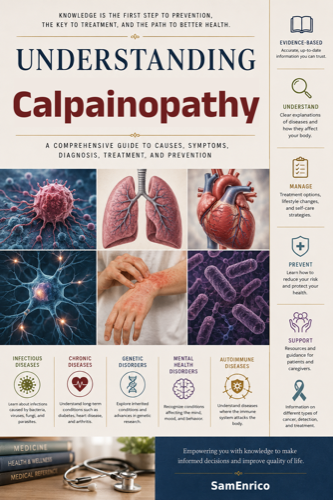 Understanding CalpainopathyBlakely Collen$17.99
 How to Become a Carbon-paper InterleaferBlakely Collen$11.99
 Drivers License Exchange GuideBlakely Collen$12.99
 Conference Presentations Without PubsBlakely Collen$12.99
 Articling StudentBlakely Collen$11.99
You may also like
 Hong Kong Handover 1997Dunn Johnnie$11.99
 Zumba For Postnatal Recovery CourseNeal Christian$11.99
 Zumba for BeginnersLadner Nikia$11.99
 YouTube Comment Mining GuideHumes Pandora$12.99
 Worry Box MeditationCarlin Rudy$11.99
 Workplace Stress MeditationNguyen Lynn$11.99
 Workplace Stress and Sleep RepairHawley Ivory$11.99
 Workplace Perfectionism CureDelaney Jeffry$11.99
 Workplace Injustice Anger GuideWallen Isabelle$11.99
 Work Addiction and Burnout LinkGreenwood Ester$11.99
 Women in Yoga and WellnessBeattie Galina$11.99
 Women in Stand Up ComedyChun Evangeline$11.99