
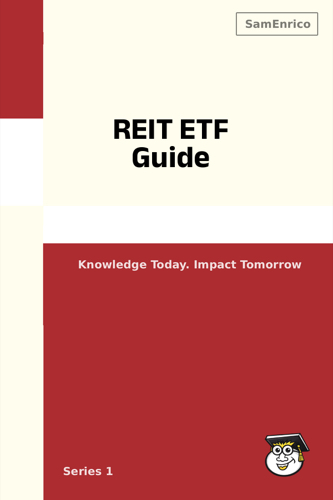
REIT ETF Guide eBook
Teaches selecting REIT ETFs like VNQ and SCHH for
Teaches selecting REIT ETFs like VNQ and SCHH for instant diversification.
Formats
Free sample
Chapter 1: The Toilet That Cost $47,000--–- I lost forty-seven thousand dollars on a toilet. Not a gold-plated toilet. Not a smart toilet with a heated seat and a bidet. An ordinary, white porcelain toilet in a rental property I was convinced would make me rich. The pipe behind it developed a hairline crack—invisible, undetectable, the kind of flaw that no home inspection could have caught.
For three months, water seeped into the subfloor, then into the wall cavity, then into the foundation. By the time the tenant noticed the smell—that sweet, sickly smell of rotting wood and mold—the damage was done. The entire bathroom needed to be gutted. The subfloor had to be replaced. The mold remediation alone cost eleven thousand dollars.
And because the property was in a state with tenant-friendly laws, I also had to put my tenant up in a hotel for six weeks while the work was done. Another nine thousand dollars.I share this story not because I want your sympathy, but because I want you to understand something that the real estate industry will never tell you: owning physical property is not an investment. It is a second job. A job with unpredictable hours, surprise expenses, and tenants who will call you at 2 AM because the garbage disposal stopped working. A job where the returns—if you are lucky enough to generate any—come from your labor, not from the magic of compound interest.
And yet, for generations, Americans have been told that buying real estate is the surest path to wealth. "They're not making any more land," the saying goes. "Buy property, rent it out, and let someone else pay your mortgage." It sounds so simple. So obvious. So American.It is also, for the vast majority of people, a trap.This book exists because I discovered a better way.
A way to own real estate without owning a single physical property. A way to collect rent checks without ever meeting a tenant. A way to diversify across thousands of buildings—warehouses, hospitals, cell towers, data centers, apartment complexes, and shopping centers—with the click of a mouse. That way is REIT ETFs. Specifically, funds like VNQ, SCHH, XLRE, and USRT that give you instant, liquid, low-cost exposure to the real estate market.
This chapter will show you why physical property is overrated, why REIT ETFs solve the problems that landlords face every day, and how to think about real estate as a financial asset rather than a second career.The American Dream That Became a Nightmare Let me tell you about my rental property, because it is not an outlier. It is the rule.In 2018, I bought a three-bedroom condominium in a mid-sized Midwestern city for two hundred and fifteen thousand dollars. I put down twenty percent—forty-three thousand dollars—and took out a mortgage for the rest. The plan was simple: rent it out for two thousand dollars per month, pay the mortgage (twelve hundred dollars), pay property taxes (three hundred dollars), pay insurance (one hundred dollars), and pocket the remaining four hundred dollars in cash flow. In five years, I told myself, I would have built equity through mortgage paydown and appreciation.
In ten years, I would sell for a profit. This was the formula I had read about in every real estate investing book on the shelf.Here is what actually happened.Year one: the tenant paid rent on time for eleven months, then lost her job. She stopped paying entirely. Eviction took four months and cost me thirty-five hundred dollars in legal fees. During those four months, I paid the mortgage out of my own pocket.
The unit sat vacant for another two months while I found a new tenant.Year two: the new tenant moved in, paid consistently, and then the water heater exploded. Three thousand dollars.Year three: the homeowners' association levied a special assessment to replace the building's roof. Twelve thousand dollars, my share.Year four: the tenant moved out, and the unit needed seventeen thousand dollars in repairs—new paint, new carpet, new appliances.Year five: I sold the property for two hundred and forty-five thousand dollars. After real estate commissions (six percent, or fourteen thousand seven hundred dollars) and closing costs, I walked away with approximately thirty thousand dollars. My initial investment had been forty-three thousand dollars.
Over five years, I had generated negative thirteen thousand dollars in realized profit, not counting the hundreds of hours I spent managing the property, coordinating repairs, and stressing about vacancies.I would have been better off putting that forty-three thousand dollars into a simple S&P 500 index fund. Much better off. And I would have slept better, too.This is not a sob story. It is a wake-up call. The real estate industry—the agents, the lenders, the "gurus" selling courses—has a vested interest in making you believe that physical property is a foolproof path to wealth.
The truth is that physical property is a business. A business with high transaction costs, low liquidity, concentrated risk, and significant operational headaches. Unless you want a second job—and many people do, and that is fine—you should not own physical property. You should own REIT ETFs.The Three Ways to Own Real Estate Before we go further, we need a framework. There are exactly three ways to own real estate as an individual investor.
Each has different characteristics, and each is appropriate for different types of investors. Let me lay them out clearly.The first way is direct physical ownership. You buy a house, a condo, a duplex, or an apartment building. You take out a mortgage. You find tenants.
You collect rent. You pay for repairs. You deal with evictions. You pay property taxes and insurance. You sell when the time is right.
This is the most labor-intensive, least liquid, and most concentrated form of real estate ownership. One bad tenant, one cracked foundation, one neighborhood decline, and your returns are destroyed. The only advantage is leverage—you can borrow money at favorable rates to buy an asset—but that leverage cuts both ways. It amplifies gains and losses.The second way is individual REIT stocks. You buy shares of a single real estate investment trust, like Prologis (which owns warehouses) or Welltower (which owns senior housing).
You get a liquid security that trades on a stock exchange. You receive dividends. You do not have to deal with tenants or toilets. This is better than physical ownership in almost every way. But there is a catch: you are still concentrated.
One REIT can fail. One REIT can be mismanaged. One REIT can be exposed to a single property type or geographic region. In 2008, many individual REITs went bankrupt. Their shareholders lost everything.
Diversification matters, and individual REITs do not provide it.The third way is REIT ETFs. You buy a single fund that holds dozens or hundreds of individual REITs. You get instant diversification across property types, geographic regions, and management teams. You get low fees. You get daily liquidity.
You get professional management. You get all the benefits of real estate ownership—rental income, appreciation potential, inflation protection—with none of the…
This is the end of the free sample. Get the eBook to keep going. Buy now
About this book
Details
- Author
- Marlow Shizue
- Publisher
- SamEnrico
- Language
- English
- Genre
- Non-Fiction, Business Brief, ETFs
- Released
- 2026-06-08
- Pages (approx.)
- 149
- Available as
- eBook, Audiobook

Read better in the ZLOADR app
Your eBooks on your phone or tablet. Sign in with your SamEnrico account and start reading.
More by Marlow Shizue
 Fear Of Blood Treatment GuideMarlow Shizue$11.99
 The Empathy and Mirroring GuideMarlow Shizue$11.99
 Self Hypnosis For Athletic PeakMarlow Shizue$11.99
 Men Nutrition and MoodMarlow Shizue$11.99
 Vertigo Steady AnchorMarlow Shizue$11.99
 Mother Specific Self CareMarlow Shizue$11.99
 ED and Priapism RiskMarlow Shizue$11.99
 The Boardroom Betrayal: How a 19th-Century Railroad Tycoon Outmaneuvered His RivalsMarlow Shizue$11.99
 The Beast of Bayswater: Australia's Most Elusive Serial KillerMarlow Shizue$11.99
 Immigration Law: Visas, Citizenship & DeportationMarlow Shizue$11.99
 A Collector's Handbook to the Alvis FdMarlow Shizue$11.99
 How to Produce a Robotic Vacuum CleanerMarlow Shizue$11.99
You may also like
 Hong Kong Handover 1997Dunn Johnnie$11.99
 Zumba For Postnatal Recovery CourseNeal Christian$11.99
 Zumba for BeginnersLadner Nikia$11.99
 YouTube Comment Mining GuideHumes Pandora$12.99
 Worry Box MeditationCarlin Rudy$11.99
 Workplace Stress MeditationNguyen Lynn$11.99
 Workplace Stress and Sleep RepairHawley Ivory$11.99
 Workplace Perfectionism CureDelaney Jeffry$11.99
 Workplace Injustice Anger GuideWallen Isabelle$11.99
 Work Addiction and Burnout LinkGreenwood Ester$11.99
 Women in Yoga and WellnessBeattie Galina$11.99
 Women in Stand Up ComedyChun Evangeline$11.99