
Non-FictionSelf-HelpOnline Communities
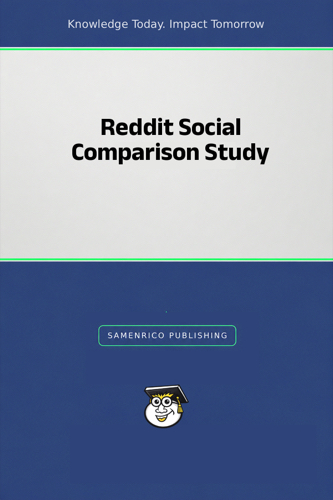
Reddit Social Comparison Study eBook
Investigates how anonymous forums shift comparison
Investigates how anonymous forums shift comparison dynamics and foster either belonging or inadequacy.
Formats
Free sample
Chapter 1: The Great Leveling–- It begins, as most things do on Reddit, with a stranger asking for judgment. The post is unremarkable in its format—a wall of text, some line breaks, a throwaway username. The content, however, is devastatingly ordinary. A woman in her early thirties describes how she told her mother that she would not be coming home for Christmas. The reasons are familiar to anyone who has survived a difficult family: years of quiet contempt, a sibling who is clearly favored, holidays spent crying in the guest bathroom while the rest of the family laughs in the next room.
The poster asks a single question: “Am I the asshole for choosing my own peace over my mother’s feelings?”Within twenty-four hours, twelve thousand strangers have weighed in. Most say she is not the asshole. Some say she is. A few offer elaborate moral philosophies that stretch across multiple comments. One user, who has been sober for eleven years and whose username suggests they live in rural Montana, writes a four-paragraph response about the difference between boundaries and abandonment.
Another user, who appears to be a college student based on their post history, dismisses the entire situation with a single sentence: “NTA. Your mom sucks. Go no contact.”The poster returns to the thread after three days. She writes: “I didn’t expect this many people to care. I’ve been crying on and off since I posted.
My therapist told me to try this. I thought she was crazy. I guess she wasn’t.”This is the great leveling. Not the post itself, but what the post reveals about how comparison works when the usual markers of identity disappear. On Instagram, the woman from the Christmas post might have shared a carefully filtered photo of a candle and a vague caption about “choosing joy.” Her friends would have double-tapped without knowing the backstory.
Her mother might have commented with a heart emoji. The performance would have been seamless, and the real conflict would have remained invisible.On Reddit, the performance is different. Not absent—never absent—but shifted. The woman cannot compare her body to her mother’s body because there are no photos. She cannot compare her salary to her sister’s salary because no one posts their tax returns.
She cannot compare her home decor or her vacation destinations or the college degrees hanging on her wall because none of that is visible. What remains is the moral question. And that question becomes the new measuring stick.The Disappearance of the Physical To understand why Reddit changes social comparison, start with what Reddit removes. When you create a Reddit account, you are not asked for your real name. You are not asked for a profile photo, though you may add one.
You are not asked for your occupation, your alma mater, your relationship status, or your geographic location beyond a general time zone. The platform does not display your follower count prominently. It does not show who liked your post unless you dig into the data. It does not encourage you to link your other social media accounts.This is not an accident. Reddit’s design philosophy, inherited from early internet forums and bulletin board systems, treats identity as optional.
You can be “u/sad_in_ohio” for twelve years without anyone knowing that you are actually a forty-seven-year-old plumber named Dave who lives in Toledo and cries during car commercials. The platform does not care. The community does not care. All that matters is the quality of your argument, the wit of your comment, or the vulnerability of your confession.Compare this to Instagram, where the first thing you see is a face. The Instagram feed is a parade of bodies—bodies in swimsuits, bodies in workout clothes, bodies holding avocado toast, bodies posing in front of murals, bodies laughing with friends, bodies alone in beautiful rooms.
The comparison is immediate and visceral: Do I look as good as her? Is my body shaped like that body? Does my skin look like that skin? Am I as happy as she appears to be?The research on this is unambiguous. Studies have shown that even brief exposure to idealized images on Instagram leads to decreases in body satisfaction, particularly among young women.
The mechanism is upward social comparison—measuring yourself against someone you perceive as better off. On Instagram, the “better off” person is almost always better looking, thinner, richer, or more visibly happy. The comparison is cruel not because it is inaccurate but because it is invisible. You do not see the forty-seven takes it took to get that one candid shot. You do not see the filter that smoothed the skin.
You do not see the blooper reel of the influencer crying in her car because the algorithm changed again.On Reddit, the body disappears. There are no faces in the default feed. There are no bodies. There is text, and there are memes, and there are links to articles, and there are photographs of cats and sunsets and strange fungi found in the woods. But the primary mode of interaction is written language.
When the body disappears, the comparison shifts from the physical to the intellectual, from the aesthetic to the moral, from the visible to the arguable.This is the great leveling. Not equality—never equality—but a new kind of hierarchy built on different foundations.The New Measuring Sticks If Reddit removes the body, what does it put in its place? The answer depends on the subreddit, because different communities value different things. But across the platform, three new metrics of comparison consistently emerge.The first is moral reasoning. In subreddits like r/Am IThe Asshole, r/relationship_advice, and r/AITA (a sister community with slightly different rules), users present real-life dilemmas and ask strangers to judge them.
The judgments are not abstract philosophical exercises. They are concrete, specific, and often brutal. A user who describes yelling at their partner will be told they are the asshole. A user who describes setting a boundary with an abusive parent will be told they are not. The comments section becomes a courtroom, and every commenter is both juror and judge.The comparison here is not “Do I look as good as her?” It is “Am I as morally righteous as this stranger?” When you read a comment that dismantles a moral problem with surgical precision, you feel a specific kind of inadequacy: I could never have articulated it that way.
I didn’t even see that angle. I am not as good at being good as this person is.The second metric is wit. In subreddits like r/funny, r/Jokes, and the comment sections of nearly any popular post, humor is currency. A well-timed pun, a clever reference, a perfectly executed roast—these are upvoted to the top of the thread. The users who consistently produce funny comments develop reputations.
Other users recognize their usernames. They become minor celebrities within their communities.The comparison here is crushing in its own way. You read a comment that makes you laugh out loud, and immediately you think: I could never have…
This is the end of the free sample. Get the eBook to keep going. Buy now
About this book
Details
- Author
- Negron Dennis
- Publisher
- SamEnrico
- Language
- English
- Genre
- Non-Fiction, Self-Help, Online Communities
- Released
- 2026-06-09
- Pages (approx.)
- 135
- Available as
- eBook, Audiobook

Read better in the ZLOADR app
Your eBooks on your phone or tablet. Sign in with your SamEnrico account and start reading.
More by Negron Dennis
 Influencer Disclosure For FitnessNegron Dennis$11.99
 Will Contest Grounds And Defenses CourseNegron Dennis$11.99
 The Menopause Skin Care Recovery GuideNegron Dennis$11.99
 Affirmations for LonelinessNegron Dennis$11.99
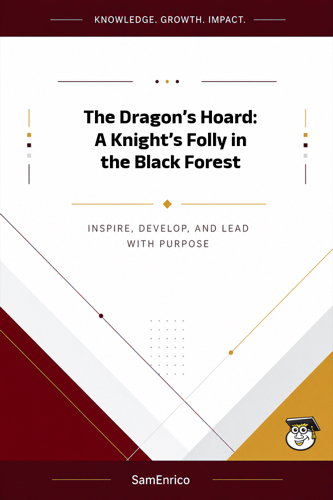 The Dragon’s Hoard: A Knight’s Folly in the Black ForestNegron Dennis$11.99
 Understanding Johanson–blizzard SyndromeNegron Dennis$17.99
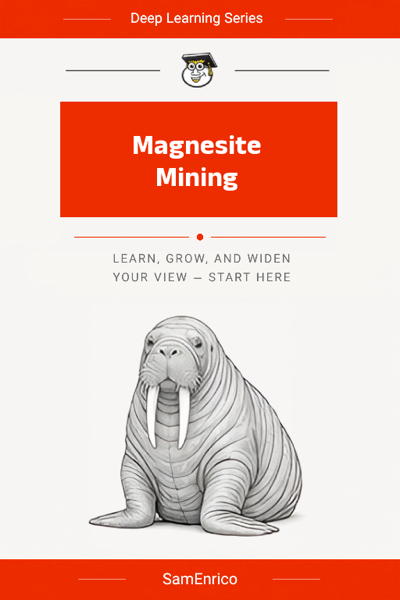 Magnesite MiningNegron Dennis$11.99
 Private Equity Regional GuideNegron Dennis$12.99
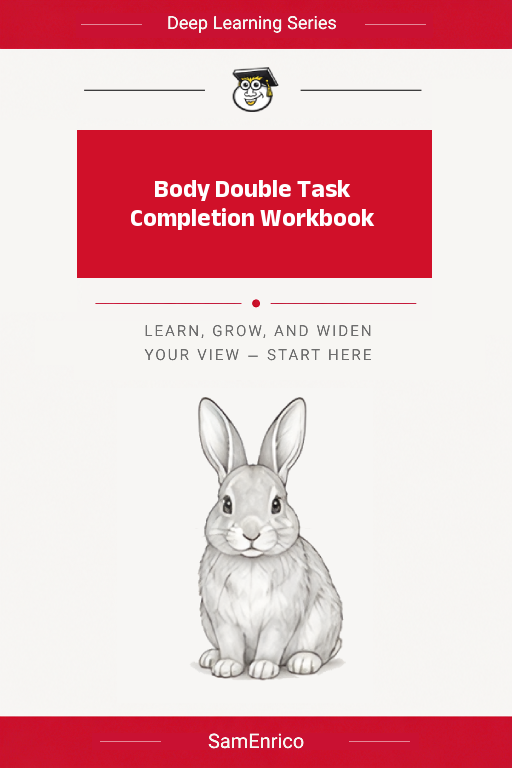 Body Double Task Completion WorkbookNegron Dennis$12.99
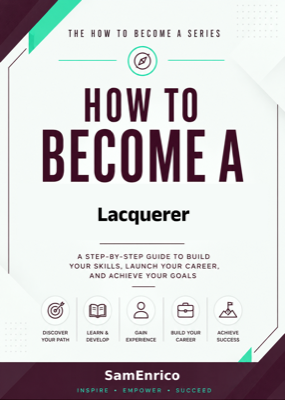 How to Become a LacquererNegron Dennis$11.99
You may also like
 Hong Kong Handover 1997Dunn Johnnie$11.99
 Zumba For Postnatal Recovery CourseNeal Christian$11.99
 Zumba for BeginnersLadner Nikia$11.99
 YouTube Comment Mining GuideHumes Pandora$12.99
 Worry Box MeditationCarlin Rudy$11.99
 Workplace Stress MeditationNguyen Lynn$11.99
 Workplace Stress and Sleep RepairHawley Ivory$11.99
 Workplace Perfectionism CureDelaney Jeffry$11.99
 Workplace Injustice Anger GuideWallen Isabelle$11.99
 Work Addiction and Burnout LinkGreenwood Ester$11.99
 Women in Yoga and WellnessBeattie Galina$11.99
 Women in Stand Up ComedyChun Evangeline$11.99