
Rebound Relationship Guide eBook
Avoid or navigate rebound dating without further e
Avoid or navigate rebound dating without further emotional damage.
Formats
Free sample
Chapter 1: The Chemistry of Collapse...--–- The first time Jenna found herself sobbing on her bathroom floor at 2 a.m., phone in hand, thumb hovering over her ex-boyfriend’s contact name for the seventeenth time that night, she told herself she was being dramatic. The second time, she told herself she was weak. By the tenth night of the same ritual—after he had blocked her, unblocked her, sent a “hey” text, then disappeared again—she had stopped using words like dramatic or weak. She had started using words like crazy. Broken.
Unfixable.What Jenna did not know, as she sat there on the cold tile, was that her brain was experiencing the same biochemical event as a cocaine user in withdrawal. She was not crazy. She was not broken. She was, quite literally, addicted.This is the single most important thing you will read in this entire book: You are not weak for wanting to text your ex. You are not pathetic for downloading a dating app three days after the breakup.
You are not broken because you cannot stop thinking about someone who was bad for you. You are experiencing a neurochemical hijacking that has been millions of years in the making, and until you understand how that hijacking works, you will keep making decisions that feel like yours but are actually being driven by a brain that is desperately trying to restore its equilibrium.Welcome to the chemistry of heartbreak. Welcome to the reason why rebounds feel inevitable, why your ex still lives rent-free in your head, and why every bone in your body is screaming at you to find someone—anyone—to fill the void. This chapter will not shame you for those urges. It will explain them.
And in that explanation, you will find the first real leverage you have ever had against the chaos.The Dopamine Crash: Why Nothing Feels Good Anymore Let us begin with a simple fact: love is a drug. That is not a metaphor. It is a neurochemical statement of fact. When you are in a romantic relationship, your brain produces dopamine—the same neurotransmitter released when you take cocaine, when you win money, when you eat sugar. Dopamine is the molecule of wanting.
It is not the molecule of liking or enjoying; it is the molecule of anticipation. It is what makes you check your phone every thirty seconds to see if they have texted back. It is what makes the first kiss feel like fireworks. It is what makes you say “I cannot stop thinking about them.”When a relationship ends, your brain’s dopamine supply crashes. Suddenly, the thing that was giving you regular, predictable hits of reward chemistry is gone.
And your brain, which is a prediction machine that hates surprises, responds exactly the way it would respond to the removal of any other addictive substance: withdrawal.Here is what withdrawal looks like in the context of heartbreak:You obsessively check their social media, hoping for a crumb of attention.You replay arguments in your head, looking for a different ending.You feel physically restless, unable to sit still or concentrate.Nothing else—not food, not friends, not hobbies—brings you the same level of pleasure.You experience cravings that feel almost sexual in their intensity.These are not signs that you are “not over them” in some moral or emotional sense. These are signs that your brain’s reward circuitry is starving. And like any starving organism, it will do whatever it takes to find food again—including convincing you that texting your ex is a good idea, that downloading a dating app will help, that sleeping with a stranger will make the pain stop.It will not. But your brain does not know that. Your brain only knows that it hurts, and that the last thing that made it stop hurting was them.Cortisol and the Hypervigilant Heart If dopamine withdrawal explains the craving, cortisol explains the panic.
Cortisol is your body’s primary stress hormone. It is released when you are in danger, when you are under threat, when your system detects that something is wrong. And to your primitive nervous system, a breakup registers as exactly the same kind of threat as being abandoned by your tribe on the savanna—which, one hundred thousand years ago, meant death.So your body does what it evolved to do: it floods you with cortisol, keeping you in a state of hypervigilance. Your heart races. Your muscles tense.
Your sleep becomes fragmented. You startle easily. You feel like something terrible is about to happen at any moment, because to your ancient brain, something terrible has happened. You have been separated from a primary attachment figure, and in evolutionary terms, that is an emergency.Here is where this becomes dangerous for rebound dating. Cortisol does not just make you anxious; it makes you mistake anxiety for attraction.
Have you ever met someone new shortly after a breakup and felt an instant, electric chemistry? That racing heart, that flutter in your stomach, that sense that this person is somehow fated? Here is the hard truth: that might not be chemistry. That might be cortisol.Your nervous system is already in a state of high arousal. When you introduce a new person into that state, your brain can easily mislabel the arousal—the racing heart, the sweaty palms, the heightened alertness—as romantic excitement.
This is called misattribution of arousal, and it is the reason why so many rebounds feel “meant to be” in the first two weeks and then fall apart catastrophically by week six. You were not falling in love. You were two anxious nervous systems colliding.Intermittent Reinforcement: The Slot Machine in Your Chest Now we arrive at the cruelest trick the brain plays on the brokenhearted. If your ex had a pattern of being hot and cold—loving one day, distant the next; present for a week, then vanished—you are not just dealing with withdrawal. You are dealing with intermittent reinforcement.Intermittent reinforcement is the psychological principle that underlies nearly every addiction.
Here is how it works: if a reward comes every single time you pull a lever, you will pull the lever until you are satisfied, and then you will stop. But if the reward comes unpredictably—sometimes after one pull, sometimes after ten, sometimes not at all—you will pull that lever until your fingers bleed. This is why slot machines are more addictive than vending machines. This is why a partner who is sometimes loving and sometimes cruel is more addictive than a partner who is consistently kind.If your ex had a pattern of withdrawing and then returning, of ignoring you and then love-bombing you, of saying “I need space” and then showing up at your door, your brain has been trained on an intermittent reinforcement schedule. You are not “crazy” for being unable to let go.
You have been neurologically conditioned, the same way Pavlov’s dogs were conditioned, except your reward was the temporary relief of their attention.And here is the kicker: that conditioning does not disappear just because the relationship ended. It lingers. It is why…
This is the end of the free sample. Get the eBook to keep going. Buy now
About this book
Details
- Author
- Beauregard Nichol
- Publisher
- SamEnrico
- Language
- English
- Genre
- Non-Fiction, Self-Help, Rebound
- Released
- 2026-06-09
- Pages (approx.)
- 141
- Available as
- eBook, Audiobook

Read better in the ZLOADR app
Your eBooks on your phone or tablet. Sign in with your SamEnrico account and start reading.
More by Beauregard Nichol
 Healthcare Worker Burnout RescueBeauregard Nichol$11.99
 Remote Company Retreats Feedback SystemsBeauregard Nichol$11.99
 Willie Nelson Outlaw JourneyBeauregard Nichol$11.99
 The David Livingstone Africa GuideBeauregard Nichol$11.99
 The Candaces of Kush: Warrior Queens of the NileBeauregard Nichol$11.99
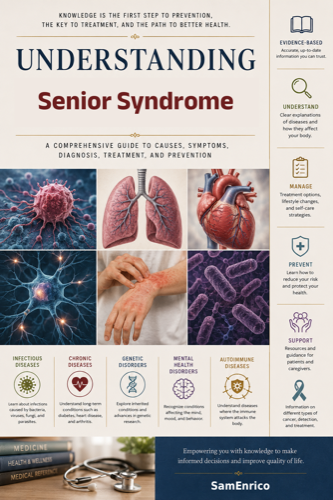 Understanding Senior SyndromeBeauregard Nichol$17.99
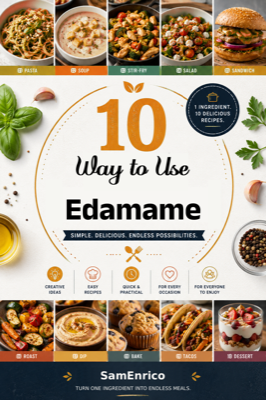 10 Ways to Use Edamame (Recipe Book)Beauregard Nichol$11.99
 Portfolio for AI Master's GuideBeauregard Nichol$12.99
 Franchise Accounting Global GuideBeauregard Nichol$12.99
 Retail Customer Service TrainerBeauregard Nichol$11.99
You may also like
 Hong Kong Handover 1997Dunn Johnnie$11.99
 Zumba For Postnatal Recovery CourseNeal Christian$11.99
 Zumba for BeginnersLadner Nikia$11.99
 YouTube Comment Mining GuideHumes Pandora$12.99
 Worry Box MeditationCarlin Rudy$11.99
 Workplace Stress MeditationNguyen Lynn$11.99
 Workplace Stress and Sleep RepairHawley Ivory$11.99
 Workplace Perfectionism CureDelaney Jeffry$11.99
 Workplace Injustice Anger GuideWallen Isabelle$11.99
 Work Addiction and Burnout LinkGreenwood Ester$11.99
 Women in Yoga and WellnessBeattie Galina$11.99
 Women in Stand Up ComedyChun Evangeline$11.99