

Non-FictionSelf-HelpSpeed Memory
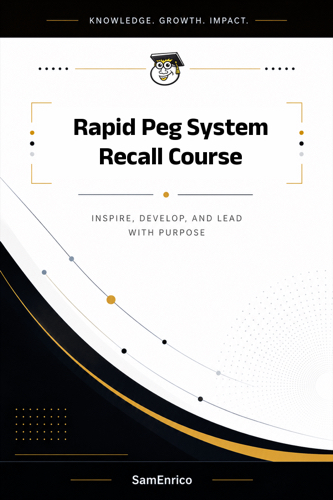
Rapid Peg System Recall Course eBook
Teaches speed retrieval techniques for competitive
by Mattos Keiko
Teaches speed retrieval techniques for competitive memory athletes.
Formats
Free sample
Chapter 1: The Frozen Screen--–- Imagine your brain is a supercomputer with a broken monitor. The data is all there—every name, every number, every fact you’ve ever learned—but the screen refreshes so slowly that by the time the image appears, the moment has passed. You know the answer to the question, but it arrives three seconds too late. You remember the person’s name, but only after they’ve walked away. You studied for the exam, but during the test, the information feels trapped behind a glass wall.This is the frustration that no memory course has ever solved—until now.Every bestselling memory book you’ve ever read taught you how to store information.
They gave you palaces, pegs, and paths. They showed you how to cram more into your head than you thought possible. And for a few days after reading, you felt like a genius. You memorized a shopping list. You impressed your friends with a deck of cards.
Then, slowly, the old problem returned. Not forgetting—slow retrieval. The pause. The hesitation. The tip-of-the-tongue agony.Welcome to the hidden ceiling of human memory.
And welcome to the only book that tears it down.The Great Misunderstanding For the past fifty years, the memory training industry has sold you a single idea: you don’t have a bad memory, you just never learned how to use it. That statement is technically true, but it’s also dangerously incomplete. The full truth is far more specific—and far more liberating.You don’t have a bad memory. You have a slow one.The distinction is everything. A bad memory loses information permanently.
A slow memory has the information but cannot access it quickly enough to be useful. And here is the shocking reality that no mainstream memory course has ever dared to tell you: your natural retrieval speed is capped at approximately 10 bits per second.That number comes from cognitive science. Ten bits per second is roughly the speed of conscious processing—the rate at which your brain can serialize thoughts, move attention from one thing to another, and convert intention into action. It is the reason you cannot consciously track three conversations at once. It is the reason typing 120 words per minute feels like magic.
And it is the reason that, no matter how many memory palaces you build, you will always hit a speed wall unless you train retrieval specifically.The world memory champions—the men and women who memorize 80 digits in 13.5 seconds or a full deck of cards in under 20 seconds—have not broken this 10-bit barrier. They have simply learned to bypass conscious processing altogether. They have turned retrieval from a deliberate act into an automatic reflex.That is what this book teaches. Not storage. Not organization.
Speed.The Three Lies You’ve Been Told Before we build anything new, we must demolish the old foundations. The memory training industry has propagated three lies that have held you back. Each one sounds true. Each one is sold as wisdom. And each one is dead wrong for anyone who wants lightning-fast recall.Lie #1: “Your memory is like a muscle—just train it.”Muscles grow through resistance and fatigue.
Memory does not. You cannot “strengthen” your memory in the way you strengthen a bicep. What you can train is strategy. The difference is critical. A stronger muscle lifts heavier weight.
A better memory strategy does not make your brain “stronger”—it makes your retrieval more efficient. You are not building tissue. You are building pathways. And pathways do not grow through exhaustion; they grow through repetition, clarity, and speed-focused drilling.Lie #2: “Photographic memory is a myth, so don’t even try.”This lie is half-true, which makes it dangerous. True: no healthy adult has perfect, automatic, lifelong photographic recall of everything they see.
False: the techniques that produce near-photographic speed are available to anyone who trains them. Elite memory athletes can glance at a page of random numbers for three seconds and recite them backwards ten minutes later. That looks like a photograph to the untrained eye. It is not magic. It is chunking, pegging, and speed retrieval—all teachable skills.
The lie that “photographic memory doesn’t exist” is often used to lower expectations. We are raising them.Lie #3: “The Method of Loci is all you need.”The ancient Greek technique of placing memories in imagined rooms is brilliant. It is also catastrophically slow for many applications. Walking through a palace in your mind takes time. Finding locus number 47 takes time.
The Method of Loci is a storage solution, not a retrieval solution. Every world champion uses it in combination with peg systems precisely because pegs offer instant, location-free access. The palace gives you order. The pegs give you speed. One without the other is incomplete.If you have read Joshua Foer’s Moonwalking with Einstein or Dominic O’Brien’s How to Develop a Perfect Memory, you have received half the equation.
This book completes it.The Speed Diagnosis: Where You Are Right Now Before we can measure improvement, we need a baseline. But unlike most memory books that ask you to memorize a list of random words using your “natural” memory (a test that tells you almost nothing useful), we will measure something far more relevant: retrieval latency.Retrieval latency is the time between a stimulus and the appearance of the associated memory in conscious awareness. For example: if someone says the number “37” and you have a peg for 37 (perhaps “Mickey Mouse” if you use 3= M, 7= K), retrieval latency is how long it takes for Mickey to appear in your mind’s eye.Average untrained retrieval latency for peg associations is approximately 1.2 to 1.8 seconds. Trained amateurs achieve 0.6 to 0.9 seconds. Elite competitors operate at 0.25 to 0.35 seconds.That range—from 1.5 seconds down to 0.3 seconds—is the entire territory this book covers.
Every chapter, every drill, every insight is designed to shave milliseconds off that number.Your first diagnostic (no pegs required yet):Take a deck of standard playing cards. Remove the jokers. Shuffle thoroughly. Set a timer for 60 seconds. Go through the deck as fast as you can, one card at a time, and for each card, say the first person that comes to mind.
Not the suit and number. A person. For the Ace of Spades, you might say “Einstein.” For the Queen of Hearts, “Beyoncé.” Do not deliberate. Do not second-guess. Say whatever arrives first.After 60 seconds, stop.
Count how many cards you named. Divide that number by 60. That is your current card-to-person retrieval rate in seconds per card.Most people score between 0.8 and 1.5 seconds per card. That means in a real memory competition (or a real-world situation like a networking event), you would be too slow to keep up. By the end of this book, your target is 0.33 seconds per card—the equivalent of 180 cards per minute, or one card every metronome beat at 180 bpm.Write your baseline down.
You will return to it in Chapter 7.Why Speed Matters More Than Capacity Let me tell you about two students. Both studied for the same medical school anatomy exam. Both used the same memory palace technique. Both reviewed their materials…
This is the end of the free sample. Get the eBook to keep going. Buy now
About this book
Details
- Author
- Mattos Keiko
- Publisher
- SamEnrico
- Language
- English
- Genre
- Non-Fiction, Self-Help, Speed Memory
- Released
- 2026-06-09
- Pages (approx.)
- 128
- Available as
- eBook, Audiobook

Read better in the ZLOADR app
Your eBooks on your phone or tablet. Sign in with your SamEnrico account and start reading.
More by Mattos Keiko
 Quit Smoking for SchizophreniaMattos Keiko$11.99
 Sleep Deprivation EffectMattos Keiko$11.99
 Anger Trigger AwarenessMattos Keiko$11.99
 Low Carb Portion Control MasteryMattos Keiko$11.99
 Medical Trauma Nightmare GuideMattos Keiko$11.99
 Grandparent Grief GuideMattos Keiko$11.99
 Scholarships In Dubai HandbookMattos Keiko$11.99
 The Aswang's Hungry Shadows: A Filipino Feast of FearMattos Keiko$11.99
 The Ghosts of Whitechapel: DNA and the Ripper’s ShadowMattos Keiko$11.99
 How to Produce Special Effects ControllersMattos Keiko$11.99
 S Corporation Succession RulesMattos Keiko$12.99
 Africa Domain Renewal Price CheckMattos Keiko$12.99
You may also like
 Hong Kong Handover 1997Dunn Johnnie$11.99
 Zumba For Postnatal Recovery CourseNeal Christian$11.99
 Zumba for BeginnersLadner Nikia$11.99
 YouTube Comment Mining GuideHumes Pandora$12.99
 Worry Box MeditationCarlin Rudy$11.99
 Workplace Stress MeditationNguyen Lynn$11.99
 Workplace Stress and Sleep RepairHawley Ivory$11.99
 Workplace Perfectionism CureDelaney Jeffry$11.99
 Workplace Injustice Anger GuideWallen Isabelle$11.99
 Work Addiction and Burnout LinkGreenwood Ester$11.99
 Women in Yoga and WellnessBeattie Galina$11.99
 Women in Stand Up ComedyChun Evangeline$11.99