
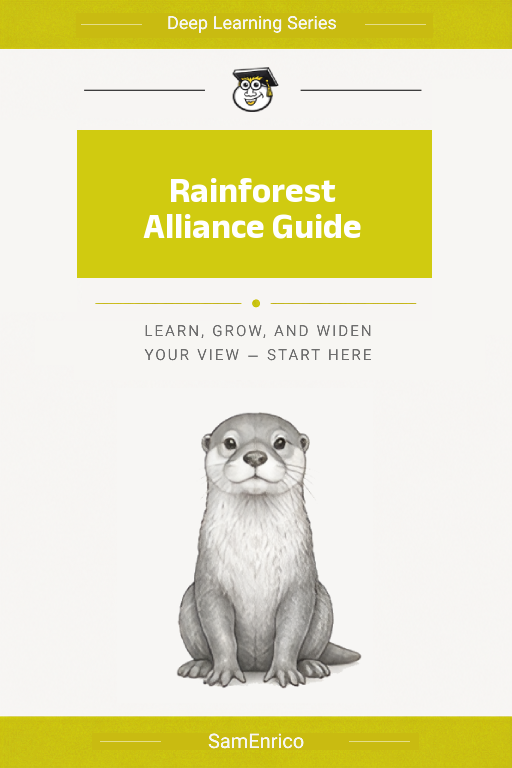
Non-FictionBusiness BriefAgricultural Trade
Rainforest Alliance Guide eBook
Get Rainforest Alliance certification for coffee a
Get Rainforest Alliance certification for coffee and shea. Sustainability credentials for European buyers.
Formats
Free sample
Chapter 1: The Container That Never Arrived--–- The container had left Tema Port in Ghana on a warm Tuesday morning. Forty metric tons of premium shea butter, destined for a German cosmetics manufacturer that had been a loyal buyer for seven years. The exporter, a mid-sized trading house run by a woman named Adwoa who had built her business from a single shipping container to a hundred per year, had done everything right. The shea was high quality. The price was agreed.
The relationship was solid.Ten days later, the container arrived in Hamburg. And then it stopped moving.Customs held it. Not for inspection of the product itself, but for documentation. The buyer’s procurement team sent an email that Adwoa would read three times before it sank in: “We cannot release payment or accept delivery until you provide proof that this shea was harvested from deforestation-free land, with geolocation data for the collection zones, and a valid sustainability certification recognized under the EU Deforestation Regulation. Our legal department informs us that without this, we cannot place this product into the European supply chain.
The container will sit at port at your cost until resolved.”Adwoa had no geolocation data. She had no certification. She had only a seven-year relationship, a container full of melting shea butter, and a sinking feeling that her business model had just become obsolete.This story is not hypothetical. It is happening now, to coffee exporters in Uganda, to shea cooperatives in Burkina Faso, to cocoa traders in Côte d’Ivoire. And if you are reading this book, it may soon happen to you.Welcome to the new European market.
The era of the handshake deal is over. The era of “trust me, it’s sustainable” is finished. In its place stands a regulatory framework that demands proof, traceability, and certification. And at the center of this new world stands a small green frog with a very big job.This chapter is about why the Rainforest Alliance seal has evolved from a niche marketing tool into a near-licence-to-operate for European buyers. It is about the market forces, regulatory pressures, and commercial realities that have made certification not optional but essential.
And it is about what happens to exporters who ignore this shift—and those who embrace it.The Death of the Handshake Deal For decades, agricultural trade between Africa, Latin America, and Europe operated on relationships. A buyer in Hamburg or Rotterdam would visit a cooperative in Colombia or Ghana, taste the product, shake hands, and agree on a price. Sustainability claims were often verbal: “Our farmers use traditional methods,” or “We don’t cut down trees.” These claims were rarely verified, and almost never audited.That world ended on June 29, 2023, when the European Union adopted Regulation 2023/1115, known as the EU Deforestation Regulation, or EUDR. The regulation, which becomes fully enforceable by December 2026, requires any company placing specified commodities—including coffee, cocoa, palm oil, rubber, soy, cattle, and wood—onto the EU market to prove that their products are deforestation-free. “Deforestation-free” means that the land used to produce the commodity has not been subject to forest degradation or deforestation after December 31, 2020.This is not a voluntary standard.
It is not a marketing claim. It is the law. And the penalties for non-compliance are severe: fines of up to four percent of a company’s annual EU turnover, confiscation of products, and a temporary ban from importing into the EU.For European buyers, this created an immediate problem. They cannot sell coffee or shea products in their home markets without proof. But obtaining that proof from thousands of smallholder farmers or hundreds of wild-collection zones is extraordinarily difficult.
The Rainforest Alliance, which has been building traceability systems for more than three decades, suddenly found itself in the right place at the right time.The Green Frog That Became a Shield The Rainforest Alliance certification seal—affectionately called “the green frog” by industry insiders—was created in 1987 as a way to signal environmentally responsible farming. For most of its history, it was a nice-to-have. A premium product for conscientious consumers. A way to charge an extra fifty cents per pound of coffee.That has changed. Today, for many European buyers, the green frog is not a nice-to-have.
It is a must-have.Why? Because Rainforest Alliance certification already requires most of what EUDR demands. Let me be specific:• Geolocation: RA requires certified farms and collection zones to be mapped using GPS coordinates. While EUDR requires polygons (the precise boundary of the land), RA has been moving in this direction since 2020. The gap is narrowing.• Deforestation monitoring: RA’s traceability platform, called Marketplace, already tracks land use and can flag deforestation risk.
This is exactly what EUDR requires.• Chain of custody: RA’s certification system requires documented traceability from farm to first buyer. This is the backbone of EUDR due diligence.• Third-party auditing: RA uses independent certification bodies (CBs) to verify compliance. EUDR requires similar third-party verification or government-approved systems.In short, Rainforest Alliance certification does not guarantee EUDR compliance—but it provides 80 percent of the infrastructure. For a European buyer facing a mountain of due diligence requirements, sourcing from an RA-certified supplier reduces risk dramatically. For an exporter, holding an RA certificate is the single most credible signal you can send that you are ready for the EU market.By the Numbers: Why Shea and Coffee Are the Frontier The EUDR applies to several commodities, but coffee and shea occupy two very different positions in the market.
Understanding these differences is essential for any exporter.Coffee is the mature market. According to the Rainforest Alliance’s 2025 impact report, approximately 42 percent of coffee imports into Germany and 38 percent into the Netherlands are now certified under either RA or a comparable scheme. The major European roasters—companies like JDE Peet’s, Nestlé, and Lavazza—have made public commitments to source 100 percent certified coffee by 2026. This means that uncertified coffee is rapidly being pushed out of the market. If you are a coffee exporter without certification, you are competing for a shrinking pool of buyers who are willing to take on regulatory risk.
Those buyers pay less. Much less.Shea is the frontier market. Shea certification is growing fast—approximately 25 percent annually according to industry data from the Global Shea Alliance—but from a much smaller base. In 2024, only about 12 percent of shea kernels imported into the EU were certified under any scheme. However, the cosmetics industry, which is the primary buyer of shea butter in Europe, is under enormous pressure from both regulators and consumers.
Companies like L’Oréal, Beiersdorf, and Unilever have all committed to deforestation-free supply chains. For shea, which is primarily wild-harvested from the savanna woodlands of West Africa, this presents unique challenges. But it also presents an opportunity. Early movers in shea certification are commanding premiums of 15 to 25 percent above market price. Late movers will struggle to find buyers at all.The message is clear: coffee exporters are in a race against time to maintain market access.
Shea exporters are in a race to capture a premium before certification becomes mandatory.The Cost of Doing Nothing Let me be blunt about what happens if…
This is the end of the free sample. Get the eBook to keep going. Buy now
About this book
Details
- Author
- Cheatham Eulah
- Publisher
- SamEnrico
- Language
- English
- Genre
- Non-Fiction, Business Brief, Agricultural Trade
- Released
- 2026-06-01
- Pages (approx.)
- 154
- Available as
- eBook, Audiobook

Read better in the ZLOADR app
Your eBooks on your phone or tablet. Sign in with your SamEnrico account and start reading.
More by Cheatham Eulah
 Remote Company Retreats Post Event GuideCheatham Eulah$11.99
 Knee Osteoarthritis GuideCheatham Eulah$11.99
 Death Of Ex Spouse GuideCheatham Eulah$11.99Death Of Ex Spouse GuideCheatham Eulah$11.99
 Hospitality Burnout RecoveryCheatham Eulah$11.99
 The Hiram Bingham Inca GuideCheatham Eulah$11.99
 Jackson Pollock: The Artist Who Painted Like a StormCheatham Eulah$11.99
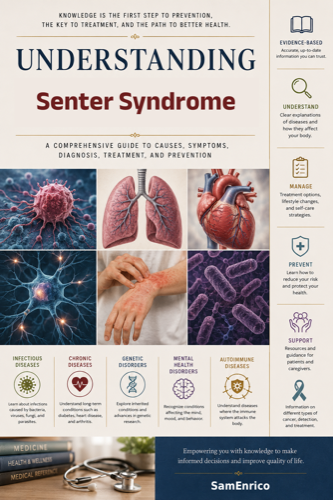 Understanding Senter SyndromeCheatham Eulah$17.99
 Rhode Island White Chicken BreedingCheatham Eulah$11.99
 Japanese MEXT Scholarship HandbookCheatham Eulah$12.99
 10 Ways to Use Dried Chilli (Recipe Book)Cheatham Eulah$11.99
You may also like
 Hong Kong Handover 1997Dunn Johnnie$11.99
 Zumba For Postnatal Recovery CourseNeal Christian$11.99
 Zumba for BeginnersLadner Nikia$11.99
 YouTube Comment Mining GuideHumes Pandora$12.99
 Worry Box MeditationCarlin Rudy$11.99
 Workplace Stress MeditationNguyen Lynn$11.99
 Workplace Stress and Sleep RepairHawley Ivory$11.99
 Workplace Perfectionism CureDelaney Jeffry$11.99
 Workplace Injustice Anger GuideWallen Isabelle$11.99
 Work Addiction and Burnout LinkGreenwood Ester$11.99
 Women in Yoga and WellnessBeattie Galina$11.99
 Women in Stand Up ComedyChun Evangeline$11.99