

Non-FictionStudent's ShortcutGap Explanation
Publication Gap Explanation eBook
Explains publication gaps in PhD applications due
Explains publication gaps in PhD applications due to field differences, advisor preferences, or COVID disruptions.
Formats
Free sample
Chapter 1: The Comparison Trap...--You have probably done this at least once in the past seventy-two hours. You opened a browser, typed in the name of a peer—someone in your year, someone you respect or secretly compete with—and added the words "CV" or "publications" to the search bar. Maybe you found a personal website. Maybe you found a Google Scholar profile. And then you counted.
Three papers. Two under review. A conference presentation at a top venue. Your stomach tightened. Your breathing changed.
You closed the tab and told yourself you were just curious, but the feeling that followed was not curiosity. It was shame.Here is what you did not see when you counted those three papers: the eighteen months that person spent waiting for a single revise-and-resubmit decision. The advisor who submitted the paper on their behalf because the journal did not accept graduate student submissions. The co-author who wrote the first draft of all three papers while the person whose name appears first merely ran the statistical analysis. The two rejections that preceded the acceptance.
The family connection that opened a door to a summer fellowship that funded the research. You saw the output. You did not see the luck, the connections, the institutional privilege, or the sheer stochastic chaos of peer review.This is the comparison trap. And it is the single greatest source of unnecessary anxiety among Ph D applicants today.The problem is not that you lack publications. The problem is that you have absorbed a fictional standard—a composite CV that does not actually exist in the wild—and you are measuring yourself against it.
Every year, I speak with applicants who have master's degrees from excellent universities, research experience that would have been the envy of a faculty member thirty years ago, and letters of recommendation that glow like embers. And every year, many of these same applicants almost do not apply because they believe they are "not productive enough." They have looked at the mythical standard CV and found themselves wanting.This chapter exists to dismantle that myth. It will not tell you that publications do not matter. They do. But they matter far less than you think, and they matter in ways that are almost never linear.
More importantly, this chapter will introduce a distinction that will reframe everything you read in the rest of this book: the difference between doctorateness and productivity, and the even more crucial difference between publishability and published.By the end of this chapter, you will take a diagnostic quiz that will tell you, with brutal honesty, whether your CV gap is real or perceived. And for the vast majority of you, the answer will be perceived.The Invention of the Standard CVLet us start with a question that seems simple but is actually a trap: what does a competitive Ph D application look like?If you ask this question on an online forum—Grad Cafe, Reddit's r/gradadmissions, The Grad Cafe Forums—you will receive answers that are remarkably consistent. A competitive applicant, according to the collective wisdom of anxious strangers, has a GPA above 3.8, GRE scores in the 90th percentile (for programs that still require them), at least two years of research experience, strong letters of recommendation, and publications. Not just working papers. Not just under review.
Published. Ideally first author. Ideally in a top journal.Here is the truth that no one on those forums will tell you: most of the people giving that advice have never served on an admissions committee. Most of them are fellow applicants, equally anxious, equally misinformed, repeating what they have heard from someone else who heard it from someone else. The standard CV is a folk legend, passed down through generations of graduate school applicants like a campfire story designed to scare children.I have served on admissions committees at two R1 universities.
I have read thousands of applications. And I can tell you with complete confidence that the majority of admitted Ph D students in the humanities and social sciences have zero publications at the time of application. In some humanities fields—philosophy, classics, comparative literature—the percentage of admitted students with publications is in the single digits. In the social sciences, it is higher but still below fifty percent for most top programs. Even in STEM fields, where publications are more common, the typical admitted student has one or two papers, almost always as a middle author on a large collaboration, and almost always with a contribution that is difficult to extract from the author list.So where does the myth come from?Part of it comes from the way successful applicants present themselves after the fact.
Someone who gets into a top program does not usually say, "I had zero publications and got lucky." They say, "I worked hard and my research experience prepared me well." That is true but incomplete. The incomplete version gets repeated. The nuance gets lost. Over time, the story becomes: "To get into a top program, you need publications." This is not malice. It is the natural erosion of complexity in oral tradition.Part of it comes from the STEM exceptionalism problem.
In biomedical fields, it is genuinely common for applicants to have multiple publications. But biomedical fields are not all fields. The publication norms of a cancer biology lab have nothing to do with the publication norms of a history department. Yet because STEM fields produce more funding, more faculty, and more graduate students, their norms have leaked into the broader conversation about graduate admissions. A political science applicant reads a forum post from a neuroscience applicant and thinks, "If they need three papers, I must need three papers." The fields are not comparable, but the anxiety does not care about disciplinary boundaries.And part of it comes from the simple fact that admissions committees do not publish their rubrics.
If you have never seen the inside of a faculty meeting where applications are discussed, you have no way of knowing what actually matters. The secrecy creates a vacuum. The vacuum fills with myths. The myths become the standard CV.Doctorateness Versus Productivity: The Core Distinction Let me introduce a concept that will save you thousands of dollars in therapy: doctorateness.Doctorateness is the quality that admissions committees are actually trying to assess. It is not a list of outputs.
It is not a number. It is a judgment about whether you have the intellectual capacity, the curiosity, the resilience, and the judgment to complete a doctoral degree and become a contributing member of a scholarly community. Doctorateness includes the ability to formulate a research question, to situate that question within an existing literature, to choose appropriate methods, to interpret results with humility and rigor, to accept feedback without collapsing, to revise work in response to critique, and to persist through the inevitable failures that define academic life.Notice that none of those things require a publication.Productivity, by contrast, is the number of countable outputs you have produced: papers, chapters, conference presentations, datasets, software packages. Productivity is easy to measure. Doctorateness is hard to measure.
And because humans are lazy, admissions committees sometimes use productivity as a proxy for doctorateness. They assume that someone with…
This is the end of the free sample. Get the eBook to keep going. Buy now
About this book
Details
- Author
- Lemaster Maura
- Publisher
- SamEnrico
- Language
- English
- Genre
- Non-Fiction, Student's Shortcut, Gap Explanation
- Released
- 2026-05-29
- Pages (approx.)
- 151
- Available as
- eBook, Audiobook

Read better in the ZLOADR app
Your eBooks on your phone or tablet. Sign in with your SamEnrico account and start reading.
More by Lemaster Maura
 Emotional Regulation For DisgustLemaster Maura$11.99
 Dreams After Electrocution TraumaLemaster Maura$11.99
 The High School Stress GuideLemaster Maura$11.99
 DBT For ParamedicsLemaster Maura$11.99
 The Climate Tech Technical WritingLemaster Maura$11.99
 Kolokotronis: The Lion of the Morea RisesLemaster Maura$11.99
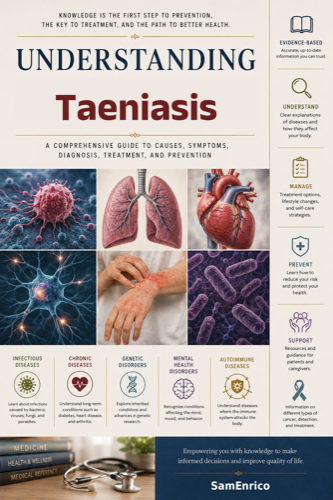 Understanding TaeniasisLemaster Maura$17.99
 How to Start a Pallets Made of Metal Business (Beginners Guide)Lemaster Maura$11.99
 Storefront NYC GuideLemaster Maura$12.99
 Journeyman Automotive Service TechnicianLemaster Maura$11.99
You may also like
 Hong Kong Handover 1997Dunn Johnnie$11.99
 Zumba For Postnatal Recovery CourseNeal Christian$11.99
 Zumba for BeginnersLadner Nikia$11.99
 YouTube Comment Mining GuideHumes Pandora$12.99
 Worry Box MeditationCarlin Rudy$11.99
 Workplace Stress MeditationNguyen Lynn$11.99
 Workplace Stress and Sleep RepairHawley Ivory$11.99
 Workplace Perfectionism CureDelaney Jeffry$11.99
 Workplace Injustice Anger GuideWallen Isabelle$11.99
 Work Addiction and Burnout LinkGreenwood Ester$11.99
 Women in Yoga and WellnessBeattie Galina$11.99
 Women in Stand Up ComedyChun Evangeline$11.99