
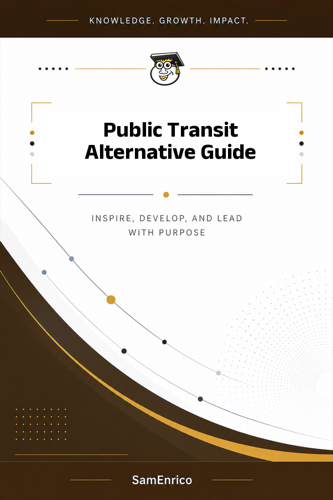
Public Transit Alternative Guide eBook
Teaches using buses or trains to eliminate driving
Teaches using buses or trains to eliminate driving anger entirely.
Formats
Free sample
Chapter 1: The Cage of Steel--–- The first time I realized my car was making me a worse person, I was screaming at a minivan.Not because the minivan had done anything dangerous. Not because the driver had cut me off or brake-checked me or flipped me off. The minivan had simply merged into my lane at a perfectly reasonable speed, leaving plenty of space, using a turn signal like a civilized human being. And yet, there I was: both hands on the wheel, knuckles white, jaw clenched, yelling a string of words I would never say to another person face-to-face.My three-year-old daughter was in the backseat. She wasn't crying.
She was used to it.That was the moment that broke me. Not the traffic. Not the minivan. The realization that my child had normalized her father's rage. She didn't flinch when I honked.
She didn't ask why Daddy was yelling. She just sat there, strapped into her car seat, waiting for the storm to pass like it was weather. Like it was normal.It was not normal. And it was not, as I had told myself for years, because I had a "short fuse" or a "temper problem." I didn't lose my temper at the grocery store. I didn't snap at waiters.
I didn't yell at my wife. I was, by any reasonable measure, a calm, patient, even-tempered person—until I got behind the wheel of a car.Something changed the moment the engine started. The seat belt clicked, and with it, a transformation occurred. My shoulders rose toward my ears. My jaw tightened.
My eyes narrowed. I became, in the span of ten seconds, someone I did not want to be.This chapter is about why that happens. And more importantly, it is about why it is not your fault.The Road Rage Epidemic Nobody Wants to Name Let us begin with a confession that most self-help books refuse to make: you are probably not the problem. You are not fundamentally broken. You do not need anger management classes, though they might help.
You do not need to meditate more, though meditation is lovely. You need to understand that you have been placed inside a machine that was designed to make you angry.Consider the numbers. According to the AAA Foundation for Traffic Safety, nearly 80 percent of U.S. drivers expressed significant anger, aggression, or road rage in the previous year. That is four out of five.
Not a fringe minority. Not a few hotheads with bumper stickers about their feelings. The overwhelming majority of people who drive a car report, when asked honestly, that driving makes them feel angry.Eighty percent.If eighty percent of people who ate at a particular restaurant got food poisoning, we would not blame the diners. We would shut down the restaurant. If eighty percent of people who used a particular smartphone app reported feeling anxious and miserable, we would not tell them to try breathing exercises.
We would delete the app and warn our friends.But when eighty percent of drivers report significant anger behind the wheel, we tell them to calm down. We tell them to leave earlier. We tell them to listen to relaxing music. We blame the drivers for failing to manage their emotions, rather than blaming the car for triggering those emotions in the first place.This chapter will argue the opposite. Your anger is not a character flaw.
It is a predictable, almost inevitable response to a toxic environment. You have been placed inside a steel cage that triggers your fight-or-flight response, isolates you from other humans, and asks you to make hundreds of high-stakes decisions per minute while surrounded by strangers you have been trained to see as threats. Anyone would become angry in that environment. Anyone.The question is not "Why are you so angry?" The question is "Why wouldn't you be?"The Psychology of the Steel Cage To understand why driving makes you angry, you must first understand what happens to your brain when you enter a car. The answer begins with a concept called "access to opportunity" —a term borrowed from transportation psychology that describes the constant, low-grade calculation every driver is making: Can I make it?
Will I get there on time? What if I miss the turn? What if I hit traffic? What if everyone else is terrible at driving?This calculation never stops. Even when traffic is moving smoothly, your brain is scanning for threats, calculating distances, monitoring speed, checking mirrors, and anticipating the behavior of other drivers.
This is not a choice. It is how the human brain works when placed inside a fast-moving machine surrounded by other fast-moving machines.The problem is that your brain cannot tell the difference between a genuine threat (a drunk driver swerving toward you) and a routine annoyance (someone merging slowly). The same fight-or-flight response activates in both cases. Your amygdala—the brain's ancient alarm system—does not distinguish between a near-death experience and a mild inconvenience. It only knows that something unexpected is happening, and unexpected things might kill you.So your heart rate increases.
Your blood pressure rises. Cortisol floods your system. Your peripheral vision narrows—a physiological response that helps you focus on the threat directly ahead, but also makes you less aware of everything else around you. Your muscles tense. Your breathing becomes shallow.
You are, in every measurable way, preparing to fight or flee.But you cannot fight the slow driver. You cannot flee the traffic jam. So the energy has nowhere to go. It builds up. It simmers.
And then someone does something mildly annoying—fails to use a turn signal, waits too long at a green light—and you explode. Not because you are a bad person. Because your body has been primed for explosion for the last forty-five minutes.The Windshield Perspective This chapter introduces a concept that will recur throughout the book: the difference between the Windshield Perspective and the Human Perspective.The Windshield Perspective is what happens when you see the world only through your car's windshield. From this vantage point, every other vehicle is either an obstacle (too slow), a threat (too fast), or an idiot (unpredictable). You do not see people.
You see metal boxes moving in ways that impede your progress. You do not see families, workers, or fellow humans. You see competitors in a zero-sum race to the next red light.The Windshield Perspective is not a choice. It is a consequence of the car's design. The windshield frames your view, blocking out everything except the road ahead.
The side mirrors show you only the vehicles immediately beside you. The rearview mirror shows you the cars behind, reduced to headlights and grilles. Every design element of the car encourages you to see other drivers as obstacles rather than people.The Human Perspective is what happens when you see the street as a shared space. From this perspective, the person in the car next to you is not an idiot who failed to accelerate quickly enough. They are a parent taking their child to school.
They are a nurse coming off a twelve-hour shift. They are someone's loved one, someone's friend, someone who is probably…
This is the end of the free sample. Get the eBook to keep going. Buy now
About this book
Details
- Author
- Rash Shawanna
- Publisher
- SamEnrico
- Language
- English
- Genre
- Non-Fiction, Self-Help, Transit
- Released
- 2026-06-08
- Pages (approx.)
- 121
- Available as
- eBook, Audiobook

Read better in the ZLOADR app
Your eBooks on your phone or tablet. Sign in with your SamEnrico account and start reading.
More by Rash Shawanna
 Microbiome Autoimmune GuideRash Shawanna$11.99
 Dental Health Quit ManualRash Shawanna$11.99
 The Parent Death Financial GuideRash Shawanna$11.99
 Cleopatra Language and Multilingual RuleRash Shawanna$11.99
 Freedom’s Unfinished Symphony: The Battle for the 1964 Civil Rights ActRash Shawanna$11.99
 The Sky Pioneers: Mapping the Lost Lands of the Fertile CrescentRash Shawanna$11.99
 Gen X Alcohol Delivery SpendingRash Shawanna$12.99
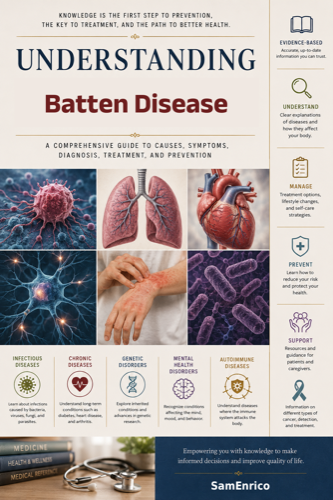 Understanding Batten DiseaseRash Shawanna$17.99
 10 Ways to Use Chives (Recipe Book)Rash Shawanna$11.99
 Insurance SpecialistRash Shawanna$11.99
You may also like
 Hong Kong Handover 1997Dunn Johnnie$11.99
 Zumba For Postnatal Recovery CourseNeal Christian$11.99
 Zumba for BeginnersLadner Nikia$11.99
 YouTube Comment Mining GuideHumes Pandora$12.99
 Worry Box MeditationCarlin Rudy$11.99
 Workplace Stress MeditationNguyen Lynn$11.99
 Workplace Stress and Sleep RepairHawley Ivory$11.99
 Workplace Perfectionism CureDelaney Jeffry$11.99
 Workplace Injustice Anger GuideWallen Isabelle$11.99
 Work Addiction and Burnout LinkGreenwood Ester$11.99
 Women in Yoga and WellnessBeattie Galina$11.99
 Women in Stand Up ComedyChun Evangeline$11.99