
Non-FictionStudent's ShortcutQuality Assurance
Proposal Writing Checklist Guide eBook
Use 100 point diagnostic checklist to self-evaluat
by Craven Clair
Use 100 point diagnostic checklist to self-evaluate and strengthen research proposals before submission.
Formats
Free sample
Chapter 1: The Checklist Paradox--–- The email arrived at 11:47 PM on a Friday. Dr. Sarah Chen had been working on her NIH R01 proposal for eleven months. She had run pilot studies, recruited a postdoctoral fellow, rewritten the significance section seven times, and secured letters of support from three senior collaborators. Her mentor called it “the best proposal I’ve ever seen from a junior faculty member.” Her department chair assured her the science was “transformative.” She had checked every box, followed every guideline, and submitted with the quiet confidence of someone who had done everything right.Four months later, the summary statement arrived.
The proposal scored in the 23rd percentile. The funding line was at the 12th. She was not funded.The reviews were not cruel. They were, in fact, almost gentle. One reviewer wrote: “The proposed research addresses an important problem.” Another noted: “The applicant has a strong publication record.” A third commented: “The methodology appears sound.” But then came the killer phrases.
“However, the significance section does not clearly articulate broader impacts.” “The budget justification lacks detail for personnel costs.” “The timeline does not account for IRB approval delays.” “The abstract contains jargon that may obscure the central hypothesis.” “The literature review is comprehensive but does not synthesize competing theoretical perspectives.”None of these criticisms was fatal alone. Each was a paper cut. Together, they bled the proposal to death.Sarah Chen had written a good proposal. She had not written a checked proposal. And in the high-stakes arena of peer-reviewed funding, the difference between good and checked is the difference between a celebration dinner and a post-submission autopsy.This book exists because of that difference.The 100-Point Diagnostic: A New Framework Every year, funding agencies worldwide receive approximately 1.7 million research proposals.
Of these, fewer than 25 percent are funded. The National Institutes of Health funds about 20 percent of R01 applications. The National Science Foundation funds roughly the same. The European Research Council funds approximately 12 percent. These are not lottery odds.
They are not random. They are the predictable outcomes of a scoring system that most applicants do not fully understand.Here is the secret that successful applicants know and unsuccessful applicants learn too late: proposals are not read. They are scored.This distinction is not semantic. When a reviewer says they “read” a proposal, they are describing an experience. But when a study section assigns a score, they are completing a rubric.
The experience is subjective. The rubric is objective. Proposals that score well may be poorly written if they check the right boxes. Proposals that are beautifully written may score poorly if they miss those boxes.The 100-Point Diagnostic is a systematic method for converting a proposal from a subjective document into an objective score. It is not a writing guide.
It is not a book about prose, persuasion, or storytelling. It is a clinical instrument—a checklist, an audit, a scoring matrix—that forces you to see your proposal the way a reviewer sees it: as a series of point-bearing items, each of which you either earn or lose.The Anatomy of a Review: How Proposals Are Really Evaluated To understand why the 100-Point Diagnostic works, you must first understand how reviewers think. This requires setting aside everything you believe about the romance of science and replacing it with the bureaucracy of scoring.Most funding agencies provide reviewers with a scoring rubric. The NIH uses a 1-to-9 scale for five core criteria: Significance, Investigator(s), Innovation, Approach, and Environment. The NSF uses two primary criteria: Intellectual Merit and Broader Impacts, each scored on a scale.
The European Research Council uses three: Ground-breaking Nature, Scientific Methodology, and Feasibility. These rubrics share a common structure: they assign point values to specific, observable features of a proposal.Here is what this means in practice. When a reviewer reads your significance section, they are not asking, “Does this move me emotionally?” They are asking, “Does this section contain an explicit statement of public health impact? Does it name at least three specific beneficiaries? Does it quantify the scale of the problem?” Each of these features corresponds to a line on their scoring sheet.
Each missing feature costs you points.The 100-Point Diagnostic reverse-engineers these rubrics. Instead of teaching you to write beautifully, it teaches you to audit systematically. You will learn to identify every point available to you, diagnose which points your current draft has missed, and fix those gaps with surgical precision.The Death by One Thousand Cuts Reviewers do not reject proposals for one big reason. They reject them for many small reasons.Consider the proposal that scores 68 out of 100. It is not a disaster.
It does not contain fraudulent data or impossible methodology. It is, by most measures, a competent proposal. But it has accumulated a dozen small problems: a vague hypothesis here, an underpowered sample size there, a missing ethics statement, a formatting violation, a generic letter of support, a timeline that forgets to account for holiday closures, a dissemination plan that mentions “journals” without naming any, an abstract that buries the lead on page two of the narrative.Each of these problems costs one to three points. None is fatal alone. But twelve problems at two points each equals twenty-four points lost.
The difference between a score of 68 and a score of 85—the difference between rejection and funding—is not a single brilliant insight. It is a dozen small fixes.This is the death by one thousand cuts. And it is the most common cause of rejection in competitive funding schemes.The 100-Point Diagnostic is designed specifically to prevent this death. It forces you to examine every cut before the reviewer does. It makes the invisible visible.
It turns vague anxiety about “readiness” into specific, actionable scores.The Ten Most Common Execution Errors Drawing on an analysis of over five hundred reviewer critiques from the NIH, NSF, UKRI, and the European Research Council, the following ten errors account for approximately seventy percent of all point losses in competitive proposals. These are not theoretical. They are extracted from actual summary statements.Error 1: Missing Required Sections. This sounds obvious, but it happens constantly. A proposal missing a data management plan, a mentorship plan, or a budget justification is often returned without review.
In some agencies, a missing section is an automatic administrative rejection before any scientific evaluation occurs.Error 2: Vague Impact Statements. Reviewers see phrases like “this research will advance the field” and assign zero points. Impact must be specific: which field? Which problem? Which population?
Which metric? The difference between “will advance the field” and “will reduce hospital readmission rates for heart failure patients by an estimated 15 percent” is the difference between zero points and full points.Error 3: Inadequate Methodology Detail. A methods section that says “data will be analyzed using appropriate statistical tests” is not a methods section. It is a placeholder. Reviewers need to know exactly which tests, which software, which assumptions, which handling of missing data, which correction for multiple comparisons.Error 4: Unrealistic Budgets.
Budgets that forget fringe benefits, underestimate travel costs, or omit publication fees signal incompetence. Reviewers use the budget as a proxy for project management ability. An arithmetic error…
This is the end of the free sample. Get the eBook to keep going. Buy now
About this book
Details
- Author
- Craven Clair
- Publisher
- SamEnrico
- Language
- English
- Genre
- Non-Fiction, Student's Shortcut, Quality Assurance
- Released
- 2026-05-30
- Pages (approx.)
- 151
- Available as
- eBook, Audiobook

Read better in the ZLOADR app
Your eBooks on your phone or tablet. Sign in with your SamEnrico account and start reading.
More by Craven Clair
 The Chemotherapy Body ScanCraven Clair$11.99
 Pain Creativity PracticeCraven Clair$11.99
 Cape Town Founder Mental Health GuideCraven Clair$11.99
 Klinefelter Syndrome TestosteroneCraven Clair$11.99
 Managing Stress as a New ManagerCraven Clair$11.99
 Rum & Revolution: The Smugglers' Code of the CaribbeanCraven Clair$11.99
 The Outback's Hidden Cure: Howard Florey and the Fight Against InfectionCraven Clair$11.99
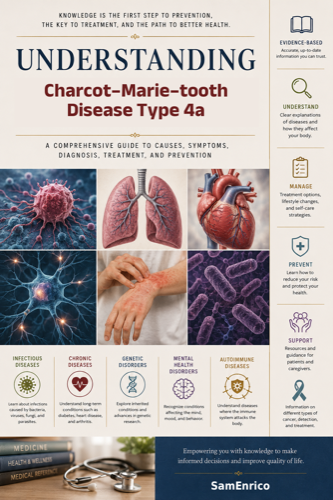 Understanding Charcot–Marie–tooth Disease Type 4aCraven Clair$17.99
 Execution Discipline in Online BusinessesCraven Clair$11.99
 Australian Education System GuideCraven Clair$12.99
 Proposal Writing Checklist GuideCraven Clair$12.99
You may also like
 Hong Kong Handover 1997Dunn Johnnie$11.99
 Zumba For Postnatal Recovery CourseNeal Christian$11.99
 Zumba for BeginnersLadner Nikia$11.99
 YouTube Comment Mining GuideHumes Pandora$12.99
 Worry Box MeditationCarlin Rudy$11.99
 Workplace Stress MeditationNguyen Lynn$11.99
 Workplace Stress and Sleep RepairHawley Ivory$11.99
 Workplace Perfectionism CureDelaney Jeffry$11.99
 Workplace Injustice Anger GuideWallen Isabelle$11.99
 Work Addiction and Burnout LinkGreenwood Ester$11.99
 Women in Yoga and WellnessBeattie Galina$11.99
 Women in Stand Up ComedyChun Evangeline$11.99