
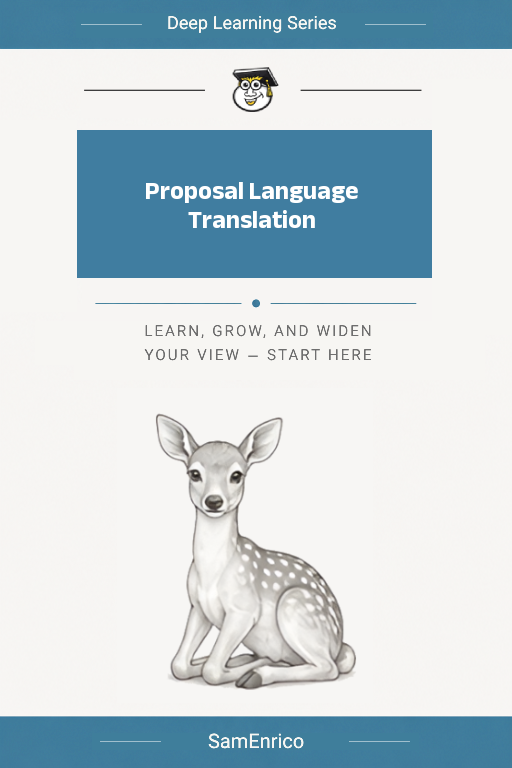
Non-FictionStudent's ShortcutTranslation GuideNon Native
Proposal Language Translation
Write research proposals in non native language us
Write research proposals in non native language using translation tools and bilingual reviewer strategies.
Formats
About this book
Free sample
Chapter 1: The Rejection Gap--–- Dr. Elena Vasquez had spent eighteen months designing her study. She had piloted the intervention, recruited a statistically significant sample size, and aligned every aim with the funding agency’s strategic priorities. Her science was sound. Her methodology was rigorous.
And yet, six months after submission, the rejection letter arrived. The reviewers’ comments were not about her hypothesis, her sample size, or her analytical plan. They wrote: “The aims are unclear in places.” “The methodology section contains ambiguous phrasing.” “The significance of the proposed work is difficult to discern.”–- Elena was not a native English speaker. She had written her proposal in Spanish, her first language, and then translated it into English using a combination of online tools and a friend who was a native English speaker but had no background in epidemiology. The friend had corrected her grammar but had inadvertently changed the meaning of several key sentences.
“We will correlate exposure X with outcome Y” became “We will compare exposure X and outcome Y.” A subtle shift. A devastating consequence. Elena’s proposal did not fail because her science was weak. It failed because her translation erased the precision of her intent.–- This chapter opens with Elena’s story because it is not an exception. It is the rule.
Across every major funding agency, non-native researchers face a persistent and well-documented disadvantage. A 2023 meta-analysis by Amano and colleagues, synthesizing data from twelve funding bodies across four continents, found that proposals submitted by researchers whose first language was not the proposal’s language of submission were rejected at 2.6 times the rate of proposals from native speakers, even after controlling for prior publication record, institutional affiliation, and requested budget. That is not a small gap. That is a chasm.–- But here is what the data also show: when those same non-native researchers successfully translate their proposals, their funding outcomes are statistically indistinguishable from those of native speakers. The problem is not the researcher.
The problem is not the science. The problem is the translation process itself. And that problem is solvable.The Cost of…
This is the end of the free sample. Get the eBook to keep going. Buy now
Contents
- Chapter 1
- Chapter 2
- Chapter 3
- Chapter 4
- Chapter 5
- Chapter 6
- Chapter 7
- Chapter 8
- Chapter 9
- Chapter 10
- Chapter 11
- Chapter 12
Details
- Author
- Jorgenson Bret
- Publisher
- SamEnrico
- Language
- English
- Genre
- Non-Fiction, Student's Shortcut, Translation Guide, Non Native
- Released
- 2026-05-29
- Pages (approx.)
- 147
- Available as
- eBook, Audiobook

Read better in the ZLOADR app
Your eBooks on your phone or tablet. Sign in with your SamEnrico account and start reading.
More by Jorgenson Bret
 Mindfulness Pain Acceptance GuideJorgenson Bret$11.99
 Lactose Intolerance Workplace GuideJorgenson Bret$11.99
 Tab Hoarding Recovery CourseJorgenson Bret$11.99
 Bariatric Surgery Support Person HandbookJorgenson Bret$11.99
 Rollover Equity Structures GuideJorgenson Bret$11.99
 The Last Dance of the Soviet CosmonautsJorgenson Bret$11.99
 The Mechanical Mind of Charles Babbage: The First AI PioneerJorgenson Bret$11.99
 Live In CaregiverJorgenson Bret$11.99
 AI Financial Data Reconciliation GuideJorgenson Bret$12.99
 Understanding Cdg Syndrome Type 2Jorgenson Bret$17.99
 How to Start a Postcards (plain) Business (Beginners Guide)Jorgenson Bret$11.99
You may also like
 Hong Kong Handover 1997Dunn Johnnie$11.99
 Zumba For Postnatal Recovery CourseNeal Christian$11.99
 Zumba for BeginnersLadner Nikia$11.99
 YouTube Comment Mining GuideHumes Pandora$12.99
 Worry Box MeditationCarlin Rudy$11.99
 Workplace Stress MeditationNguyen Lynn$11.99
 Workplace Stress and Sleep RepairHawley Ivory$11.99
 Workplace Perfectionism CureDelaney Jeffry$11.99
 Workplace Injustice Anger GuideWallen Isabelle$11.99
 Work Addiction and Burnout LinkGreenwood Ester$11.99
 Women in Yoga and WellnessBeattie Galina$11.99
 Women in Stand Up ComedyChun Evangeline$11.99