
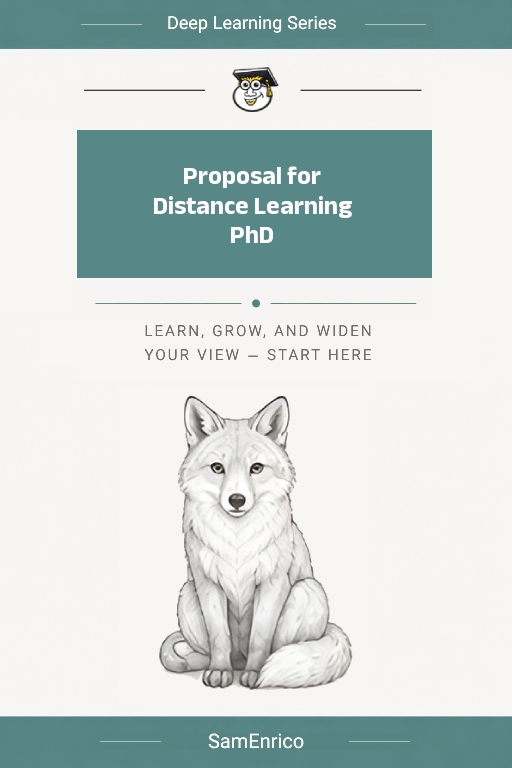
Non-FictionStudent's ShortcutDistance Research
Proposal for Distance Learning PhD eBook
Plan research for low-residency or online graduate
Plan research for low-residency or online graduate programs including remote data collection and supervision.
Formats
Free sample
Chapter 1: The Isolation Paradox--–- The first time I realized that distance might be an advantage, not a handicap, I was sitting in a chaotic coffee shop in rural Vermont, my laptop balanced on a wobbly table, headphones blasting white noise to drown out the sound of a frothing milk machine. On my screen, a professor from a university I had never visited was marking up my research proposal in real time. Across the Atlantic, a focus group participant in Nairobi was uploading a video diary. And in a Slack channel I had never expected to join, three other doctoral candidates I had never met in person were troubleshooting the same statistical software that had been defeating me for days.I was three years into a low-residency Ph D program, and I had just discovered what I call the Isolation Paradox: the very thing that seems like a weakness—being away from campus, from colleagues, from the invisible scaffolding of traditional academic life—can become your greatest strength, but only if you understand how to wield it.Most new doctoral students enter low-residency or online programs carrying a hidden shame. They apologize for not being “on campus.” They explain, preemptively, that their circumstances are unusual: a full-time job, young children, a chronic illness, military deployment, or simply the geographical reality that moving to a university town would uproot an entire family.
They speak in whispers about their “non-traditional” path, as if the word were a diagnosis rather than a description.This chapter exists to relieve you of that shame permanently.Over the next pages, I will dismantle the myth that a “real Ph D” requires daily physical presence. I will introduce you to three distinct models of distance doctoral education that exist in 2026, and help you identify which one you are actually in—because many students enroll without ever understanding the structural differences between a fully online program, a blended low-residency model, and a professional doctorate delivered at a distance. More importantly, I will draw a distinction that most programs themselves fail to make: between geographic isolation (where you live) and administrative isolation (how the institution treats you). The first is a fact. The second is a failure of institutional design, and it is largely preventable.I will also guide you through a self-audit to determine whether the low-residency path is genuinely right for you, and provide a checklist of twenty specific questions you must ask your program before you commit another year to a structure that may be working against you.
Finally, I will introduce you to three real doctoral candidates—one in the humanities, one in the social sciences, and one in STEM—who turned their distance status from a liability into a research superpower. Their stories will reframe everything you think you know about what a Ph D can look like.By the end of this chapter, you will stop apologizing for being remote. You will start strategizing.The Three Maps of the Distance Ph DBefore you can navigate the low-residency landscape, you need to know which terrain you are actually crossing. In my years of coaching distance doctoral students and analyzing program structures, I have identified three dominant models. Most students cannot name which model they belong to, and that ambiguity is the first cause of administrative isolation.Model One: The Fully Online Ph DThis is the purest form of distance education.
Every component of the degree—coursework, comprehensive exams, proposal development, data collection, analysis, writing, defense—occurs online. There is no residency requirement, no expectation of campus visits, and often no physical location for the student at any point. These programs are typically housed in universities that have made strategic investments in online infrastructure, and they attract students who are geographically immobile, internationally based, or employed full-time in jobs that cannot accommodate travel.The fully online Ph D has obvious advantages: flexibility, lower direct costs (no relocation or commuting), and the ability to maintain existing employment and family structures. However, it also has hidden dangers. The absence of any in-person contact can exacerbate administrative isolation if the university treats online students as second-class citizens.
Some fully online programs limit access to library services, career counseling, or writing centers. Others schedule mandatory synchronous sessions at times that privilege the institution’s time zone over the student’s. The best fully online programs have dedicated distance learning coordinators, 24-hour tech support, and asynchronous alternatives for every required event. The worst assume that “online” simply means “put the lectures on You Tube.”Model Two: The Blended or Low-Residency Ph DThe blended model is the most common form of distance doctoral education in 2026, and also the most misunderstood. In this model, students complete the majority of their work remotely but attend periodic intensive residencies—typically one to two weeks per year, often in the summer.
These residencies may include methodological boot camps, proposal workshops, cohort-building activities, and sometimes the defense itself.The blended model attempts to solve the problem of administrative isolation by forcing periodic physical co-presence. When designed well, these residencies create genuine intellectual community and provide hands-on training that is difficult to replicate online (such as lab techniques, archival handling, or in-person interview practice). When designed poorly, they become expensive, exhausting obligations that disrupt work and family life without delivering meaningful value.The key variable in the blended model is the purpose of the residency. A residency that exists solely to check a regulatory box (“students must have X hours of face-to-face instruction”) is a waste of your time and money. A residency that is tightly integrated into the curriculum—for example, a statistics residency that occurs immediately before you begin quantitative data collection—can be transformative.
Before enrolling in any blended program, you must ask: what exactly happens during the residency, and why can it not happen online?Model Three: The Professional Doctorate (Distance Format)Professional doctorates—the Doctor of Education (Ed D), Doctor of Business Administration (DBA), Doctor of Psychology (Psy D), and similar degrees—have always had a different relationship to distance education. Unlike research doctorates (Ph Ds), which are designed to produce academic researchers, professional doctorates are designed for practitioners who want to conduct applied research within their existing workplaces. This applied focus makes them unusually well-suited to distance delivery because the “field site” is often the student’s own office, clinic, or school.In a distance-format professional doctorate, you typically remain employed full-time while conducting research on a problem of practice within your organization. Your supervisor may be a university faculty member, but your data collection happens where you already are. The dissertation (often called a “doctoral study” or “capstone project”) is typically shorter and more applied than a traditional Ph D dissertation, and the defense may be more focused on practical implications than theoretical contributions.The advantage of this model is immediate relevance: your research directly benefits your workplace, and your workplace directly supports your research.
The disadvantage is a potential lack of critical distance. When you study your own organization, you risk confirmation bias, access problems (what happens if you are fired or laid off?), and ethical conflicts between your roles as employee and researcher. A good distance professional doctorate…
This is the end of the free sample. Get the eBook to keep going. Buy now
About this book
Details
- Author
- Baggett Lachelle
- Publisher
- SamEnrico
- Language
- English
- Genre
- Non-Fiction, Student's Shortcut, Distance Research
- Released
- 2026-06-01
- Pages (approx.)
- 153
- Available as
- eBook, Audiobook

Read better in the ZLOADR app
Your eBooks on your phone or tablet. Sign in with your SamEnrico account and start reading.
More by Baggett Lachelle
 Pain Meaning Making GuideBaggett Lachelle$11.99
 Kigali Media Tech Startup GuideBaggett Lachelle$11.99
 Testosterone Therapy Monitoring GuideBaggett Lachelle$11.99
 The Driver Body ScanBaggett Lachelle$11.99
 Cortisol Management Through Daily HabitsBaggett Lachelle$11.99
 The Berlin Tunnel: The Cold War's Most Daring Espionage HeistBaggett Lachelle$11.99
 Midnight at the Millennium: When the World Almost StoppedBaggett Lachelle$11.99
 Eavestrough InstallerBaggett Lachelle$11.99
 Work Rights On Student VisaBaggett Lachelle$12.99
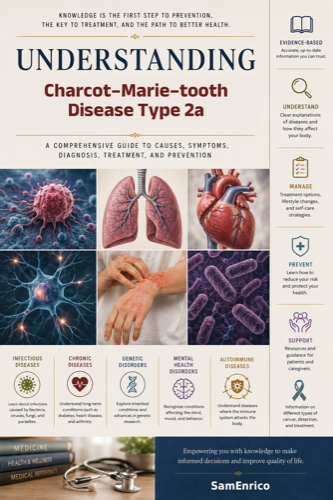 Understanding Charcot–Marie–tooth Disease Type 2aBaggett Lachelle$17.99
 How to Start a Hobby in Laser skirmishBaggett Lachelle$11.99
You may also like
 Hong Kong Handover 1997Dunn Johnnie$11.99
 Zumba For Postnatal Recovery CourseNeal Christian$11.99
 Zumba for BeginnersLadner Nikia$11.99
 YouTube Comment Mining GuideHumes Pandora$12.99
 Worry Box MeditationCarlin Rudy$11.99
 Workplace Stress MeditationNguyen Lynn$11.99
 Workplace Stress and Sleep RepairHawley Ivory$11.99
 Workplace Perfectionism CureDelaney Jeffry$11.99
 Workplace Injustice Anger GuideWallen Isabelle$11.99
 Work Addiction and Burnout LinkGreenwood Ester$11.99
 Women in Yoga and WellnessBeattie Galina$11.99
 Women in Stand Up ComedyChun Evangeline$11.99