
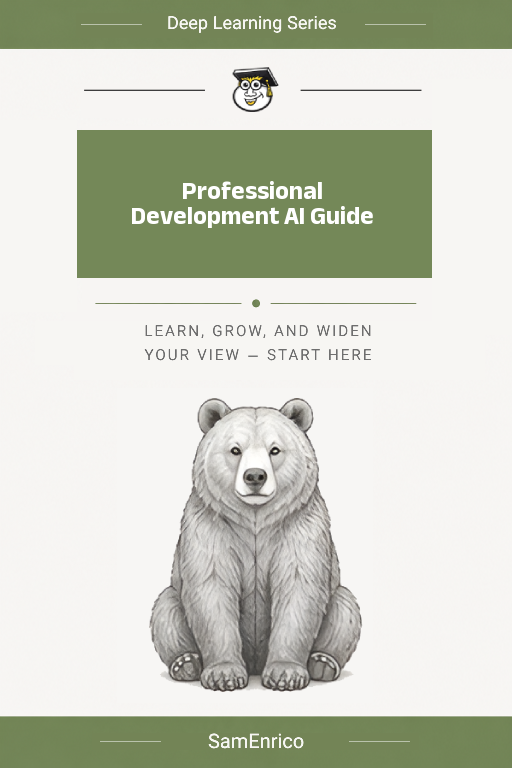
Non-FictionForecast & OutlookTeacher PD
Professional Development AI Guide eBook
Explore personalized teacher training recommendati
by Shook Gail
Explore personalized teacher training recommendations based on classroom observation and student outcomes.
Formats
Free sample
Chapter 1: The $18 Billion Graveyard--–- Every September, across the United States, a familiar ritual unfolds in school auditoriums, hotel ballrooms, and online webinar platforms. Teachers sit in folding chairs, Styrofoam coffee cups in hand, as a consultant clicks through a Power Point presentation titled "Differentiated Instruction for the 21st Century Classroom." The consultant smiles. The teachers nod. The district superintendent, seated in the back row, checks the box marked "Professional Development Delivered." And then everyone goes back to their classrooms and does exactly what they did before.This ritual costs American schools over $18 billion annually. And it changes almost nothing.The problem is not that teachers are resistant to growth.
The problem is not that consultants lack expertise. The problem is not even that budgets are stretched thin, though they are. The problem is far more fundamental: traditional professional development is built on a design flaw so profound that no amount of funding, enthusiasm, or Power Point animation can fix it.Traditional PD ignores the only two data sources that actually matter: what happens in the classroom during instruction, and how students perform as a result of that instruction. It substitutes generic content for specific diagnosis, one-size-fits-all workshops for personalized coaching, and compliance for curiosity. And then we wonder why teachers return to their classrooms with binders full of strategies they will never use.This chapter tells the story of that failure.
It explains why the $18 billion spent annually on teacher training produces so little return on investment. It contrasts the expensive, ineffective workshop model with the proven but unaffordable coaching model. And it introduces the solution that will unfold across the remaining eleven chapters: a closed-loop system powered by artificial intelligence that brings the personalization of coaching to every teacher, at a fraction of the cost.But before we get to the solution, we must confront the failure honestly. Because only by understanding why the current system is broken can we build something better in its place.The Ritual of Waste Let us walk through a typical professional development day in a typical American school district. Call it Jefferson County.It is a Wednesday in October.
School is dismissed early. Teachers file into the high school cafeteria, where tables have been pushed aside and chairs arranged in neat rows. A consultant named Dr. Reynolds has flown in from a national firm. His fee for the day is 15,000,plustravel.Thedistricthasalsopaidforworkbooks,handouts,andasubscriptionto Dr.Reynolds′sonlineportal.Totalcostforthissingleday:15,000, plus travel.
The district has also paid for workbooks, handouts, and a subscription to Dr. Reynolds's online portal. Total cost for this single day: 15,000,plustravel.Thedistricthasalsopaidforworkbooks,handouts,andasubscriptionto Dr.Reynolds′sonlineportal.Totalcostforthissingleday:42,000.Dr. Reynolds is an engaging speaker. He uses metaphors.
He tells stories about his own classroom experience, which happened twenty years ago but still sounds plausible. He shows a video of a master teacher leading a flawless lesson. He distributes a four-color flowchart titled "The Five Steps to Student Engagement." The teachers fill out exit tickets at the end of the day, rating the session 4.2 out of 5 on average. The superintendent tweets a photo: "Great day of learning with our Jefferson County educators!"Three months later, a researcher visits Jefferson County. She observes classrooms.
She interviews teachers. She looks for evidence that anything from Dr. Reynolds's workshop has been implemented. She finds none. Not one teacher has changed their questioning patterns, their lesson structures, or their assessment strategies.
The four-color flowchart sits in a drawer. The online portal was visited exactly once, by a teacher who accidentally clicked the bookmark.This is not a story about lazy teachers or ineffective consultants. It is a story about a system designed for compliance rather than change. The Jefferson County administrators needed to show that they had provided PD. The consultant needed to deliver a product.
The teachers needed to attend and complete the exit ticket. Everyone fulfilled their obligations. No one changed their behavior.Research consistently shows that this pattern is not an exception but the rule. A landmark study published in the Journal of Teacher Education found that over 90 percent of teachers report that traditional workshop-based PD has no measurable impact on their classroom practice. Another study by the Learning Policy Institute found that school districts spend an average of $18,000 per teacher per year on professional development, with the vast majority of that spending going toward one-time events that produce no lasting change.The numbers are staggering.
But they hide a deeper truth: money is not the issue. The United States spends more on teacher training than almost any other country. The issue is how that money is allocated. We are pouring billions into a model that has been proven, repeatedly and conclusively, not to work.The Two Critical Data Sources We Ignore Why does traditional PD fail so consistently? The answer is surprisingly simple: it ignores the two data streams that matter most.The first data stream is classroom observation.
What actually happens when a teacher teaches? What questions do they ask? How long do they wait for answers? Who speaks during the lesson—the teacher or the students? Where do students show confusion, boredom, or engagement?
Traditional PD never asks these questions. Dr. Reynolds does not watch the Jefferson County teachers teach. He does not analyze their transcripts. He does not measure their wait time or their talk ratio.
He delivers generic content about "student engagement" without ever seeing what engagement looks like in their actual classrooms.The second data stream is student outcomes. Not standardized test scores, which arrive months too late to inform instruction, but the daily, formative evidence of learning. Exit tickets that show who understood the lesson. Discussion board posts that reveal student reasoning. Moment-to-moment feedback that signals confusion or clarity.
Traditional PD never looks at this data either. Dr. Reynolds does not ask to see the Jefferson County teachers' exit ticket results. He does not analyze patterns in student misconceptions. He delivers a workshop on "differentiated instruction" without knowing which students are struggling with which concepts.This is the blind spot at the heart of American professional development.
We spend billions of dollars training teachers to change their practice without ever measuring their current practice or its effects on students. It would be like a hospital spending millions on surgical training without ever looking at patient outcomes, or a sports team hiring coaches who never watch game footage.The result is a system that operates entirely on faith. We believe that if we send teachers to a workshop on cooperative learning, they will somehow implement cooperative learning effectively. We believe that if a consultant tells a story about a successful strategy, teachers will figure out how to adapt that strategy to their specific context. We believe in the magic of exposure: show teachers a good idea, and good teaching will follow.It does not.The Case Study That Reveals Everything To understand what actually works, we must look at the alternative.
Consider two schools, both serving similar populations of students, both with similar budgets for professional development.School A follows the traditional model. Each year, it brings in outside consultants for four full-day workshops. Topics include "Classroom Management," "Formative Assessment," "Differentiated Instruction," and "Culturally Responsive Teaching." The…
This is the end of the free sample. Get the eBook to keep going. Buy now
About this book
Details
- Author
- Shook Gail
- Publisher
- SamEnrico
- Language
- English
- Genre
- Non-Fiction, Forecast & Outlook, Teacher PD
- Released
- 2026-05-30
- Pages (approx.)
- 135
- Available as
- eBook, Audiobook

Read better in the ZLOADR app
Your eBooks on your phone or tablet. Sign in with your SamEnrico account and start reading.
More by Shook Gail
 Social Status Self Worth GuideShook Gail$11.99
 US Solar ITC Step DownShook Gail$11.99
 OKR Scoring System GuideShook Gail$11.99
 Facebook Group Comparison GuideShook Gail$11.99
 The Family Recovery Companion HandbookShook Gail$11.99
 Silent Echoes: The Lost Symphony of the Ice AgeShook Gail$11.99
 Employer Anti-Union Compliance HandbookShook Gail$12.99
 Understanding Ichthyosis, Lamellar RecessiveShook Gail$17.99
 Ultimate Handbook Guide to Tolyatti : (Russia) Travel GuideShook Gail$11.99
 PinballShook Gail$11.99
You may also like
 Hong Kong Handover 1997Dunn Johnnie$11.99
 Zumba For Postnatal Recovery CourseNeal Christian$11.99
 Zumba for BeginnersLadner Nikia$11.99
 YouTube Comment Mining GuideHumes Pandora$12.99
 Worry Box MeditationCarlin Rudy$11.99
 Workplace Stress MeditationNguyen Lynn$11.99
 Workplace Stress and Sleep RepairHawley Ivory$11.99
 Workplace Perfectionism CureDelaney Jeffry$11.99
 Workplace Injustice Anger GuideWallen Isabelle$11.99
 Work Addiction and Burnout LinkGreenwood Ester$11.99
 Women in Yoga and WellnessBeattie Galina$11.99
 Women in Stand Up ComedyChun Evangeline$11.99