
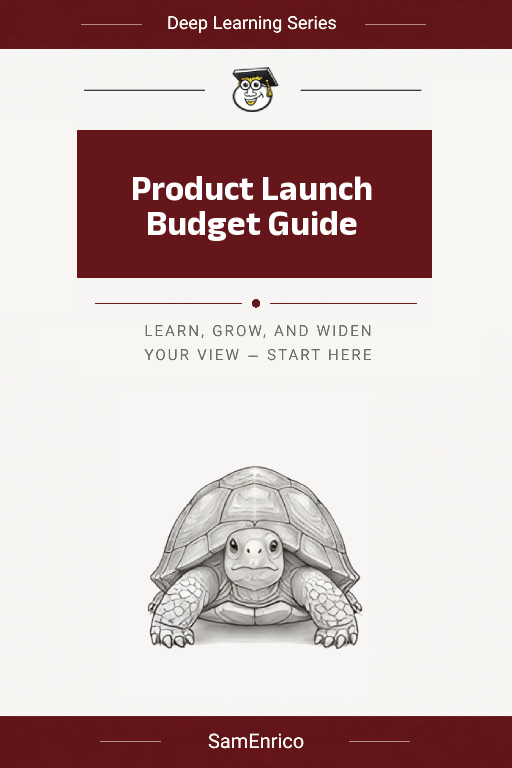
Non-FictionFirst 30 DaysBudgeting
Product Launch Budget Guide eBook
Set a 500 or less launch budget for ads, software,
Set a 500 or less launch budget for ads, software, and freelancers to create your digital product.
Formats
Free sample
Chapter 1: The Ramen Paradox--–- In 2016, I spent 12,000onaproductlaunch.Ihadaprofessionalvideocrew,apolishedsalespagewrittenbyacopywriterwhocharged12,000 on a product launch. I had a professional video crew, a polished sales page written by a copywriter who charged 12,000onaproductlaunch.Ihadaprofessionalvideocrew,apolishedsalespagewrittenbyacopywriterwhocharged400 per hour, and a Facebook ad budget that burned through cash like a wildfire in a dry forest. The result? Seventeen sales. Total revenue: 1,275.Ilostover1,275.
I lost over 1,275.Ilostover10,000 in less than two weeks. I remember sitting in my home office at 2:00 AM, staring at my Stripe dashboard, watching the red "refund" notifications pop up one by one. Three people asked for their money back. Four more never even downloaded the product. The silence was deafening.Two years later, I launched a similar product with exactly 487.Iusedacrackedlaptopwithamissingcommakey.Irecordedvideoson Loom′sfreetier,designedalandingpageon Carrdfor487.
I used a cracked laptop with a missing comma key. I recorded videos on Loom's free tier, designed a landing page on Carrd for 487.Iusedacrackedlaptopwithamissingcommakey.Irecordedvideoson Loom′sfreetier,designedalandingpageon Carrdfor19, and hired a freelancer on Fiverr for 45tofixmytypos.Iranadson Redditbecause Icouldn′tafford Facebook.Theresult?Eighty−threesalesinthefirst72hours.Totalrevenue:45 to fix my typos. I ran ads on Reddit because I couldn't afford Facebook. The result? Eighty-three sales in the first 72 hours.
Total revenue: 45tofixmytypos.Iranadson Redditbecause Icouldn′tafford Facebook.Theresult?Eighty−threesalesinthefirst72hours.Totalrevenue:3,901. Profit: $3,414. I cried. Not because of the money, but because I had finally learned the truth that every guru hides from you: Big budgets don't create success. They hide failure.This book is about that truth.
It is about the Ramen Paradox, named for the cheap noodles that struggling entrepreneurs survive on while building empires. The paradox is simple: The less money you have, the more likely you are to succeed. This sounds counterintuitive, even ridiculous. How can having less money lead to more success? Because constraints force clarity, and clarity is the only thing that matters in a launch.The Lie You Have Been Sold The launch industry is built on a beautiful, seductive lie.
The lie is that you need money to make money. Everywhere you look, the message is the same: buy this software for 200permonth,hirethisagencyfor200 per month, hire this agency for 200permonth,hirethisagencyfor10,000, run ads on this platform with a minimum daily budget of $50. The gurus tell you that you need a "launch team," a "waitlist," a "funnel," a "VSL," and a dozen other acronyms that all cost money to implement. They show you screenshots of their seven-figure launches, but they never show you the five-figure ad spend that came before. They never show you the months of losses, the failed tests, the money they burned while they figured out what worked.I fell for this lie.
Hard. After my 12,000disaster,Ididwhatanydesperateentrepreneurwoulddo:Ispentanother12,000 disaster, I did what any desperate entrepreneur would do: I spent another 12,000disaster,Ididwhatanydesperateentrepreneurwoulddo:Ispentanother5,000 on a course that promised to teach me the "real" secrets of launching. The course was eight hours of video, three workbooks, and a Facebook group full of people who were also failing. The main takeaway? I needed to spend more money on better ads, better software, and better freelancers.
The solution to losing money was apparently to lose even more money. I was trapped in what I now call the "More Money Fallacy" —the belief that throwing additional resources at a broken system will eventually fix it. It never does.The Ramen Paradox Defined The Ramen Paradox has three components, and once you understand them, you will never look at launch budgets the same way again.Component One: Constraints Force Creativity When you have unlimited money, you take unlimited shortcuts. You hire an agency to write your emails instead of learning to write them yourself. You buy a $2,000 template instead of learning to design.
You run ads to "test" instead of thinking deeply about your audience. Money becomes a substitute for effort, and effort is where the real learning happens.When you have $500, you cannot afford shortcuts. You have to write your own emails, which means you have to understand your audience deeply enough to say something that matters. You have to design your own landing page, which means you have to clarify your message until it fits on one screen. You have to think about every dollar you spend on ads, which means you have to know exactly who you are talking to and what they need to hear.
Constraints force you to do the hard work that money usually lets you avoid. And that hard work is exactly what makes your product better.Component Two: Small Budgets Force Validation Here is a hard truth: most products should never be launched. They should die quietly in the research phase, where they cannot hurt anyone's wallet or reputation. But when you have $10,000 to spend, you feel pressure to launch something. You have already paid for the software, hired the freelancer, and booked the ad space.
Sunk cost fallacy kicks in. You launch a product that nobody wants, and you lose a fortune.When you have $500, you cannot afford to launch the wrong product. You have to validate first. You have to find ten people who will say "yes, I would buy that" before you build a single thing. This validation process is the single most valuable activity in any launch, but big budgets make it feel unnecessary.
Why validate when you can just build and hope? Because hope is not a strategy. Validation is a strategy. And validation costs almost nothing. A Gumroad page with a "Coming Soon" button is free.
A DM to ten friends is free. A five-minute survey on Google Forms is free. The only cost is your willingness to hear the truth before you spend the money.Component Three: The Velocity Metric Most entrepreneurs measure success by revenue. Did you make 10,000?Success.Didyoumake10,000? Success.
Did you make 10,000?Success.Didyoumake1,000? Failure. This binary measurement is destructive because it ignores the only metric that matters for a small-budget launcher: learning velocity.Learning velocity is the speed at which you discover what does not work. Every failed ad, every ignored email, every product that nobody buys is not a failure. It is data.
It is a lesson that brings you closer to the thing that actually works. The problem with big budgets is that they slow down learning velocity. When you spend 10,000onalaunch,yougetonebig,slow,expensivelesson.Whenyouspend10,000 on a launch, you get one big, slow, expensive lesson. When you spend 10,000onalaunch,yougetonebig,slow,expensivelesson.Whenyouspend500 on a launch, you can run ten small, fast, cheap experiments. Each experiment teaches you something.
By the time your big-budget competitor has learned one lesson, you have learned ten. And you still have money left over.I learned this the hard way. After my 12,000disaster,Iknewexactlyonething:Ididnotknowhowtolaunch.Thatwasmyonlylesson.Aftermy12,000 disaster, I knew exactly one thing: I did not know how to launch. That was my only lesson. After my 12,000disaster,Iknewexactlyonething:Ididnotknowhowtolaunch.Thatwasmyonlylesson.Aftermy487 launch, I knew twenty-three specific things: which headline worked, which platform generated the cheapest clicks, which freelancer was worth rehiring, which email subject line got the most opens, which price point converted the best.
I had a playbook. My big-budget self had a bankruptcy.Why Most Launch Books Are Wrong for You Open any best-selling launch book…
This is the end of the free sample. Get the eBook to keep going. Buy now
About this book
Details
- Author
- Peeples Esperanza
- Publisher
- SamEnrico
- Language
- English
- Genre
- Non-Fiction, First 30 Days, Budgeting
- Released
- 2026-05-29
- Pages (approx.)
- 149
- Available as
- eBook, Audiobook

Read better in the ZLOADR app
Your eBooks on your phone or tablet. Sign in with your SamEnrico account and start reading.
More by Peeples Esperanza
 Risk Based Thinking WorkbookPeeples Esperanza$11.99
 Growth Hormone and Heart MusclePeeples Esperanza$11.99
 Stephen Fry HumanismPeeples Esperanza$11.99
 Bedtime Self Talk for Letting GoPeeples Esperanza$11.99
 Service Commitments in Twelve StepsPeeples Esperanza$11.99
 Yahoo Password Security FailuresPeeples Esperanza$11.99
 Goal Setting for LeadersPeeples Esperanza$11.99
 Grief and Work After Parent LossPeeples Esperanza$11.99
 The Lion of Cairo: Hassan El-Shazly's Miraculous ComebackPeeples Esperanza$11.99
 The Last Flight of the Concorde: A Supersonic FarewellPeeples Esperanza$11.99
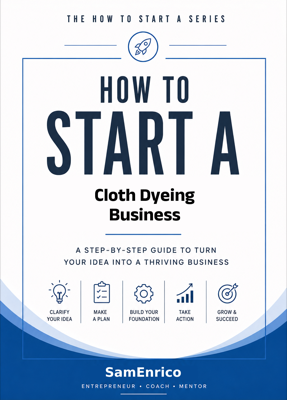 How to Start a Cloth Dyeing Business (Beginners Guide)Peeples Esperanza$11.99
 How to Produce Memory CasesPeeples Esperanza$11.99
You may also like
 Hong Kong Handover 1997Dunn Johnnie$11.99
 Zumba For Postnatal Recovery CourseNeal Christian$11.99
 Zumba for BeginnersLadner Nikia$11.99
 YouTube Comment Mining GuideHumes Pandora$12.99
 Worry Box MeditationCarlin Rudy$11.99
 Workplace Stress MeditationNguyen Lynn$11.99
 Workplace Stress and Sleep RepairHawley Ivory$11.99
 Workplace Perfectionism CureDelaney Jeffry$11.99
 Workplace Injustice Anger GuideWallen Isabelle$11.99
 Work Addiction and Burnout LinkGreenwood Ester$11.99
 Women in Yoga and WellnessBeattie Galina$11.99
 Women in Stand Up ComedyChun Evangeline$11.99