
Non-FictionOperational Efficiency ManualPharma
Procurement in Pharmaceuticals eBook
Navigate pharma procurement including raw material
by Bolt Rashad
Navigate pharma procurement including raw materials, lab equipment, and cold chain logistics.
Formats
Free sample
Chapter 1: The Pharma Paradox--Every procurement manager remembers the phone call that changes everything.For Maria Chen, it came at 11:47 PM on a Tuesday. The night shift supervisor at her company’s fill-finish facility had just completed a routine in-process check. The results: out-of-specification. The raw material—a seemingly innocuous excipient purchased for 18,000becauseitwas4018,000 because it was 40% cheaper than the incumbent supplier’s—had just failed. The batch, valued at 18,000becauseitwas404.2 million, was now on hold.
The production line was idle. And within seventy-two hours, Maria would discover that the “cheaper” raw material would cost her company over $11 million in direct losses, regulatory reporting fees, expedited freight for replacement material, and a customer penalty for delayed delivery.This is the Pharma Paradox: in pharmaceutical procurement, the cheapest option is almost always the most expensive.The Illusion of Savings The pharmaceutical industry operates under a fundamental misunderstanding that has persisted for decades. Procurement professionals, measured on cost reduction targets, chase lower unit prices. Finance departments celebrate supplier negotiations that shave 2% off raw material costs. And executives reward purchasing teams for delivering “savings” that appear on spreadsheets but never materialize in actual financial performance.The problem is that pharmaceutical manufacturing is not assembling furniture or packaging consumer goods.
When a tablet disintegrates too quickly or a biologic denatures, the root cause is rarely the active ingredient. More often, it is the excipient, the solvent, the packaging component, or the raw material that someone bought because it was cheaper.Consider the anatomy of a typical pharmaceutical deviation. A manufacturer receives a shipment of magnesium stearate—a common lubricant used in tablet compression. The Certificate of Analysis looks acceptable. The price was competitive.
But during production, tablets begin sticking to the punches. The line stops. Investigation reveals that the magnesium stearate’s particle size distribution falls outside the validated range, despite the Co A showing acceptable averages. The supplier used a different milling process, changed without notification. The result: three weeks of production lost, 2.1 million tablets rejected, and a regulatory filing for a manufacturing deviation.The “savings” on that purchase?
4,200.Theactualcost?4,200. The actual cost? 4,200.Theactualcost?1.7 million.This chapter dismantles the illusion that low purchase price equals low total cost. It introduces the framework that will underpin every procurement decision in this book: the Total Cost of Ownership (TCO) model specifically calibrated for pharmaceutical manufacturing. More importantly, it establishes the core thesis that distinguishes pharmaceutical procurement from all other industries: every purchasing decision is, ultimately, a patient safety decision.Understanding c GMP Through a Procurement Lens Before examining the TCO model in detail, procurement professionals must understand the regulatory framework that makes pharmaceutical purchasing unique.
Current Good Manufacturing Practice (c GMP) is not merely a quality department concern—it is the legal standard that governs every material that enters the manufacturing process.Under 21 CFR Part 211, the FDA requires that “components shall be tested for conformity with all appropriate written specifications for purity, strength, and quality.” This is not a suggestion. It is a binding regulation with criminal penalties for violations. For procurement, this means:Every purchased component must meet its specifications before use. There is no exception for “low-risk” materials. There is no waiver for “cost-saving” alternatives.
The regulation applies equally to a 10,000kilogramofactiveingredientanda10,000 kilogram of active ingredient and a 10,000kilogramofactiveingredientanda0.10 plastic cap.The supplier is not the final arbiter of quality. A supplier’s Certificate of Analysis is an input, not a determination. The manufacturer remains legally responsible for ensuring every component meets specifications. This means incoming inspection, testing, and quarantine are not optional—they are the law.Changes to suppliers or materials require notification and often revalidation. When procurement switches to a new supplier of a critical excipient, the change may trigger a regulatory filing, stability studies, or process revalidation.
The cost of these activities rarely appears on the supplier’s invoice, but they are real costs nonetheless.The implications for procurement are profound. A purchasing manager cannot simply compare price quotes and select the lowest bidder. They must evaluate the supplier’s quality systems, regulatory history, change control procedures, and testing capabilities. They must understand the manufacturing process well enough to know which material attributes are critical and which are not. They must build relationships that ensure suppliers notify them of changes before—not after—they occur.Many procurement professionals find this intimidating.
They should. The stakes are genuinely high. But the alternative—purchasing based on price alone and hoping for the best—is not procurement. It is gambling with patient lives.The Total Cost of Ownership Model for Pharma The Total Cost of Ownership (TCO) model is not new. It has been used in manufacturing for decades.
However, the pharmaceutical version differs fundamentally from general manufacturing TCO because the cost drivers are different.In automotive manufacturing, TCO includes purchase price, shipping, inventory carrying costs, and the cost of defective parts that cause rework. In pharmaceutical manufacturing, TCO must include:Compliance Holds: The cost of quarantining material while awaiting testing results. For high-throughput facilities, a one-week hold on a critical raw material can idle production lines, requiring expensive schedule reshuffling and overtime.Testing Costs: The full cost of incoming quality control testing, including sample preparation, analytical runs, data review, and documentation. For complex biologics, testing a single raw material batch can cost 15,000–15,000–15,000–50,000.Deviation Investigation Costs: When a material causes an out-of-specification result, the investigation typically requires a cross-functional team of quality, manufacturing, and technical services personnel. At an average fully-loaded cost of 200–200–200–400 per hour per professional, a two-week investigation can easily exceed $100,000 before any product is rejected.Product Loss Costs: If the deviation requires rejecting finished product, the loss includes the value of the finished goods, the cost of the active ingredient, packaging, labor, and facility time.
For high-value biologics, a single lost batch can exceed $10 million.Regulatory Costs: Reportable deviations require notification to regulatory agencies, sometimes including fines, consent decrees, or increased inspection frequency. While difficult to quantify per incident, the long-term regulatory cost of repeated deviations can run into millions.Supplier Management Costs: The cost of auditing the supplier, managing the corrective action process, requalifying the supplier, or replacing the supplier entirely. A full on-site quality audit of a foreign supplier typically costs 15,000–15,000–15,000–30,000 including travel, personnel time, and documentation.Opportunity Costs: Perhaps the most difficult to measure but often the largest. When procurement spends months managing a failing supplier relationship, they are not spending that time on strategic sourcing, risk mitigation, or innovation. The cost of diverted attention is real, even if it never appears on an income statement.The TCO formula for pharmaceutical procurement can be expressed as:TCO = Purchase Price + Shipping + (Compliance Hold Cost × Hold Duration) + Testing Cost + (Deviation Risk × Deviation Cost) + (Supplier Management Cost × Number of Interventions)This is not an academic exercise.
Leading pharmaceutical companies have reduced their material-related deviations by 60–80% by shifting from price-based to TCO-based supplier selection. They have found that paying slightly more for a reliable supplier with robust quality systems is dramatically cheaper than paying less for a supplier that periodically fails.The Case Study: One Out-of-Specification Shipment To understand the TCO model in practice, trace the path of a single out-of-specification (OOS) raw material shipment from receipt to resolution.The Context: A mid-sized…
This is the end of the free sample. Get the eBook to keep going. Buy now
About this book
Details
- Author
- Bolt Rashad
- Publisher
- SamEnrico
- Language
- English
- Genre
- Non-Fiction, Operational Efficiency Manual, Pharma
- Released
- 2026-05-30
- Pages (approx.)
- 143
- Available as
- eBook, Audiobook

Read better in the ZLOADR app
Your eBooks on your phone or tablet. Sign in with your SamEnrico account and start reading.
More by Bolt Rashad
 Emotional Eating and Diet CultureBolt Rashad$11.99
 Herniated Disc MeditationBolt Rashad$11.99
 Hypnotic Competition SimulationBolt Rashad$11.99
 The Active ListenerBolt Rashad$11.99
 Airline Pilot Stress ManagementBolt Rashad$11.99
 The Miracle on Ice: The Untold OvertimeBolt Rashad$11.99
 The Bridge That Time Forgot: The Mysterious Collapse of the Roman Pont du GardBolt Rashad$11.99
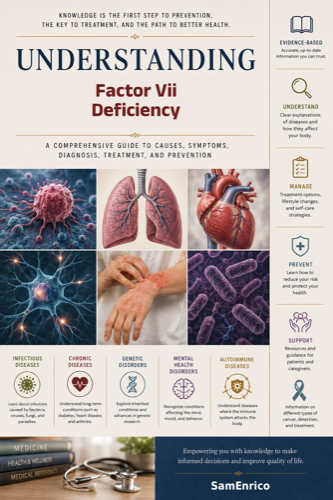 Understanding Factor Vii DeficiencyBolt Rashad$17.99
 Data Presentation Cheat Sheet for AnalystsBolt Rashad$12.99
 How to Start a Cyclic Hydrocarbons (saturated and Unsaturated) Business (Beginners Guide)Bolt Rashad$11.99
 Pet Grooming (Basic Certification)Bolt Rashad$11.99
You may also like
 Hong Kong Handover 1997Dunn Johnnie$11.99
 Zumba For Postnatal Recovery CourseNeal Christian$11.99
 Zumba for BeginnersLadner Nikia$11.99
 YouTube Comment Mining GuideHumes Pandora$12.99
 Worry Box MeditationCarlin Rudy$11.99
 Workplace Stress MeditationNguyen Lynn$11.99
 Workplace Stress and Sleep RepairHawley Ivory$11.99
 Workplace Perfectionism CureDelaney Jeffry$11.99
 Workplace Injustice Anger GuideWallen Isabelle$11.99
 Work Addiction and Burnout LinkGreenwood Ester$11.99
 Women in Yoga and WellnessBeattie Galina$11.99
 Women in Stand Up ComedyChun Evangeline$11.99