
Non-FictionSelf-HelpStudy Skills
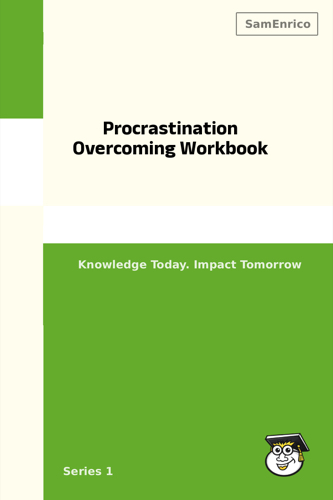
Procrastination Overcoming Workbook eBook
Identify avoidance triggers and use the five-minut
by Downs Gianna
Identify avoidance triggers and use the five-minute rule to start any task.
Formats
Free sample
Chapter 1: The Unspoken Weight– You are not lazy. You are not broken. You are not a procrastinator because you lack discipline, willpower, or moral character. You procrastinate for the same reason you flinch when something flies toward your face: your brain is trying to protect you from discomfort. The problem is not that your brain is broken.
The problem is that your brain has learned the wrong lesson about how to handle tasks that feel boring, difficult, or anxiety-provoking. And the solution is not to hate yourself into productivity. The solution is to understand what is actually happening inside your skull and then give your brain a better option.This chapter is about unlearning the most damaging myth in all of self-help: the myth that procrastination is a moral failing. Every minute you have ever spent scrolling social media instead of working, every night you have ever stayed up late cramming after weeks of avoidance, every promise you have ever broken to yourself—“I’ll start tomorrow, I mean it this time”—has been interpreted by you, at some level, as evidence that you are fundamentally flawed. That interpretation is wrong.
And it is making everything worse.Let us begin with a definition that will surprise you. Procrastination is not “putting things off.” That is too vague. Procrastination is the voluntary delay of an intended action despite knowing you will be worse off for the delay. Notice the three components. First, the delay is voluntary.
You are not being forced to avoid the task. Something is not physically preventing you from starting. You are choosing, in each moment, to do something else. Second, the action was intended. You meant to do it.
You wrote it on your to-do list. You told someone you would do it. You genuinely wanted to start. Third, you know the delay will make things worse. You know the task will still be there tomorrow, often with added guilt, less time, and more stress.
You know all of this, and you delay anyway. That is the paradox that has tortured generations of bright, capable people.Now here is the crucial distinction that most books get wrong. There is a difference between active procrastination and passive procrastination. Active procrastination is a conscious, purposeful delay. Some people claim they work better under pressure.
They deliberately wait until the last minute because the adrenaline helps them focus. They are not distressed by the delay. They feel in control. For a very small percentage of people—perhaps five to ten percent—this actually works. They are not reading this book.
Passive procrastination is what the rest of us experience. It is the paralyzing, indecisive avoidance that leads to distress, guilt, shame, rushed work, broken promises, and a persistent sense of falling behind. You do not feel in control. You feel stuck. You watch yourself doing things you know are stupid, and you cannot seem to stop.
That is passive procrastination, and that is what this workbook addresses.If you are reading this book, you have almost certainly tried the “Eat the Frog” method. You have heard the advice: tackle your biggest, ugliest task first thing in the morning. Get it over with. The problem is that for chronic procrastinators, the frog is so large and so disgusting that the mere thought of eating it triggers overwhelming resistance. You do not eat the frog.
You stare at the frog for an hour, then you check your phone, then you reorganize your desk, then you decide you need to “ease into” the day with something smaller, and then it is noon and you have done nothing. The frog is still there, staring at you, and now you also feel ashamed.This book proposes a different approach. Instead of eating the frog, you take a single, tiny bite. So small that your brain does not bother to resist. So trivial that it feels almost silly to call it progress.
That bite is called a Micro-Commit. A Micro-Commit is not “write the report.” A Micro-Commit is “open a blank document and type the title.” A Micro-Commit is not “clean the garage.” A Micro-Commit is “walk into the garage and pick up one screwdriver.” A Micro-Commit is not “exercise for an hour.” A Micro-Commit is “put on your sneakers.” That is it. That is the whole commitment. And here is the secret that changes everything: once you take that first tiny bite, you will often keep going. Not always.
Sometimes you will do your five minutes and stop. That is fine. But often, the hardest part—the part that felt impossible—was just the first five seconds of resistance.Before we go any further, we need to address the shame that brought you here. Shame is the silent partner of procrastination. You procrastinate.
Then you feel ashamed of procrastinating. Then the shame makes you feel heavy and exhausted, which makes it even harder to start, so you procrastinate more. Then you feel more ashamed. This is the Procrastination-Shame Spiral, and it is the reason that self-criticism does not work. You have probably tried to motivate yourself with harsh words: “What is wrong with me?” “I am so lazy.” “Anyone else would have finished this by now.” That voice in your head—the one that sounds like a disappointed parent or a cruel coach—is not helping you.
It is making you worse. Research in psychology consistently shows that self-criticism predicts more procrastination, not less. Self-forgiveness predicts less procrastination. We will spend an entire chapter on self-forgiveness later, but for now, just notice: the voice that says you are lazy is not the voice of truth. It is the voice of the spiral.Every chapter in this workbook includes exercises.
You will be tempted to skip them. Do not. The difference between reading a book about procrastination and actually changing your procrastination is the difference between reading about swimming and getting in the water. The exercises are the water. Do them.
Even the ones that feel silly. Especially the ones that feel silly.The Three Lies You Believe About Yourself Before you can change your behavior, you need to identify the stories you are telling yourself about why you procrastinate. These stories are not true, but they feel true because you have repeated them for years. Here are the three most common lies.Lie Number One: “I work better under pressure.” No, you do not. You work only under pressure because you have trained yourself to wait until the panic sets in.
The quality of your work under pressure is almost certainly lower than it would be if you had started earlier. You are not working better. You are working faster, with less revision, less creativity, and more stress. The relief you feel when you finish under the wire is not the satisfaction of good work; it is the relief of escape. Those are different things.Lie Number Two: “I just need to find the right system.” You have probably bought planners, downloaded apps, color-coded your calendar, tried bullet journaling, attempted GTD, experimented with time blocking, and purchased at least one “productivity system” that promised to change your life.
The system is not the problem. The problem is that no system can overcome limbic friction—the brain’s emotional resistance to…
This is the end of the free sample. Get the eBook to keep going. Buy now
About this book
Details
- Author
- Downs Gianna
- Publisher
- SamEnrico
- Language
- English
- Genre
- Non-Fiction, Self-Help, Study Skills
- Released
- 2026-06-11
- Pages (approx.)
- 137
- Available as
- eBook, Audiobook

Read better in the ZLOADR app
Your eBooks on your phone or tablet. Sign in with your SamEnrico account and start reading.
More by Downs Gianna
 Research Proposal Pilot Study PlanningDowns Gianna$11.99
 Myanmar Rohingya Family ReunitedDowns Gianna$11.99
 Self Esteem for Aging LGBTQ+ SeniorsDowns Gianna$11.99
 Luxury Goods EconomicsDowns Gianna$11.99
 Gymnastics Routine Lock InDowns Gianna$11.99
 Digital Nomad Visa TrendsDowns Gianna$11.99Digital Nomad Visa TrendsDowns Gianna$11.99
 Everglades Swamp SinkingsDowns Gianna$11.99
 The Great Cookie Heist: How a 1980s Baking Empire Collapsed OvernightDowns Gianna$11.99
 The Magnificent Merchants of the Sahara: The Gold Caravans of the WangaraDowns Gianna$11.99
 Growing DiphylleiaDowns Gianna$11.99
 US Business Credit For StartupsDowns Gianna$12.99
You may also like
 Hong Kong Handover 1997Dunn Johnnie$11.99
 Zumba For Postnatal Recovery CourseNeal Christian$11.99
 Zumba for BeginnersLadner Nikia$11.99
 YouTube Comment Mining GuideHumes Pandora$12.99
 Worry Box MeditationCarlin Rudy$11.99
 Workplace Stress MeditationNguyen Lynn$11.99
 Workplace Stress and Sleep RepairHawley Ivory$11.99
 Workplace Perfectionism CureDelaney Jeffry$11.99
 Workplace Injustice Anger GuideWallen Isabelle$11.99
 Work Addiction and Burnout LinkGreenwood Ester$11.99
 Women in Yoga and WellnessBeattie Galina$11.99
 Women in Stand Up ComedyChun Evangeline$11.99