
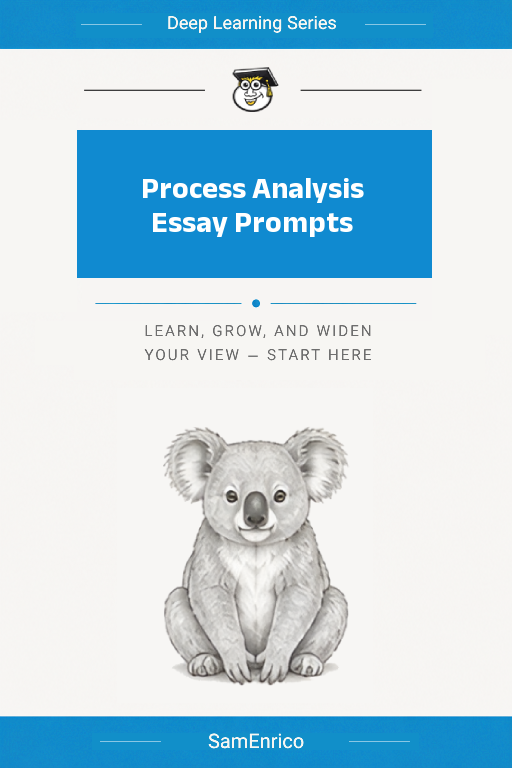
essaysStudent's ShortcutTechnical
Process Analysis Essay Prompts eBook
Write step by step instructions and how to guides
Write step by step instructions and how to guides using sequential prompts.
Formats
Free sample
Chapter 1: The Splinter That Changed Everything...--–- It was a Tuesday afternoon when my neighbor, a retired engineer named Frank, almost lost his finger. He had a splinter—a tiny, almost invisible shard of wood lodged beneath the skin of his thumb. Like any sensible person, he opened his laptop, typed a simple query into an AI assistant, and asked for “step-by-step instructions to remove a splinter.” The AI responded in under three seconds. It was polite, confident, and utterly wrong. The instructions it provided were a Frankenstein’s monster of two entirely different types of writing.
The first step read like a medical textbook: “The epidermis contains no blood vessels and relies on diffusion for nutrient exchange.” The second step switched to a cheerful cooking blog: “Now, gently wiggle the splinter out—you’ve got this!” The third step offered advice that would have sent Frank to the emergency room: “If bleeding occurs, apply pressure and then iodine.” No warning. No disclaimer. No distinction between a minor nuisance and a potential infection.Frank didn’t lose his finger, but he came close. And his small, painful encounter with bad instructions reveals a much larger problem. We are living in an age of instant answers, but we are drowning in confused writing.
AI does not know the difference between teaching someone how to perform an action and explaining how something works. It blends them together because we, as prompters, have not learned to separate them. This book exists to solve that single, specific problem.Before you write another prompt, before you ask AI to generate another how-to guide, you must understand one foundational distinction. It is the difference between a recipe and a physics textbook. Between a yoga instructor and an anatomy professor.
Between saving Frank’s finger and sending him to urgent care. This chapter introduces that distinction, gives you the tools to apply it immediately, and sets up every subsequent chapter in this book. By the time you finish reading, you will never look at a set of instructions the same way again.The Two Faces of Process Analysis Every set of step-by-step instructions falls into one of two categories. There is no third category, no hybrid that works, no “best of both worlds” that satisfies a reader. You must choose one.
The moment you try to serve both masters, your writing becomes the digital equivalent of a fork that is also a knife—useless for eating and dangerous for cutting.Directive Process Analysis tells the reader how to do something. The reader will perform an action. The writing uses second-person pronouns (“you”). The tone is urgent, clear, and action-oriented. The verbs are imperative: turn, press, mix, remove, attach.
The reader’s success is measured by whether they can complete the task. Examples include how to change a tire, how to bake a cake, how to perform CPR, how to file taxes, how to tie a knot. In a Directive essay, the reader is the protagonist. The words on the page are a script they must follow.Informative Process Analysis tells the reader how something works. The reader will gain understanding but take no physical action.
The writing uses third-person pronouns (“it,” “the mechanism,” “the system”). The tone is neutral, explanatory, and evidence-based. The verbs are descriptive: operates, functions, converts, transmits, regulates. The reader’s success is measured by whether they can explain the process to someone else. Examples include how a combustion engine works, how photosynthesis converts light to energy, how a bill becomes law, how a blockchain verifies transactions, how the human immune system responds to a virus.
In an Informative essay, the process is the protagonist. The words on the page are a window into a mechanism.Here is the critical insight that most writers—and most AI systems—miss. A Directive essay and an Informative essay on the same topic share almost no sentences. They are not translations of each other. They are different genres written for different purposes.
Ask AI to “explain how a car engine works,” and you should get a description of pistons, fuel injection, and the four-stroke cycle. Ask AI to “explain how to diagnose a car engine that won’t start,” and you should get a checklist: check the battery, test the starter, inspect the fuel pump. The AI will happily give you both. But if you ask for “instructions on how a car engine works,” the AI will panic—because that question is nonsense. And yet, thousands of people ask exactly that kind of mixed prompt every day.Why AI Confuses These Two Modes Artificial intelligence language models are trained on the entire public internet.
That means they have read millions of documents that are themselves confused. A cooking blog might start with a Directive recipe (“preheat the oven to 350 degrees”) and then wander into an Informative explanation of the Maillard reaction (“browning occurs when amino acids and reducing sugars react at high temperatures”). A medical website might provide a Directive list of symptoms to watch for (“call your doctor if you experience chest pain”) followed by an Informative description of coronary artery disease. The AI learns that these two modes can appear in the same document. It does not learn that they should not.When you prompt an AI without specifying which mode you want, the AI defaults to its most probable prediction.
That prediction is often a hybrid. The result is writing that fails as both instruction and explanation. The reader cannot follow the action because the action is buried under mechanism. The reader cannot understand the mechanism because the mechanism is interrupted by commands. This is why Frank received a splinter-removal guide that lectured him about epidermal diffusion before telling him to “wiggle.” The AI was not being stupid.
It was being average—and average writing is terrible.The solution is not to blame the AI. The solution is to change how you prompt. And that change begins with a single tool: the Type Check.The Type Check: Your First and Most Important Prompt Before you write any prompt for any AI, you will ask yourself one question. Then you will put the answer in your prompt. That question is: Am I writing Directive or Informative?This is the Type Check.
It is not optional. It is not a suggestion. It is the single most important habit you will build in this book. A Type Check takes two seconds and saves hours of editing. Here is how it works.If you are writing Directive, your prompt will include these signals:Second-person pronouns: “you”Imperative verbs: “do this,” “then do that”Action-oriented nouns: “step,” “action,” “task”A measurable outcome: “by the end, you will have X”Warnings and cautions (covered in Chapter 6)If you are writing Informative, your prompt will include these signals:Third-person pronouns: “it,” “the system,” “the mechanism”Descriptive verbs: “operates,” “functions,” “converts”Explanation-oriented nouns: “phase,” “stage,” “component”A conceptual outcome: “by the end, you will understand X”Diagrams and analogies (covered in Chapters 9 and 10)Here is a concrete example.
Two prompts for the same topic, with the Type Check included:Directive prompt: “You are a mechanic. Write a Directive process analysis explaining how…
This is the end of the free sample. Get the eBook to keep going. Buy now
About this book
Details
- Author
- Dockery Elfreda
- Publisher
- SamEnrico
- Language
- English
- Genre
- essays, Student's Shortcut, Technical
- Released
- 2026-06-06
- Pages (approx.)
- 143
- Available as
- eBook, Audiobook

Read better in the ZLOADR app
Your eBooks on your phone or tablet. Sign in with your SamEnrico account and start reading.
More by Dockery Elfreda
 Imposter Syndrome Recovery CourseDockery Elfreda$11.99
 Working Memory Journal LogDockery Elfreda$11.99
 Sleep Spindle Aging MemoryDockery Elfreda$11.99
 Second Generation EntrepreneurshipDockery Elfreda$11.99
 Low Income Subscription ChurnDockery Elfreda$11.99
 The Two Minute Distraction RuleDockery Elfreda$11.99
 Dividend Portfolio GuideDockery Elfreda$11.99
 Paleo For Families WorkbookDockery Elfreda$11.99
 The Phantom of the Danube: Vienna’s Vanishing Heiress (1934)Dockery Elfreda$11.99
 Love and Siege: The Fall of Constantinople's Last DefendersDockery Elfreda$11.99
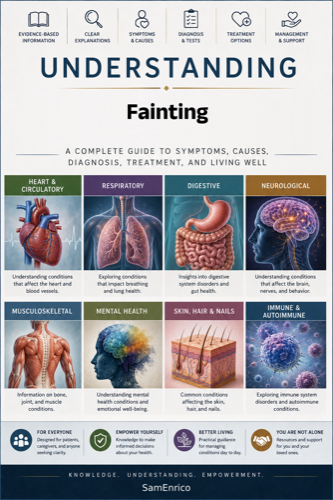 Understanding FaintingDockery Elfreda$11.99
 How to Become a Marine EngineerDockery Elfreda$11.99
You may also like
 YouTube Video Essay DepthLeon Lala$11.99
 TOEFL Independent Essay GuideMintz Alex$11.99
 Music Theory Essay GuideWilkinson Maisha$11.99
 Expository Essay AI PromptsApplegate Dalia$11.99
 Exam Essay MemorizationMcgovern Johna$11.99
 Compare Contrast Essay PromptsOntiveros Marx$11.99
 College Application Essay GuideSisson Aimee$11.99College Application Essay GuideSisson Aimee$11.99
 The 100 Word Essay ChallengeAli Luciana$11.99
 Journalism Essay PromptsThatcher Williemae$11.99
 Finance Essay PromptsShrader Lamont$11.99
 Cause Effect Essay GPT GuideBland Jacelyn$11.99