
Non-FictionSelf-HelpIncarceration
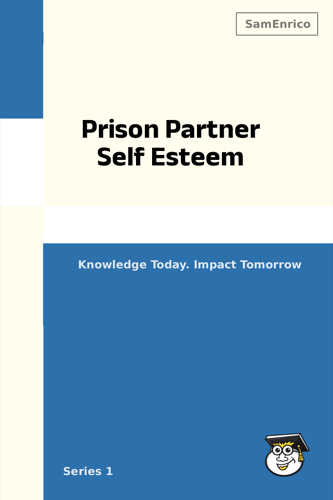
Prison Partner Self Esteem eBook
Stay confident while visiting incarcerated loved o
by Colley Dawne
Stay confident while visiting incarcerated loved one.
Formats
Free sample
Chapter 1: The Unearned Sentence...–- You did not stand before a judge. No gavel fell. No handcuffs clicked around your wrists. And yet, here you are, serving a life sentence of shame. You feel it when the cashier at the grocery store glances at your driver’s license—still showing the same address, the one you can barely afford alone now—and you wonder if she knows.
You feel it when your mother asks, “Are you still going to see him?” with that particular tilt of her head, the one that says I love you, but I don’t understand you. You feel it when you lie in bed at 2:00 AM, staring at the ceiling, replaying every choice you ever made that led you to this door. The door you keep walking through, even though it slams shut behind you every single time.This is the unearned sentence. And this book exists to help you commute it.If you are reading these words, you are likely the partner—wife, girlfriend, fiancée, life partner—of an incarcerated man. You did not commit his crime.
You may not have even known about it until the handcuffs clicked shut. But you have been punished nonetheless. You have been punished by a society that whispers that your love is a character flaw. You have been punished by a prison system that treats you like a potential smuggler, a security threat, a woman with something to hide. And worst of all, you have been punishing yourself.
You have asked, What did I miss? Why didn’t I stop him? If I had been a better partner, would he be free?Stop. Breathe. Let me tell you the first truth of this book, the one you must tattoo onto the inside of your eyelids: You are not guilty of his crime.
You are not responsible for his choices. And you do not owe the world your shame.This chapter is called “The Unearned Sentence” because that is exactly what you are carrying—a punishment you did nothing to deserve. And before we can build your self-esteem back up, brick by brick, we have to first identify the weight you have been carrying that was never yours to hold. We have to separate responsibility from blame. And we have to begin the slow, radical, deeply necessary work of forgiving yourself for loving someone the world has told you you should abandon.The Difference Between Responsibility and Blame Let us start with a distinction that will serve as the backbone of this entire book.
It is simple to say and excruciatingly difficult to internalize: Responsibility belongs to you. Blame belongs to the situation.Responsibility refers to your own actions, your own choices, your own behaviors. It is the domain of things you actually did. You are responsible for whether you show up to visitation on time. You are responsible for whether you speak kindly to yourself after a difficult phone call.
You are responsible for whether you pay your rent before you send commissary money. These are your choices. They belong to you. And they are the only things you should ever feel answerable for.Blame, by contrast, refers to the legal situation, your partner’s past choices, and the failures of a punitive system. You did not write the laws that sent him away.
You did not commit the act that violated them. You did not design the parole board’s cold calculus or the judge’s harsh sentence. You are not responsible for the childhood trauma, the addiction, the poverty, or the poor decisions that landed him behind bars. Those things belong to him. They belong to the system.
They do not belong to you.But here is what happens inside a prison partner’s mind: you collapse the two. You tell yourself that because you love him, his choices become your responsibility. You tell yourself that because you stayed, you must share the blame. You tell yourself that if you had been better—smarter, richer, more attentive, more demanding—he would be sleeping next to you instead of in a concrete bunk.That is a lie. And it is a lie that is killing your self-esteem.Take out a piece of paper.
Yes, right now. Draw a line down the middle. On the left side, write “What I Actually Did.” On the right side, write “What I Feel Guilty For.” Be honest. The left column might be short: I visited. I sent money.
I answered the calls. I lied to my boss about where I was going. The right column will likely be much longer: I feel guilty for not stopping him. I feel guilty for still loving him. I feel guilty for being angry.
I feel guilty for wanting to leave. I feel guilty for wanting to stay.Now look at the right column. Cross out every single item that you did not actually do. Cross out every item that belongs to his choices, the system’s failures, or society’s judgment. What remains?
Almost nothing. That is the weight you are carrying that was never yours to carry.The Stigma of the "Mainline Mama"There is a term used in some prison communities, sometimes with affection, sometimes with contempt: mainline mama. It refers to a woman who remains partnered with an incarcerated man, often for years, often against the advice of everyone around her. The term carries a specific kind of stigma—the implication that she is trapped, that she has low self-worth, that she cannot function without a man, even a man behind bars.This book rejects that implication entirely. But we have to name the stigma before we can dismantle it.Societal judgment of prison partners is vicious and hypocritical.
If you leave him, you are called disloyal. If you stay, you are called codependent. If you cry, you are weak. If you do not cry, you are cold. There is no version of this situation that earns you a gold star from the outside world.
And that is because the outside world does not want you to win. It wants you to disappear. It wants you to stop reminding everyone that people who love incarcerated men exist. Your very presence is a discomfort to a system that prefers to lock away its problems and forget about them.The research supports this. Sociologists studying the families of incarcerated individuals have found that partners experience what is called “courtesy stigma”—a shame-by-association that attaches to them simply because of their relationship.
You do not have to do anything wrong. You just have to love the wrong person, in the eyes of society, and the shame transfers to you like a stain.But here is what the researchers also found: women who resist that stigma—who consciously reject the label and reframe their identity—have significantly higher self-esteem and better mental health outcomes than women who internalize it. The difference is not in the situation. The difference is in the story you tell yourself about the situation.So let me tell you a different story. You are not a mainline mama because you are trapped.
You are a woman who made a conscious choice to love someone through the worst period of his life. That…
This is the end of the free sample. Get the eBook to keep going. Buy now
About this book
Details
- Author
- Colley Dawne
- Publisher
- SamEnrico
- Language
- English
- Genre
- Non-Fiction, Self-Help, Incarceration
- Released
- 2026-06-06
- Pages (approx.)
- 138
- Available as
- eBook, Audiobook

Read better in the ZLOADR app
Your eBooks on your phone or tablet. Sign in with your SamEnrico account and start reading.
More by Colley Dawne
 Sleep Routine Evening GuideColley Dawne$11.99
 Disagreeing RespectfullyColley Dawne$11.99
 Arachnophobia Recovery GuideColley Dawne$11.99
 The Recovery Capital Assessment GuideColley Dawne$11.99
 The Tsar's Composer: Tchaikovsky and the Soul of RussiaColley Dawne$11.99
 Logistics Command Center ProtocolColley Dawne$12.99
 North America Consumer Spending ForecastColley Dawne$12.99
 How to Start a British Board of Film Classifications Business (Beginners Guide)Colley Dawne$11.99
 Zoisite MiningColley Dawne$11.99
 Understanding Inactive ColonColley Dawne$17.99
You may also like
 Hong Kong Handover 1997Dunn Johnnie$11.99
 Zumba For Postnatal Recovery CourseNeal Christian$11.99
 Zumba for BeginnersLadner Nikia$11.99
 YouTube Comment Mining GuideHumes Pandora$12.99
 Worry Box MeditationCarlin Rudy$11.99
 Workplace Stress MeditationNguyen Lynn$11.99
 Workplace Stress and Sleep RepairHawley Ivory$11.99
 Workplace Perfectionism CureDelaney Jeffry$11.99
 Workplace Injustice Anger GuideWallen Isabelle$11.99
 Work Addiction and Burnout LinkGreenwood Ester$11.99
 Women in Yoga and WellnessBeattie Galina$11.99
 Women in Stand Up ComedyChun Evangeline$11.99