
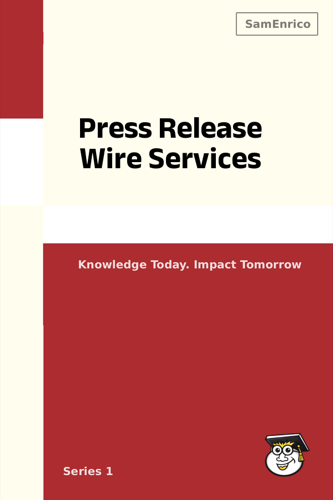
Non-FictionProfessional's Cheat Sheet / Wires
Press Release Wire Services eBook
undefined
undefined
Formats
Free sample
Chapter 1: The $7,000 Mistake--–- Seven thousand dollars. That is the average amount an independent author, entrepreneur, or nonprofit founder spends on marketing before admitting defeat. They buy Facebook ads that get clicks but no sales. They hire publicists who promise “guaranteed media placements” and deliver obscure blogs with seventeen readers. They print bookmarks, business cards, and postcards that end up in landfill bins at conferences.
They run Amazon ads with ACOS (Advertising Cost of Sales) numbers that look like phone numbers. And after ninety days of throwing money into the digital void, they declare their book or business a failure—not because the product was bad, but because no one knew it existed.This chapter is not about that seven thousand dollars. It is about the seven thousand dollars you will never have to spend. It is about the single most expensive myth in publishing and marketing: the belief that building something great is enough.The Discovery Problem No One Talks About Let us begin with a number that should terrify you. Every single day, over seven thousand new books are published on Amazon alone.
That does not include the books published exclusively through Ingram Spark, Draft2Digital, or direct-to-consumer via Shopify. That does not include the courses launched on Teachable, the methodologies released on Kajabi, or the annual reports distributed by nonprofits. Seven thousand is just Amazon. In the time it takes you to read this chapter, approximately fifteen new books will enter the marketplace. By the time you finish this book, roughly two thousand new competitors will have appeared.But the problem is worse than volume.
Google processes over eight billion searches per day. Yet most of those searches never surface the products, books, or services that could genuinely help the person searching. Why? Because Google prioritizes authority, and authority comes from one place above all others: news mentions, backlinks from trusted domains, and consistent visibility on platforms that Google’s algorithm has learned to trust.Here is the brutal truth that no one in the “build it and they will come” camp wants to admit. Amazon does not promote books that are good.
It promotes books that sell. Google does not rank pages that are beautiful. It ranks pages that are linked to by other trusted pages. And journalists do not cover products that are interesting to the creator. They cover stories that are interesting to their audience.The discovery problem is not a bug in the system.
It is a feature. The system is designed to reward those who understand how it works. And the first thing you must understand is that your product—whether it is a thriller novel, a leadership methodology, a cookbook, or a nonprofit impact report—does not exist until someone with a platform says it exists.Defining “Press Ready”: The Four Pillars of Newsworthiness Before we go any further, we need to retire a phrase forever: “press release.” The phrase itself is part of the problem. It sounds like something you send to a fax machine in 1995. It sounds like corporate boilerplate written by a committee.
It sounds like something that belongs in a spam folder. So let us rename it right now. From this point forward, you are not writing press releases. You are writing media invitations.The difference is not semantic. It is strategic.
A press release announces. A media invitation welcomes. A press release says, “Here is something I made.” A media invitation says, “Here is a story your audience needs to hear.” Journalists receive hundreds of press releases every day. They delete ninety-nine percent of them without reading past the headline. But they open media invitations—because a media invitation respects their time, understands their audience, and offers something genuinely newsworthy.So what makes something genuinely newsworthy?
After analyzing thousands of successful wire service campaigns across books, business launches, and nonprofit announcements, four pillars emerge consistently. You do not need all four. You need at least one, and preferably two.Pillar One: Timeliness. Is your product connected to a current event, season, or cultural moment? A thriller about political corruption released three months before a presidential election is timely.
A children’s book about starting school released in August is timely. A business book about remote leadership released during a shift to distributed work is timely. Timeliness tells a journalist, “This matters right now, not six months from now.”Pillar Two: Human Interest. Does your product emerge from a personal story of struggle, transformation, or unexpected journey? A cookbook written by a former line cook who lost their sense of smell and had to relearn flavor from scratch is human interest.
A leadership book written by a CEO who was fired twice before building a million-dollar company is human interest. A nonprofit report on homelessness written by a former shelter resident is human interest. Journalists are human beings. They respond to struggle and triumph.Pillar Three: Prominence. Does your product have a connection to someone already famous or respected?
A foreword by a known expert. An endorsement from a celebrity. A blurb from a bestselling author in your genre. A partnership with a recognizable nonprofit or corporation. Prominence is the shortcut.
It is not cheating. It is leverage. If you do not have prominence yet, your goal is to build it gradually. But if you have it, use it immediately.Pillar Four: Utility. Does your product solve a specific, measurable, relatable problem?
A book that teaches parents how to talk to teenagers about mental health has utility. A methodology that helps small business owners reduce their tax burden has utility. A nonprofit report that shows local governments how to reduce food waste by thirty percent has utility. Utility is the most reliable pillar because every journalist’s audience has problems. Show them a solution, and you have a story.Before you write a single word of your media invitation, identify which pillar you are leading with.
Write it down. If you cannot identify at least one, stop. You are not ready. Go back to your product and find the story within it. The story is always there.
You just have not excavated it yet.Earned Media vs. Owned Media: The Bridge You Have Been Missing Here is where most marketing advice goes wrong. The gurus tell you to focus on “owned media”—your blog, your email list, your social media accounts. Build an audience, they say, and the sales will follow. This is not bad advice.
Owned media is essential. But it is also slow, expensive, and capped. You cannot grow your email list faster than you can attract new subscribers. You cannot make your blog post go viral on command. Owned media is a garden.
You plant seeds, water them daily, and wait for harvest. There is no shortcut.On the other end of the spectrum is “paid media”—Facebook ads, Google ads, Amazon ads, Tik Tok promotions, influencer sponsorships. Paid media works instantly. You put money in, and traffic comes out. But paid media is a rental.
The moment you stop paying, the traffic stops. Worse, paid media has diminishing returns. Your cost per click rises as you saturate your audience. Your return on ad…
This is the end of the free sample. Get the eBook to keep going. Buy now
About this book
Details
- Author
- Sturgeon Dewayne
- Publisher
- SamEnrico
- Language
- English
- Genre
- Non-Fiction, Professional's Cheat Sheet / Wires
- Released
- 2026-06-06
- Pages (approx.)
- 144
- Available as
- eBook, Audiobook

Read better in the ZLOADR app
Your eBooks on your phone or tablet. Sign in with your SamEnrico account and start reading.
More by Sturgeon Dewayne
 Benzo Cognitive Recovery WorkbookSturgeon Dewayne$11.99
 Surfing Wave Reading Hypnosis GuideSturgeon Dewayne$11.99
 Networking Through Social EventsSturgeon Dewayne$11.99
 Mortgage Stress ManagementSturgeon Dewayne$11.99
 Dream Symbol DictionarySturgeon Dewayne$11.99
 Sri Lankan Civil War ReunionSturgeon Dewayne$11.99
 PTSD Grounding MeditationSturgeon Dewayne$11.99
 Liberating the Mind BreathSturgeon Dewayne$11.99
 The Silk and Steel of Paris: Worth and the Birth of Haute CoutureSturgeon Dewayne$11.99
 The Last Great Timber Wolf: How One Man Saved the ForestsSturgeon Dewayne$11.99
 Advanced Computer Vision Applications MasterySturgeon Dewayne$11.99
 College Essay For Non Native WritersSturgeon Dewayne$12.99
You may also like
 Hong Kong Handover 1997Dunn Johnnie$11.99
 Zumba For Postnatal Recovery CourseNeal Christian$11.99
 Zumba for BeginnersLadner Nikia$11.99
 YouTube Comment Mining GuideHumes Pandora$12.99
 Worry Box MeditationCarlin Rudy$11.99
 Workplace Stress MeditationNguyen Lynn$11.99
 Workplace Stress and Sleep RepairHawley Ivory$11.99
 Workplace Perfectionism CureDelaney Jeffry$11.99
 Workplace Injustice Anger GuideWallen Isabelle$11.99
 Work Addiction and Burnout LinkGreenwood Ester$11.99
 Women in Yoga and WellnessBeattie Galina$11.99
 Women in Stand Up ComedyChun Evangeline$11.99