
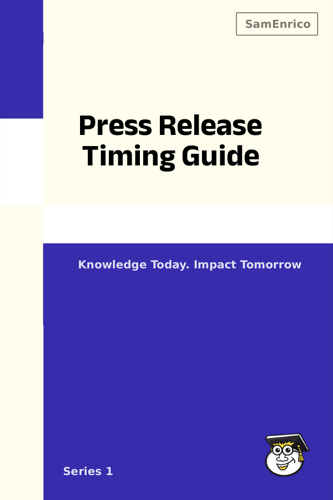
Non-FictionProfessional's Cheat Sheet / Timing
Press Release Timing Guide Audiobook
undefined
undefined
Formats
Free sample
Chapter 1: The 48-Hour Graveyard--Most authors kill their own book on the day they are most desperate to save it.The scene unfolds like this, thousands of times every year. An author finishes their manuscript after months or years of labor. They secure a publication date. They build a website, gather some early reviews, and design a cover they love. Then, on the morning of launch day—or worse, the week before—they sit down at their computer, craft a press release announcing their book, and click "send" to a list of journalists they have scraped together from Google searches and social media.Then they wait.And nothing happens.If they are lucky, one small blog picks up the release.
If they are exceptionally fortunate, a local newspaper runs a 200-word blurb. But the major outlets they dreamed of—the Washington Post, the Today Show, People magazine, the top podcasts in their genre—do not even send a polite rejection. They simply delete the email. The author checks their email obsessively for a week, then two weeks, then a month. Eventually, they conclude that press releases do not work.
Or that journalists are rude. Or that their book is not good enough.None of these conclusions are correct.The real problem is not the quality of the book, the writing of the press release, or even the size of the media list. The real problem is timing. And more specifically, the belief that a press release is something you send when your book is ready rather than something you send when the media is ready.This chapter will destroy that belief and replace it with a framework that separates successful authors from everyone else: the 180-Day Runway, the distinction between breaking news and editorial planning, and the single most important cheat sheet you will ever use in your publicity career.The Launch Week Delusion Let us start with a hard number that should haunt every author who plans to send a press release on launch day.According to a survey of 500 journalists conducted by the marketing platform Fractl, 75 percent of journalists say they ignore press releases that are not relevant to their current or upcoming editorial calendar. That sounds obvious until you understand what "upcoming editorial calendar" actually means.For a monthly magazine like Real Simple or Bon Appétit, the editorial calendar for the June issue is finalized in January.
The features are assigned in February. The writing happens in March. The layout happens in April. The magazine prints in…
This is the end of the free sample. Get the Audiobook to keep going. Buy now
About this book
Details
- Author
- Sallee Bryanna
- Publisher
- SamEnrico
- Language
- English
- Genre
- Non-Fiction, Professional's Cheat Sheet / Timing
- Released
- 2026-06-06
- Pages (approx.)
- 136
- Available as
- eBook, Audiobook

Listen in the VoxFlicks app
Audiobooks and audio dramas wherever you go. Sign in with your SamEnrico account and press play.
More by Sallee Bryanna
 Emotional Spending WorkbookSallee Bryanna$11.99
 Wish Fulfillment DreamsSallee Bryanna$11.99
 Student Loan Stress SolutionSallee Bryanna$11.99Student Loan Stress SolutionSallee Bryanna$11.99
 Self Hypnosis For Skiing GuideSallee Bryanna$11.99
 The 5 Minute NetworkerSallee Bryanna$11.99
 Peruvian Asylum Seeker StorySallee Bryanna$11.99
 Concentrating the Mind BreathSallee Bryanna$11.99
 OCD Thought Labeling MeditationSallee Bryanna$11.99
 Sir William Hamilton: The Kiwi Visionary Who Conquered the SkiesSallee Bryanna$11.99
 Montcalm's Last Stand: The Fall of Quebec in 1759Sallee Bryanna$11.99
 How to Produce a BedspreadSallee Bryanna$11.99
You may also like
 Hong Kong Handover 1997Dunn Johnnie$11.99
 Zumba For Postnatal Recovery CourseNeal Christian$11.99
 Zumba for BeginnersLadner Nikia$11.99
 YouTube Comment Mining GuideHumes Pandora$12.99
 Worry Box MeditationCarlin Rudy$11.99
 Workplace Stress MeditationNguyen Lynn$11.99
 Workplace Stress and Sleep RepairHawley Ivory$11.99
 Workplace Perfectionism CureDelaney Jeffry$11.99
 Workplace Injustice Anger GuideWallen Isabelle$11.99
 Work Addiction and Burnout LinkGreenwood Ester$11.99
 Women in Yoga and WellnessBeattie Galina$11.99
 Women in Stand Up ComedyChun Evangeline$11.99