
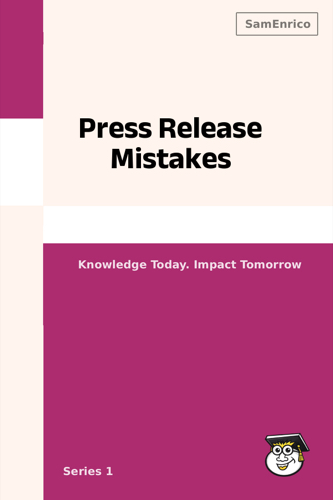
Press Release Mistakes Audiobook
undefined
undefined
Formats
Free sample
Chapter 1: The Three-Second Corpse--–- The email arrived at 9:47 on a Tuesday morning. The journalist, let's call her Sarah, had already filed two stories, attended a 45-minute editorial meeting, and deleted 117 pitches before her first cup of coffee cooled to room temperature. She was exhausted, underpaid, and deeply skeptical of anyone who claimed to have "revolutionary" anything.Your press release was number 118.She opened it. Her eyes scanned the subject line. Then the first sentence.
Then the second. Three seconds passed. She hit delete.You never knew she existed. You never got the rejection email—because journalists don't send those. You just sent your release into the void, heard nothing, and assumed the media was broken, or biased, or simply too stupid to recognize your brilliance.The media isn't broken.
Your press release was dead on arrival.This chapter is about why that happens, how to stop it, and why the difference between coverage and silence often comes down to a single paragraph—sometimes a single sentence—that you haven't written yet.The Economics of Attention Before we fix anything, we need to understand the economic reality of a journalist's inbox. This is not a metaphor. This is math.According to surveys conducted by Muck Rack and Cision across thousands of journalists, the average reporter receives between 50 and 200 pitches per day. Senior writers at major publications can receive 500 or more. Now do the math.
If a journalist works an eight-hour day, that is 480 minutes. If they receive 200 emails and spend just one minute on each, that is 200 minutes—over three hours—just opening, scanning, and deleting. No reading. No reporting. No writing.
Just triage.They do not have three hours. They have three seconds per email at most.Let me say that again because it is the single most important number in this entire book: three seconds. That is the window you have to convince a journalist not to delete your press release. Not three minutes. Not thirty seconds.
Three.What can you communicate in three seconds? A headline. A subject line. The first few words of a lead paragraph. That's it.
Everything else in your press release—the quotes, the data, the background, the boilerplate—only matters if you survive the three-second cut.Most press releases do not survive. They die because their authors made the same mistake: they buried the lead.The Anatomy of a Burial Here is what a buried lead…
This is the end of the free sample. Get the Audiobook to keep going. Buy now
About this book
Details
- Author
- Tremblay Giuseppe
- Publisher
- SamEnrico
- Language
- English
- Genre
- Non-Fiction, Professional's Cheat Sheet / Mistakes
- Released
- 2026-06-08
- Pages (approx.)
- 137
- Available as
- eBook, Audiobook

Listen in the VoxFlicks app
Audiobooks and audio dramas wherever you go. Sign in with your SamEnrico account and press play.
More by Tremblay Giuseppe
 Benzodiazepine Tapering HandbookTremblay Giuseppe$11.99
 Predatory Pricing EnforcementTremblay Giuseppe$11.99
 Uber Comfort Electric GuideTremblay Giuseppe$11.99
 Sixteen Step Anapanasati GuideTremblay Giuseppe$11.99
 Endometriosis Pain MeditationTremblay Giuseppe$11.99
 The Life History Timeline GuideTremblay Giuseppe$11.99
 Body Temperature Rhythm GuideTremblay Giuseppe$11.99
 Cortisol Lowering MorningTremblay Giuseppe$11.99
 The Raven’s Oath: Odin’s Knight in Camelot’s ShadowTremblay Giuseppe$11.99
 Tewkesbury: The Rose That Bleeds RedTremblay Giuseppe$11.99
 How to Produce Bath FizziesTremblay Giuseppe$11.99
 How to Become a MicrobiologistTremblay Giuseppe$11.99