
Posture Study Alertness Guide eBook
Sit upright to increase oxygen flow and cognitive
Sit upright to increase oxygen flow and cognitive performance.
Formats
Free sample
Chapter 1: The Oxygen Illusion--–- You are probably reading this while sitting down. Take a moment to notice how. Are your shoulders rounded forward? Is your chin jutting out toward the screen? Does your lower back feel like it’s melting into the chair, or worse, hovering without support?
Now ask yourself a more uncomfortable question: How long have you been sitting this way before I mentioned it?Most people cannot answer that question accurately. That is not a character flaw. It is a neurological reality. The human brain is designed to automate repetitive physical behaviors—including how you sit—so that conscious attention can be reserved for what seems important: the text on the screen, the conversation in the room, the problem you are trying to solve. Your posture has been running on autopilot for years, and autopilot, left unchecked, always drifts toward the path of least resistance.
Unfortunately, the path of least resistance for the human spine is not neutral. It is collapsed.This book is built on a single claim that sounds almost too simple to matter: sitting upright increases oxygen flow, and increased oxygen flow improves cognitive performance. That claim is not simple at all. Behind it lies a cascade of physiology, neuroscience, and habit formation that most people—including many high-performing students and professionals—have never been taught. You have likely heard since childhood to “sit up straight.” You were probably never told why, in mechanical and chemical terms, slouching makes you slower, dumber, and more tired than you need to be.
That changes now.Let us begin with a question that will guide this entire chapter: If poor posture only affected your spine, why does it change how well you think?The Mechanical Lung Your lungs are not muscular balloons that inflate on their own. They are passive organs. They expand only when the cavity surrounding them—the thoracic cavity—expands. That expansion is driven primarily by one muscle: the diaphragm. The diaphragm is a large, dome-shaped sheet of muscle that sits beneath your lungs, attached to your lower ribs and lumbar spine.
When it contracts, it flattens and moves downward. This increases the volume of the thoracic cavity, creating negative pressure that pulls air into your lungs. When it relaxes, the dome rises, and air is pushed out.This is the fundamental mechanics of breathing. It works beautifully when your spine is in neutral alignment—what we will call the upright posture throughout this book. In neutral alignment, the diaphragm has a clear, unobstructed path to descend.
Your ribs can flare slightly outward and upward, as they are designed to do. Your abdominal cavity has room to accommodate the descending diaphragm. The result is a full, efficient breath that maximizes something called tidal volume: the amount of air moved in and out of the lungs with each cycle.Now consider what happens when you slouch. Slouching is not a single position but a family of compensations. The most common seated slouch involves posterior pelvic tilt (your pelvis tucks under, flattening the natural curve of your lower back), thoracic kyphosis (your upper back rounds forward), and forward head posture (your chin migrates toward the screen).
In this configuration, several mechanical disasters occur simultaneously.First, your diaphragm’s attachment points shift. The lower ribs, which should flare outward during inhalation, are pulled downward and inward by the rounded spine. This reduces the horizontal dimension of the thoracic cavity. Second, your abdominal contents—stomach, liver, intestines—are compressed because the pelvis has tilted backward, reducing the vertical space in the abdominal cavity. When your diaphragm tries to descend, it meets resistance from below.
Third, your rib cage becomes less mobile overall. The joints between your ribs and your spine (costovertebral joints) stiffen in the slouched position, further restricting expansion.The result is mechanically shallow breathing. You are still getting air. You are not suffocating. But you are not getting enough air.
Your tidal volume drops by an estimated 20 to 30 percent compared to upright breathing. That is not a minor inefficiency. That is the difference between a relaxed walk and carrying a heavy backpack uphill.Oxygen Delivery to the Brain Your brain consumes approximately 20 percent of your body’s oxygen despite representing only 2 percent of your body weight. It has no oxygen storage capacity. It cannot pause respiration.
It demands a continuous, high-volume supply of oxygenated blood every second of every day. That supply is delivered through the carotid and vertebral arteries, which pass through the neck and into the brain’s circulatory network.When you slouch, you reduce blood oxygen saturation (Sp O2) by a small but measurable amount. In healthy individuals at sea level, normal Sp O2 ranges from 95 to 99 percent. A slouched posture can drop that by 1 to 2 percentage points. That number sounds trivial.
It is not. Oxygen binding to hemoglobin follows a sigmoidal dissociation curve, meaning that small decreases in saturation at the high end can represent disproportionately larger reductions in oxygen delivery to tissues. A drop from 98 percent to 96 percent is not a 2 percent reduction in oxygen delivery. It can be a 5 to 10 percent reduction in available oxygen at the cellular level, depending on individual physiology.That reduction hits your prefrontal cortex first. The prefrontal cortex is the brain region responsible for executive functions: working memory, attention regulation, impulse control, decision-making, and planning.
It is also the most metabolically demanding region of the brain. It requires more oxygen per unit of tissue than almost any other area. When systemic oxygen delivery drops, the prefrontal cortex is the first to show functional impairment. Reaction times slow. Working memory capacity shrinks from roughly seven items to four or five.
Error rates increase on tasks requiring sustained attention.This is not theoretical. In controlled studies where participants alternated between slouched and upright sitting while performing cognitive tasks, the results are consistent and striking. One study published in the journal Frontiers in Psychology had participants complete a working memory task (the n-back task) in both postures. Upright sitters showed faster reaction times and higher accuracy. Slouched sitters showed increased activity in the anterior cingulate cortex—a sign that their brains were working harder to achieve worse results.
Another study measured EEG power spectra during seated cognitive testing. Upright posture was associated with higher alpha power (associated with relaxed alertness) and lower theta power (associated with drowsiness and mind-wandering). Slouched posture produced the opposite pattern: more theta, less alpha, slower responses.The conclusion is inescapable: when you sit collapsed, your brain literally receives less fuel. It compensates by working harder, but harder is not smarter. You end up exhausted not because you studied too long but because you studied inefficiently for too long.The Cortisol Connection Oxygen is only part of the story.
Slouching also changes your hormonal state in ways that impair cognition. This is the neuroendocrine pathway, and it operates independently of oxygen delivery.The sympathetic nervous system—the branch of your autonomic nervous system responsible for fight-or-flight responses—is exquisitely sensitive to body position. When you adopt a collapsed, protective posture (rounded shoulders, chin tucked, chest compressed), your brain interprets this as a sign of threat or submission. This is not a conscious interpretation. It is a…
This is the end of the free sample. Get the eBook to keep going. Buy now
About this book
Details
- Author
- Coughlin Talia
- Publisher
- SamEnrico
- Language
- English
- Genre
- Non-Fiction, Self-Help, Ergonomics
- Released
- 2026-06-09
- Pages (approx.)
- 147
- Available as
- eBook, Audiobook

Read better in the ZLOADR app
Your eBooks on your phone or tablet. Sign in with your SamEnrico account and start reading.
More by Coughlin Talia
 Remote Retreats Documentation GuideCoughlin Talia$11.99
 Social Listening Mapping CourseCoughlin Talia$11.99
 Single Tasking Deep Work MethodCoughlin Talia$11.99
 Polish Resistance Cemetery DropsCoughlin Talia$11.99
 The Silk Road Queen: The Untold Empire of the 'White Widow'Coughlin Talia$11.99
 The Phantom ScriptCoughlin Talia$11.99
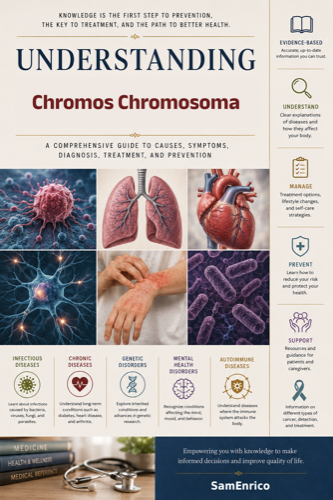 Understanding Chromos ChromosomaCoughlin Talia$17.99
 RangerCoughlin Talia$11.99
 Department Budget KPI TrackingCoughlin Talia$12.99
 JEE Weak Topic ImprovementCoughlin Talia$12.99
 10 Ways to Use Cherry Tomatoes (Recipe Book)Coughlin Talia$11.99
You may also like
 Ergonomics Anger ReductionLozano Vickey$11.99
 Minimalist Desk Distraction BusterBrewster Refugio$11.99
 Remote Work Home Office SetupBryson Mikaela$11.99
 Remote Work Desk SetupBurleson Reanna$11.99
 Ergonomic Stress Prevention GuideWhittington Lillia$11.99
 Distraction Environmental Audit GuideKnutson Robbie$11.99
 Road Rage and Posture CorrectionBain Lolita$11.99
 Workplace Stress and Workspace DesignDarby Magen$11.99
 The Remote Work Desk SetupBearden Kala$11.99
 Burnout Prevention Workspace SetupBostic Nakisha$11.99
 Remote Work Ergonomics GuideLegg Dorothea$11.99
 Body Scan For Neck TensionBroussard Cleveland$11.99