
Non-FictionHealth & WellnessPostpartum
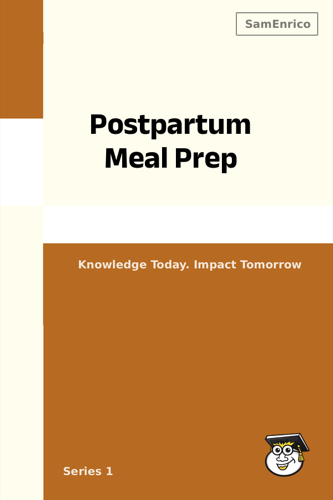
Postpartum Meal Prep eBook
Stock freezer meals before birth for easy recovery
Stock freezer meals before birth for easy recovery nutrition.
Formats
Free sample
Chapter 1: The Wound Beneath--–- You are about to run a marathon while bleeding, breastfeeding, and sleeping in ninety-minute increments. No one will hand you a medal at the finish line. What you will get is a screaming infant who needs to eat every two hours, a body that just endured the equivalent of a major trauma, and a kitchen that will not cook for itself. This book is the difference between crying over a bowl of cold cereal at 2 PM and eating a hot, nutrient-dense meal that actively heals your body while you hold your baby. But before we get to the recipes, before we talk about freezer bags or batch cooking, we have to talk about what actually happened to your body.
Because once you understand that, you will never again feel guilty for prioritizing food.The Fourth Trimester is not a metaphor. It is a medical reality. The first twelve weeks after birth are a distinct physiological period during which every organ system in your body is rebuilding, rebalancing, and recovering from the most intense physical event of your adult life. Yet modern culture treats this period as an inconvenience—something to "bounce back" from, something to hide with high-waisted jeans and a brave smile. This book rejects that entirely.
You are not bouncing back. You are healing from a wound the size of a dinner plate.The Placental Wound You Didn't Know You Had When the placenta detaches from the uterine wall after delivery, it leaves behind an open wound. Not a scrape. Not a bruise. A raw, bleeding wound approximately the size of a dinner plate.
This wound takes six to eight weeks to heal completely. During that time, your uterus is contracting, your hormones are plummeting, and your body is working harder than it ever has in its existence.Here is what most doctors do not tell you: that wound requires specific nutrients to close. Without enough protein, the tissue regenerates slowly. Without enough iron, you remain anemic and exhausted. Without enough Vitamin C (which we will discuss in Chapter 5), the collagen that knits the wound together is weak and prone to reopening.
The standard American postpartum diet—coffee for breakfast, a granola bar for lunch, takeout pizza for dinner—provides almost none of these nutrients. You are essentially trying to heal a major surgical wound while eating vending machine food.This is not an exaggeration. A vaginal delivery without complications still results in the same placental wound. A C-section adds a second wound—an incision through seven layers of abdominal tissue. Cesarean recovery requires even more protein (closer to 90 grams daily), even more careful hydration, and specific attention to inflammation reduction.
Yet the advice new mothers receive is often limited to "rest when the baby rests" and "don't lift anything heavy." No one says "eat seventy-one grams of protein daily or your incision will heal poorly." That changes now.The Three Pillars of Postpartum Nutrition After reviewing the existing research from maternal-fetal medicine specialists, registered dietitians specializing in the fourth trimester, and the limited but growing body of clinical studies on postpartum nutrition, three nutrients emerge as non-negotiable. Everything else in this book builds from these pillars.Pillar One: Protein (71 Grams Daily Minimum)Protein is the building block of every cell in your body. When you give birth, you have just depleted months of protein stores that were diverted to the growing fetus. Breastfeeding pulls another seven to ten grams of protein into every liter of milk produced. If you do not consume enough protein, your body will cannibalize your own muscle tissue to make milk for your baby.
That is not a metaphor. That is biochemistry.The minimum daily requirement for a lactating parent is 71 grams. For comparison, a single egg contains 6 grams. A chicken breast contains 30 grams. A cup of Greek yogurt contains 20 grams.
To reach 71 grams without planning, you would need to eat four chicken breasts daily. That is not realistic. That is why every recipe in this book is engineered to pack protein into every bite—meatballs with hidden lentils, breakfast burritos with double eggs, smoothies with protein powder built in.For non-lactating parents, the requirement is slightly lower (approximately 55 grams daily for tissue repair alone), but the recipes in this book work for everyone. You cannot overdose on protein. You can only under-eat it.Pillar Two: Iron (Fighting the Fatigue You Think Is Normal)Postpartum fatigue is not a personality flaw.
It is not "just how motherhood feels." It is almost certainly iron deficiency anemia caused by blood loss during delivery. The average vaginal delivery loses 500 milliliters of blood. A C-section loses closer to 1,000 milliliters. An emergency delivery or postpartum hemorrhage can lose much more. Your body needs iron to manufacture new red blood cells.
Without it, you remain exhausted, dizzy, short of breath, and unable to think clearly.Here is the cruel irony: the symptoms of postpartum anemia—fatigue, brain fog, irritability—are identical to the symptoms of normal newborn sleep deprivation. Most parents assume they are just tired. They are not just tired. They are anemic and tired. And anemia makes everything worse.The recommended daily intake for postpartum parents is 9 to 10 milligrams of iron, but that number assumes no blood loss.
Most birthing parents need closer to 18 to 27 milligrams daily for the first six weeks. This book includes iron-rich recipes in every chapter. Chapter 4's Lentil and Sweet Potato Stew delivers 8 milligrams per serving. Chapter 5's Spinach Lasagna delivers 5 milligrams. Chapter 8's Shredded Beef delivers 4 milligrams.
Combined with a Vitamin C source (which doubles absorption—see Chapter 5 for the science), you can meet your needs without choking down iron pills that cause constipation.A note on supplementation: If your doctor prescribes iron pills, take them. But take them with food (preferably with Vitamin C, not with dairy or caffeine, both of which block absorption). The recipes in this book are designed to complement supplementation, not replace medical advice.Pillar Three: Omega-3 Fatty Acids (Your Brain on Inflammation)The connection between postpartum depression and inflammation is one of the most important discoveries in maternal mental health over the past decade. Research consistently shows that women with higher levels of inflammatory markers in the weeks after birth are significantly more likely to develop postpartum depression and anxiety. Omega-3 fatty acids—specifically EPA and DHA found in fatty fish and algae—are potent natural anti-inflammatories.The data is striking.
A 2018 meta-analysis of clinical trials involving more than 2,000 postpartum parents found that Omega-3 supplementation reduced depression scores by approximately 40 percent compared to placebo. That is comparable to some prescription antidepressants. The difference is that Omega-3s have no side effects, are safe for breastfeeding, and come packaged in delicious foods like salmon (see Chapter 5's Salmon and Veggie Bake) and sardines (tinned and ready to eat from Chapter 9's Emergency Shelf).The recommended daily intake for postpartum parents is 1,000 to 2,000 milligrams of combined EPA and DHA. A single serving of wild salmon contains approximately 1,500 milligrams. Two tablespoons of ground flaxseed (added to Chapter 7's Emergency Balls) contain approximately 3,000 milligrams of ALA (a precursor that converts inefficiently to EPA/DHA, but still beneficial).
If you do not eat fish, consider an algae-based supplement. The recipes in this book will help, but supplementation may…
This is the end of the free sample. Get the eBook to keep going. Buy now
About this book
Details
- Author
- Hardesty Anissa
- Publisher
- SamEnrico
- Language
- English
- Genre
- Non-Fiction, Health & Wellness, Postpartum
- Released
- 2026-06-08
- Pages (approx.)
- 140
- Available as
- eBook, Audiobook

Read better in the ZLOADR app
Your eBooks on your phone or tablet. Sign in with your SamEnrico account and start reading.
More by Hardesty Anissa
 Vitamin D For Winter DepressionHardesty Anissa$11.99
 Working Caregiver BalanceHardesty Anissa$11.99
 Loneliness on BirthdaysHardesty Anissa$11.99
 The Immigrant Media MagnateHardesty Anissa$11.99
 Medication Adjustment GuideHardesty Anissa$11.99
 Menopause And Breast PainHardesty Anissa$11.99
 Grit for StudentsHardesty Anissa$11.99
 The Forgotten Prisoners of Dartmoor: A Century of InjusticeHardesty Anissa$11.99
 Falklands: A War of Ice and IronHardesty Anissa$11.99
 A Collector's Handbook to the Marendaz 11Hardesty Anissa$11.99
 How to Produce Laser PointersHardesty Anissa$11.99
 Agency OSDBU Directory HandbookHardesty Anissa$12.99
You may also like
 Hong Kong Handover 1997Dunn Johnnie$11.99
 Zumba For Postnatal Recovery CourseNeal Christian$11.99
 Zumba for BeginnersLadner Nikia$11.99
 YouTube Comment Mining GuideHumes Pandora$12.99
 Worry Box MeditationCarlin Rudy$11.99
 Workplace Stress MeditationNguyen Lynn$11.99
 Workplace Stress and Sleep RepairHawley Ivory$11.99
 Workplace Perfectionism CureDelaney Jeffry$11.99
 Workplace Injustice Anger GuideWallen Isabelle$11.99
 Work Addiction and Burnout LinkGreenwood Ester$11.99
 Women in Yoga and WellnessBeattie Galina$11.99
 Women in Stand Up ComedyChun Evangeline$11.99