
Non-FictionSelf-HelpProject Review
Post Project Creative Review Guide eBook
Extract collaboration lessons after creative proje
Extract collaboration lessons after creative projects using this team reflection workbook.
Formats
Free sample
Chapter 1: The First Fifteen...--The meeting invite said “Post-Project Retrospective.” The agenda promised “lessons learned” and “actionable insights.” Twelve people filed into the conference room—or joined the Zoom link—with coffee, notebooks, and the quiet dread of people who have been through this before.For the first ten minutes, the project manager projected a timeline. She pointed to missed milestones in red. The creative director defended the design choices. The copywriter looked at her hands. The junior designer said nothing.
The client’s feedback was summarized as “challenging but fair.” By minute fifteen, two people had already checked their email. By minute twenty, someone had cried. By minute thirty, the team had agreed on exactly nothing except that the project was “difficult” and everyone would “try harder next time.”Six weeks later, the exact same breakdown happened on the next project.This scene plays out in thousands of creative teams every week. The ritual of the post-project review has become a theater of blame, a graveyard of good intentions, or worse—a box-checking exercise that does more harm than good. Teams leave these meetings feeling drained, defensive, or indifferent.
And the collaboration lessons that could transform their next project—the real lessons, the uncomfortable ones, the ones hidden in silence and frustration—never get extracted.This book exists because that ritual is broken. And it can be fixed not by working harder, but by working differently in the first fifteen minutes.The core argument of this chapter—and the foundation of everything that follows—is simple and non-negotiable: The first fifteen minutes of any post-project review determine whether the session will produce honest insight or defensive theater. You cannot skip the setup. You cannot rush to the timeline. You cannot assume that smart, well-intentioned professionals will simply “be honest” if you ask them nicely.
The human brain does not work that way.Drawing from the research synthesized in bestsellers like The Culture Code, A Voice at the Table, and Team Being, this chapter introduces the neurobiology of collaboration and the single most important precondition for any useful retrospective: psychological safety. Without it, your workbook is useless. With it, the remaining eleven chapters become possible.The Neurobiology of a Bad Meeting Let us start with what happens inside the human brain when a post-project review begins badly.Imagine the project just ended poorly. The client rejected the final deliverable. The team worked three weekends in a row.
The budget overran by forty percent. Now, twelve exhausted people sit in a room. The project manager opens with: “Let’s go around the room and share what went wrong.”In that moment, every person in that room experiences a cascade of neurochemical events. The amygdala—the brain’s threat-detection system—activates. Cortisol, the stress hormone, begins to rise.
The prefrontal cortex, responsible for rational analysis, creative problem-solving, and impulse control, begins to down-regulate. In plain English: when people feel threatened, they become stupider.This is not a metaphor. This is measurable biology.When a team member perceives social threat—the risk of being blamed, humiliated, ignored, or punished—their brain literally shifts resources away from the thinking regions and toward survival regions. They stop listening for insight and start listening for ammunition. They stop analyzing causes and start constructing defenses.
They stop collaborating and start performing.The psychologist and Harvard professor Amy Edmondson, whose work on psychological safety anchors A Voice at the Table, has demonstrated this repeatedly in field research. Teams that feel unsafe do not produce better ideas under pressure. They produce safer ideas. Smaller ideas. Ideas that have already been approved by someone with authority.
And when it comes time to review a project that failed, unsafe teams do not surface the real causes—they surface the acceptable causes, the ones that distribute blame evenly, the ones that do not threaten anyone’s job or reputation.The result is a post-project review that produces exactly zero actionable insights. Everyone nods. Everyone agrees that “communication could have been better.” Everyone commits to vague improvements. And everyone walks out knowing that nothing will change.The first fifteen minutes are where you decide whether you are running a learning session or a liability session.Why the First Fifteen Minutes Are Different Every meeting has a “norming” phase—the first few minutes when participants unconsciously calibrate to the social environment. Is this meeting safe?
Is it hierarchical or flat? Are we here to learn or to blame? Is honesty rewarded or punished?In most organizations, the norming phase is implicit and chaotic. People read the room. They watch the boss’s face.
They test a small comment and see how it lands. They decide within minutes whether to speak or to stay silent. And once those norms are set, they are extraordinarily difficult to change. A team that spends the first fifteen minutes in defensive mode will spend the next sixty minutes digging deeper into that mode.This is why the “First 15” protocol exists. Instead of leaving norming to chance, you intentionally design it.
Instead of allowing implicit rules to form from anxiety and hierarchy, you impose explicit rules that prioritize safety, anonymity, and emotional honesty.The protocol has three layers, each building on the last. Together, they take exactly fifteen minutes. And they transform everything that follows.Layer One: The Amazon Review Check-In Before any discussion of the project’s output—before the timeline, before the budget, before the client feedback—every team member writes an Amazon-style product review of the process only.Here is exactly how the facilitator introduces it:“We are going to do something unusual. Before we look at what we delivered, we are going to look at how we worked. I want you to imagine that our collaboration process over the last six weeks was a product for sale on Amazon.
You bought it. Now you are going to leave a customer review. You will give it a star rating from one to five—and you will write one sentence of praise and one sentence of criticism. You are reviewing the process, not the people. You are reviewing how we worked together, not what we made.
You have three minutes. Write on a sticky note. Do not put your name on it.”The rules are strict and important:Five stars maximum, one star minimum. No three-star cop-outs. The team needs extremes.One sentence of praise, one sentence of criticism.
Both required. Balance prevents pure venting or pure avoidance.Anonymity is absolute. The facilitator collects all notes and reads them aloud without attribution.Focus on process, not people. “The approval chain was confusing” is allowed. “Sarah was confusing” is not.Here is what a good Amazon Review looks like:“Four stars.
I loved that we had morning check-ins every day—that kept everyone aligned. But I hated that we never had a clear decision-maker in client meetings, so we left every call with four different interpretations.”And another:“Two stars. The shared asset folder was genius and saved us hours. But the fact that three different people revised the same document without version control was a nightmare.”Notice what these reviews do. They name specific behaviors, not specific people.
They treat the process as a product—something that can be improved without anyone losing face. They contain both appreciation and…
This is the end of the free sample. Get the eBook to keep going. Buy now
About this book
Details
- Author
- Snodgrass Lue
- Publisher
- SamEnrico
- Language
- English
- Genre
- Non-Fiction, Self-Help, Project Review
- Released
- 2026-06-06
- Pages (approx.)
- 151
- Available as
- eBook, Audiobook

Read better in the ZLOADR app
Your eBooks on your phone or tablet. Sign in with your SamEnrico account and start reading.
More by Snodgrass Lue
 EQ Performance Review GuideSnodgrass Lue$11.99
 End Emotional Eating ManualSnodgrass Lue$11.99
 The Anger Trigger ThresholdSnodgrass Lue$11.99
 SAS Airborne Parachute SchoolSnodgrass Lue$11.99
 The Last Pharaoh's Gambit: Cleopatra's Hidden WarSnodgrass Lue$11.99
 The Ghost in the Machine: How a Teen Hacker Almost Broke the InternetSnodgrass Lue$11.99
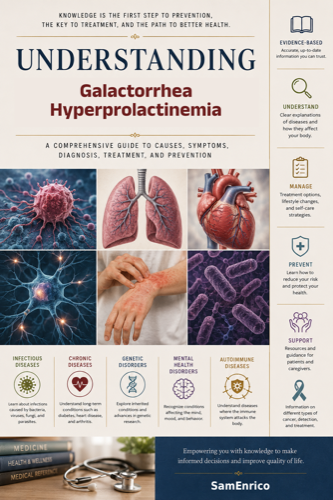 Understanding Galactorrhea HyperprolactinemiaSnodgrass Lue$17.99
 Meta AI Outreach HandbookSnodgrass Lue$12.99
 ESL Income Potential GuideSnodgrass Lue$12.99
 Cloud Native Full Stack Application DeveloperSnodgrass Lue$11.99
 How to Start a Snack Bar Business (Beginners Guide)Snodgrass Lue$11.99
You may also like
 Hong Kong Handover 1997Dunn Johnnie$11.99
 Zumba For Postnatal Recovery CourseNeal Christian$11.99
 Zumba for BeginnersLadner Nikia$11.99
 YouTube Comment Mining GuideHumes Pandora$12.99
 Worry Box MeditationCarlin Rudy$11.99
 Workplace Stress MeditationNguyen Lynn$11.99
 Workplace Stress and Sleep RepairHawley Ivory$11.99
 Workplace Perfectionism CureDelaney Jeffry$11.99
 Workplace Injustice Anger GuideWallen Isabelle$11.99
 Work Addiction and Burnout LinkGreenwood Ester$11.99
 Women in Yoga and WellnessBeattie Galina$11.99
 Women in Stand Up ComedyChun Evangeline$11.99