
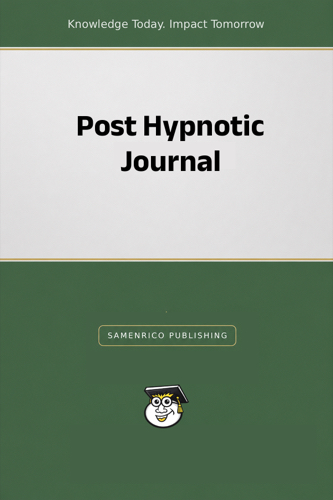
Post Hypnotic Journal eBook
Track installed triggers and their effectiveness o
Track installed triggers and their effectiveness over time.
Formats
Free sample
Chapter 1: The Forgotten Bridge...--When the hypnotist says, "You will feel calm every time you touch your thumb to your forefinger," something real happens in your brain. Neurons fire in new patterns. Synaptic weights shift. A fragile neural bridge—no wider than a strand of spider silk—stretches across the divide between conscious intention and automatic reaction. For the next few minutes, perhaps the next few hours, that bridge holds.
You touch thumb to finger, and something in you softens. It feels like magic. It feels like proof that change is possible.Then you drive home. You cook dinner. You check your email.
You argue with your partner about whose turn it is to take out the trash. And sometime in the next 48 to 72 hours—usually without noticing—the bridge collapses.Not because the hypnotist was incompetent. Not because you lack willpower. Not because hypnosis is pseudoscience. The bridge collapses because of a fundamental property of biological memory: if a new neural connection is not reinforced within a critical window, the brain treats it as irrelevant noise and prunes it away.
This is not a bug. It is a feature. Your brain is bombarded with thousands of sensory inputs every second. To function, it must constantly decide what to keep and what to discard. A post-hypnotic suggestion, no matter how beautifully worded, arrives as just another piece of information competing for survival.This chapter is about that bridge—why it fails, how to stop it from failing, and why a simple notebook can do what hours of hypnotherapy cannot.
We will explore the neuroscience of suggestion fade, the hidden graveyard of forgotten triggers already living in your mind, and the first concrete step toward building bridges that last.The 72-Hour Graveyard Let us begin with an uncomfortable truth. If you have ever tried hypnotherapy—whether with a professional, an audio track, or a self-guided recording—you have almost certainly experienced the 72-Hour Graveyard. This is the period between the third day after your session and the seventh day, during which the majority of post-hypnotic suggestions lose more than half of their effectiveness.I want you to run a quick mental experiment. Think back to the last time you received a post-hypnotic suggestion. Perhaps it was for relaxation.
Perhaps for confidence. Perhaps for sleep, focus, or habit change. Now ask yourself three questions. First, can you remember the exact wording of the trigger? Second, do you know—with certainty—the specific sensory cue that was supposed to activate it?
Third, if you performed that cue right now, would you feel a measurable, automatic response?For most people, the answer to at least two of these questions is no. And this is not a failure of memory in the ordinary sense. You have not "forgotten" the suggestion the way you forget where you put your keys. Something stranger has happened. The suggestion has become what memory researchers call "latent but inaccessible"—a neural trace that still exists in your brain but cannot be voluntarily retrieved or activated.This phenomenon was first documented in the late nineteenth century by memory pioneer Hermann Ebbinghaus, who discovered that newly learned information follows a predictable decay curve.
Within one hour, half of what you learn is gone. Within 24 hours, up to seventy percent is gone. Within 72 hours, unless reinforced, most novel information has been pruned. Ebbinghaus was studying nonsense syllables, not post-hypnotic suggestions, but the underlying principle is identical: the brain does not distinguish between a trigger command and a random fact about the capital of North Dakota. Both are just patterns of neural activation.
Both require reinforcement to survive.Modern neuroscience has refined this picture. We now know that memory consolidation—the process by which short-term neural activity becomes long-term structural change—depends on something called synaptic tagging. When you learn something new, your brain tags the relevant synapses with a molecular marker that says, "This connection might be important later." But that tag is temporary. It lasts about 72 hours. If you do not revisit the learning within that window—if you do not reactivate the same neural pathway—the tag degrades, and the synapse returns to its baseline state.Your post-hypnotic trigger is a tagged synapse.
Every time your hypnotist says, "When you hear the word 'calm,' your shoulders will drop," they are creating a tag. But they are not creating a permanent bridge. That bridge only becomes permanent if you—yes, you, the client—take action within the 72-hour window to reactivate it.Here is the brutal irony: most hypnotherapy ends precisely at the moment consolidation should begin. The session finishes. The client leaves.
The hypnotist considers the job done. And the tag degrades, unloved and unreactivated, until the suggestion exists only as a vague memory of something that once felt powerful but now does nothing.The Post-Hypnotic Journal as External Prosthetic This book offers a different model. Instead of treating the post-hypnotic suggestion as a self-contained instruction that the brain will somehow remember and execute on its own, we treat it as what it actually is: a fragile neural bridge requiring active maintenance. And the primary tool for that maintenance is not more hypnosis. It is a journal.Not a diary.
Not a gratitude log. Not a collection of feelings and insights. A post-hypnotic journal is an external prosthetic for the subconscious—a physical object that offloads the burden of memory from your overworked hippocampus onto paper and ink. When you write down a trigger, its exact wording, its cue, its intended response, you are not just recording information. You are creating a sensory anchor that can reactivate the neural bridge days or weeks later.Consider the difference between two types of memory.
The first is recall memory. This is what you use when someone asks, "What did the hypnotist say?" You reach back into your conscious mind, search for the relevant file, and retrieve the information. Recall memory is effortful, slow, and easily disrupted by stress or distraction. It is also mostly conscious. Your prefrontal cortex—the part of your brain responsible for deliberate thinking—is heavily involved.The second is reinstatement memory.
This is what happens when you smell a perfume and suddenly remember a person you have not thought about in years. The sensory cue bypasses your conscious searching and directly activates the original neural state. Reinstatement memory is automatic, fast, and largely unconscious. It is also far more powerful for triggering post-hypnotic responses.Your journal is designed to function as a reinstatement cue. Every time you open it, you are performing a sensory ritual that your subconscious learns to associate with trance states and trigger activation.
The weight of the paper. The scratch of the pen. The specific layout of the tracking spread. These are not neutral details. They are conditioned stimuli that, over time, will automatically lower your critical factor and increase your suggestibility.This is not metaphor.
This is classical conditioning, the same mechanism that makes Pavlov's dogs salivate at the sound of a bell. Your journal becomes a bell. And your subconscious becomes the dog—but in the best possible way.The Initial Assessment: What Is Already Living in Your Mind Before we install a single…
This is the end of the free sample. Get the eBook to keep going. Buy now
About this book
Details
- Author
- Workman Emerald
- Publisher
- SamEnrico
- Language
- English
- Genre
- Non-Fiction, Self-Help, Journaling
- Released
- 2026-06-10
- Pages (approx.)
- 137
- Available as
- eBook, Audiobook

Read better in the ZLOADR app
Your eBooks on your phone or tablet. Sign in with your SamEnrico account and start reading.
More by Workman Emerald
 TM for Seniors GuideWorkman Emerald$11.99
 PCOS Fasting Insulin TestWorkman Emerald$11.99
 HealthTech Investment RoadmapWorkman Emerald$11.99
 The Empathy for Postpartum MothersWorkman Emerald$11.99
 The Bloodstain That Broke the Alibi: The First DNA Conviction in AmericaWorkman Emerald$11.99
 Stripe Subscription Billing GuideWorkman Emerald$12.99
 Pop Up Retail in London Lagos NYCWorkman Emerald$12.99
 Registered Pharmacy TechnicianWorkman Emerald$11.99
 Understanding Peptidic Growth Factors DeficiencyWorkman Emerald$17.99
You may also like
 Stress Journaling for TwoPoirier Melodie$11.99
 Workaholism Recovery JournalParis Cheyenne$11.99
 The Self Esteem Journal for WorkStock Cherrie$11.99
 The Mindset Shift JournalForman Marine$11.99
 The Assertiveness Journal MethodEdgar Ruthanne$11.99
 Sugar Addiction Recovery Journal WorkbookHelms Letitia$11.99
 Student Journaling for StressWagoner Joetta$11.99
 Procrastination Journal PromptsDover Delmar$11.99
 Procrastination Journal MethodShank Dona$11.99
 Pet Bereavement JournalEuler Ross$11.99
 Loneliness Journal WorkbookLoveless Rosanne$11.99
 Habit Journaling WorkbookLancaster Valentine$11.99