
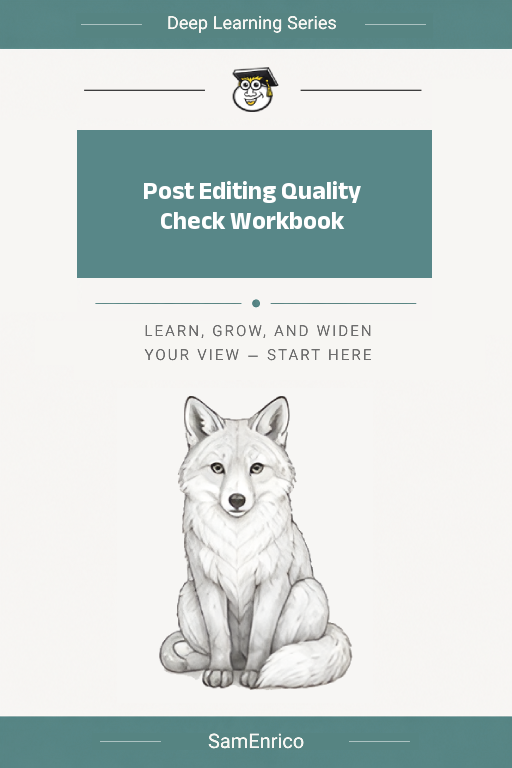
Non-FictionAI OperatorLanguage ServicesWorkbook
Post Editing Quality Check Workbook
Use AI to review machine translations for accuracy
Use AI to review machine translations for accuracy, fluency, and cultural appropriateness before publication. Includes error flagging, alternative suggestions, and human review prompts.
Formats
About this book
Free sample
Chapter 1: The Fluency Trap--–- In the winter of 2023, a major European hospital system quietly published a set of patient discharge instructions translated by artificial intelligence. The English source document read: “Take one 5mg tablet every eight hours. Do not exceed three tablets in 24 hours.” The AI’s German translation read, perfectly fluently: “Nehmen Sie alle acht Stunden eine 5-mg-Tablette ein. Überschreiten Sie nicht drei Tabletten in 24 Stunden.” A human reviewer, rushed and trusting, glanced at the text. The grammar was flawless.
The spelling was correct. The sentences flowed naturally. He approved it for publication.The error was invisible to fluency. The source said “5mg” (five milligrams). The AI had written “5 mg” – visually identical – but the hospital’s internal medication safety protocol required that all doses appear in micrograms for this particular drug to avoid confusion with a different medication.
The AI had no access to the protocol. The human reviewer, trained in light post-editing, was not looking for protocol violations. He was looking for typos.No patient was harmed that day, but the near-miss triggered a six-month audit that cost the hospital over 200,000 euros in external consulting fees. The root cause was not bad translation. The root cause was trust in fluency.This is the fluency trap.
And if you are reading this workbook, you have either fallen into it yourself or been hired to clean up after someone who did.The New Shape of Error For decades, the translation industry operated on a simple, reliable heuristic: if a sentence looks wrong, it probably is wrong. Bad grammar, misspelled words, awkward syntax, and punctuation errors were the reliable signals of low quality. Human translators produced these signals naturally when they were tired, rushed, or unskilled. Machine translation, in its early statistical and rule-based forms, produced them even more abundantly. A reviewer could scan a page, spot three obvious errors, and confidently reject or correct the work.Large language models have destroyed that heuristic.Modern AI translation does not produce obvious errors.
It produces fluent hallucinations – text that reads perfectly in the target language but is factually wrong, culturally tone-deaf, or…
This is the end of the free sample. Get the eBook to keep going. Buy now
Contents
- Chapter 1
- Chapter 2
- Chapter 3
- Chapter 4
- Chapter 5
- Chapter 6
- Chapter 7
- Chapter 8
- Chapter 9
- Chapter 10
- Chapter 11
- Chapter 12
Details
- Author
- Lemieux Caprice
- Publisher
- SamEnrico
- Language
- English
- Genre
- Non-Fiction, AI Operator, Language Services, Workbook
- Released
- 2026-06-01
- Pages (approx.)
- 153
- Available as
- eBook, Audiobook

Read better in the ZLOADR app
Your eBooks on your phone or tablet. Sign in with your SamEnrico account and start reading.
More by Lemieux Caprice
 Physician Stress Management GuideLemieux Caprice$11.99
 Pet Loss FAQ GuideLemieux Caprice$11.99
 Billy Graham AccountLemieux Caprice$11.99
 Body Language for Medical StaffLemieux Caprice$11.99
 The Self Esteem After Trauma GuideLemieux Caprice$11.99
 The Miami Vice Downfall: How a Cop’s Betrayal Brought Down a Drug EmpireLemieux Caprice$11.99
 Understanding Kurczynski–casperson SyndromeLemieux Caprice$17.99
 Associate Full Stack Software EngineerLemieux Caprice$11.99
 Heat Pump Market Growth GuideLemieux Caprice$12.99
 How to Start a Hobby in Singing and playing musical instrumentsLemieux Caprice$11.99
You may also like
 Hong Kong Handover 1997Dunn Johnnie$11.99
 Zumba For Postnatal Recovery CourseNeal Christian$11.99
 Zumba for BeginnersLadner Nikia$11.99
 YouTube Comment Mining GuideHumes Pandora$12.99
 Worry Box MeditationCarlin Rudy$11.99
 Workplace Stress MeditationNguyen Lynn$11.99
 Workplace Stress and Sleep RepairHawley Ivory$11.99
 Workplace Perfectionism CureDelaney Jeffry$11.99
 Workplace Injustice Anger GuideWallen Isabelle$11.99
 Work Addiction and Burnout LinkGreenwood Ester$11.99
 Women in Yoga and WellnessBeattie Galina$11.99
 Women in Stand Up ComedyChun Evangeline$11.99